
Here are my choices for books to add in my mini-collection
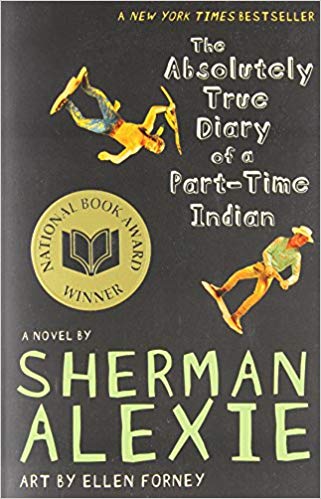
Title: The Absolutely True Diary of a Part-Time Indian
Author: Sherman Alexie
ISBN: 978-0316013680
Publisher: Little, Brown Books
Copyright Date: 2007
Genre: Realistic Contemporary Fiction
Plot Summary: This is the coming age story of Junior, a young Spokane Indian who was born with multiple medical issues. Life is hard on the reservation and the future looks bleak for Junior. So, through support from his family, Junior decides to leave the Indian reservation and go to school at an predominantly white school to try to have a better future. Still living at his home on the reservation, he must deal with the racism at his new school as well as anger from people in his own community. As Junior gets acclimated with his new school, he notices differences between himself and the other students, such as that he is poor and this community is fairly affluent. But he uses his humor and art to get through these situations. He also must navigate how it affects his closest friend on the reservation when he makes this decision to try to change in order to have a better life.
Critical Analysis: This critical evaluation will be looking at how Sherman Alexie uses characters in the book, The Absolutely True Diary of a Part-Time Indian. The first character we meet is Junior. Junior is going through a great deal, he has many medical issues, his parents are alcoholics, his best friend has anger issues, and it feels as though the Indian reservation does not offer many opportunities for its community members. But through Sherman Alexie’s use of humor, Junior is still bright and deals with his struggles in a nonchalant way so the audience does not dwell in his difficulties too long. We feel sad but have a feeling Junior will be okay. When we meet his parents, through the author’s writing we learn they love Junior, but they are stuck with their own demons, so they can’t help Junior as much as they should. But we also see that they support Junior completely with going to the new school by giving him money even though they do not have much to get rides to school and lunch. Another character we see is someone that Junior could easily be, his best friend, Rowdy. Rowdy is angry when Junior decides to go to the new school. But he never hurts Junior. This says a lot because it seems Rowdy has no filters and does not know how to control his anger. He is a character that also shows us what Junior’s life will be like if he does not get out of the reservation. This book is full of colorful and complex characters who guide Junior through his story.
Reader’s Annotation: A young Spokane Indian boy decides to go to an all-white school and endures racism and prejudice from people at the new school as well from hos home as well.
Reading Level/Interest Age: Grades 9 and up

Author Biography:
Sherman Alexie, a Spokane/Coeur d’Alene poet and novelist, was born on October 7, 1966, on the Spokane Indian Reservation in Wellpinit, Washington. He received his BA in American studies from Washington State University in Pullman. His books of poetry include Face (Hanging Loose, 2009), One Stick Song (2000), The Man Who Loves Salmon (1998), The Summer of Black Widows (1996), Water Flowing Home (1995), Old Shirts & New Skins (1993), First Indian on the Moon (1993), I Would Steal Horses (1992), and The Business of Fancydancing (1992). He is also the author of several novels and collections of short fiction, including a young adult novel The Absolutely True Diary of a Part-Time Indian (2007), which won the National Book Award for Young People’s Literature; Flight (Grove Press, 2007); Ten Little Indians (2003); The Toughest Indian in the World (2000); Indian Killer (1996); Reservation Blues (1994), which won the Before Columbus Foundation’s American Book Award; and The Lone Ranger and Tonto Fistfight in Heaven (1993), which received a Hemingway Foundation/PEN Award. Among his other honors and awards are poetry fellowships from the Washington State Arts Commission and the National Endowment for the Arts and a Lila Wallace-Reader’s Digest Writers’ Award. He has also received the Stranger Genius Award, a Boston Globe–Horn Book Award, a Pushcart Prize, the PEN/Malamud Award, and a citation as “One of 20 Best American Novelists Under the Age of 40” from Granta magazine. Alexie and Chris Eyre wrote the screenplay for the movie Smoke Signals, which was based on Alexie’s short story “This is What it Means to Say Phoenix, Arizona.” The movie won two awards at the Sundance Film Festival in 1998 and was released internationally by Miramax Films. He is also a three-time world heavyweight poetry slam champion. Alexie lives with his wife and son in Seattle, Washington.
Book Talking Ideas: Feeling isolated, figuring out who you are and who you want to be
Curriculum Ties: Diversity of Cultures
Challenge Issues: Racism, Language, Homophobia, Masturbation, Death
Reason for Inclusion into Mini-Collection: The reason I included this material into this collection is it provides a diverse narrative. Native Americans make up a small part of published authors and my collection means to bring diverse books to young adults. This books was a National Book Award Winner. With this all being said I think it is important to note that there has been some very negative information that has been released about Sherman Alexie. I have included a link below to provide further information. With all this being said, I do not believe in censoring books that can have a positive impact on young adults, so I still included it in my collection. But I do think it is important to know if there are any controversial aspects to books we recommend. https://americanindiansinchildrensliterature.blogspot.com/2018/02/an-open-letter-about-sherman-alexie.html
Defense File:
Responsibility for Selection
Under the general supervision of the Library Director, the Supervising Librarians are responsible for the collection development process. Centralized Collection Development staff is responsible for identifying titles for acquisition. All library staff and members of the public are encouraged to recommend titles for purchase. Those recommendations will be evaluated by Supervising Librarians using the same selection criteria as general purchases. An electronic resources committee recommends resources for purchase. Selection Criteria
All materials, whether purchased or donated, are considered in terms of the criteria listed below. An item need not meet all of these standards in order to be added to the collection: Popular interest, Contemporary significance or permanent value, Currency of information or format, Representation of diverse points of view, Relationship to existing materials in collection, Readability or ability to sustain interest, Appropriateness of subject to the age and/or level of the intended audience, Reputation of the author, publisher, producer, illustrator, or artist, Creative, literary, or technical quality, Physical condition, Accuracy and authentication, Critical assessments in a variety of professional journals and attention in media, Circulation as monitored through the Library’s ILS, Cost and availability, Relationship to materials in other area libraries, Local emphasis, Multiple copies of materials are purchased in response to user demand as evidenced by the number of holds, anticipated popularity, and monitoring of the collection. Philosophy of Selection
In support of its mission, the Library fully endorses the principles documented in the Library Bill of Rights, Freedom to Read and Freedom to View statements of the American Library Association. These three documents can be accessed online through the following links:
http://www.ala.org/advocacy/intfreedom/librarybill
http://www.ala.org/advocacy/intfreedom/statementspols/freedomreadstatement
http://www.ala.org/advocacy/intfreedom/statementspols/freedomviewstatement Retrieved from: https://library.escondido.org/collection-development-policy.aspx Rationale – The rationale to how the materials were selected for this mini-collection is through reviews from School Library Journal as well as goodreads.com. Active Listening Skills – To avoid escalation, staff has been trained in active listening skills including; Neutral and nonjudgmental, Patient (periods of silence are not “filled”), Verbal and nonverbal feedback to show signs of listening (e.g., smiling, eye contact, leaning in, mirroring), Asking questions, Reflecting back what is said, Asking for clarification, and Summarizing. Retrieved from https://www.verywellmind.com/what-is-active-listening-3024343 Reconsideration Request – Library patrons who recommend the review of appropriateness or removal of a particular item in the Library collection may request and submit a Statement of Concern about Library Resources form available from Information Desk staff. The form will be reviewed by the Library Director or designee and staff in relation to the Library’s mission statement and the selection criteria in this Collection Development Policy. An evaluation of review materials submitted by the patron and staff will be made in accordance with the Reconsideration of Library Materials Policy which is listed below and can be viewed on the Library’s website. A response will be made by the Library Director or designee within 21 days of receiving the formal objection. Reconsideration of Library Materials Policy
Recognizing the importance of intellectual freedom, the Escondido Public Library Board of Trustees fully supports the American Library Association’s Library Bill of Rights and the Association’s Freedom to Read and Freedom to View Statements and has adopted them as official library policy. Reading is a private activity, and individuals must examine materials as to suitability for their own purposes and make their own decisions to read or not to read particular items. As part of its mission to provide ready access to the wide diversity of ideas and information, the library strives to collect materials that provide a variety of viewpoints on issues and subjects. It recognizes that some of these may be controversial and that any given item may offend some members of the community. Selection of materials is not made on the basis of anticipated approval or disapproval, but on the basis of the principles and guidelines stated in the Collection Development Policy. Likewise, the library will not eliminate items purchased under due consideration solely because they displease a particular individual or group. Library materials will not be marked or identified to show approval or disapproval of their contents, and no library materials will be sequestered, except to protect it from physical damage or theft. Responsibility for the reading of children rests with their parents or legal guardians. Selection of library materials will not be inhibited by the possibility that books may come into the possession of children, and only parents may restrict access for their own children. Patrons may raise an objection to an item in the library’s collection. If a complaint cannot be resolved informally, after the complainant has talked with a librarian and has seen the Collection Development Policy, the following procedure will be used to consider the opinions of those persons in the community who are not directly involved in the selection process.
- The library’s department heads and administrators will keep on hand and make available the form, Statement of Concern about Library Materials, and will assist the complainant in completing it if requested. All formal objections to library materials must be made on this form.
- The form shall be signed by the complainant and filed with the Library Administration.
- Within two business days of receiving the form, the Library Director or designee shall file it with the Reconsideration Committee for reevaluation of the material in question. The Committee shall recommend disposition to the Library Director or designee within three weeks.
- The challenge material will not be restricted during the reconsideration process.
- The Reconsideration Committee shall be mad up of three of the Library’s department heads, a Library administrator, and a Library trustee
- The Committee will have an initial meeting to:
- Distribute copies of the completed Statement of Concern About Library Materials form to committee members.
- Distribute copies of the challenged material, as available.
- Give the complainant an opportunity to talk about and expand on the form.
- Give the staff member who selected the item an opportunity to respond to the form.
- The Committee will make its recommendation and draft a response for the Library Director who will review it and send it to the complainant.
- If not satisfied with the decision, the complainant may appeal to the Public Library Board of Trustees, which has final authority for library policy and materials. Retrieved from https://library.escondido.org/collection-development-policy.aspx.
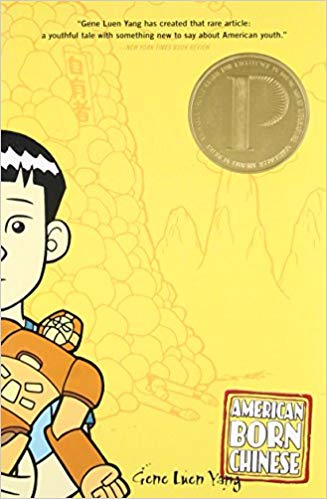
Title: American Born Chinese
Author: Gene Luen Yang
ISBN: 978-0312384487
Publisher: Square Fish
Copyright Date: 2008
Genre: Realistic Fiction/ Folklore
Plot Summary: Jin is a Chinese-American boy who is starting to go to a new school. He does not quite fit in and at first is resistant to being friends with Wei-Chen, who has come over from Taiwan. They do become good friends after they have some common interests. But they still have struggles trying to find out where they fit in this new school. While we are learning about Jin, there are two other stories going on. One is about a white boy named Danny, and his annoying cousin, Chin-Kee, that is visiting. Danny feels like Chin-Kee is ruining his life. The other story is a bit of a folklore story about the Monkey King trying to prove he is worthy of being in heaven with the other Gods. The other Gods don’t think the Monkey King belongs since he is a monkey. All these stories fit together in an interesting resolution.
Critical Analysis: This critical evaluation will be looking at how Gene Luen Yang uses symbolism in the book, American Born Chinese. The stories of the Monkey King and of Danny are symbolism for what Jin Wang is struggling with at his new school. The Monkey King and Chin-Kee represents Wei-Chen in Jin’s mind. He is tradition and unafraid to be himself, whereas Jin wants to belong in this new school and hide his differences. Wei-Chen does not try to change his appearance like Jin and dates a girl with a different background like himself. Jin changes his hair and tries to date a popular white girl. Even when he perms his hair, he is just trying to be like the others at his school. Jin is almost embarrassed to be around Wei-Chen because Wei-Chen does not hide his differences from everyone else. Another time Gene uses symbolism is in the toy robot Jin has. This toy is a Transformer Robot that can transform from a truck into a robot. Jin specifically says “It’s a robot in disguise, more than meets the eye.” This symbolizes the ending of the book where the Monkey King is disguised as Chin-Kee and Jin is transformed into Danny. Also, Wei-Chen and Jin bound over their common interest in transformers. The side stories are symbolic to the main story of Jin trying to fit in at school and the guilt of being ashamed of Wei-Chen, who does not repress his tradition.
Reader’s Annotation: A Chinese-American boy trying to fit in, a Monkey King trying to get to heaven, and an all-american boy just trying to get through school; all have something in common.
Reading Level/Interest Age: Grades 7-12

Author Biography:
Gene Luen Yang writes, and sometimes draws, comic books and graphic novels. As the Library of Congress’ fifth National Ambassador for Young People’s Literature, he advocates for the importance of reading, especially reading diversely. American Born Chinese, his first graphic novel from First Second Books, was a National Book Award finalist, as well as the winner of the Printz Award and an Eisner Award. His two-volume graphic novel Boxers & Saints won the L.A. Times Book Prize and was a National Book Award Finalist. His other works include Secret Coders (with Mike Holmes), The Shadow Hero (with Sonny Liew), New Super-Man from DC Comics (with various artists), and the Avatar: The Last Airbender series from Dark Horse Comics (with Gurihiru). In 2016, he was named a MacArthur Foundation Fellow.
Book Talking Ideas: Racism, Feeling isolated
Curriculum Ties: Diversity of Cultures
Challenge Issues: Racism, Sexual Innuendo, Violence
Reason for Inclusion into Mini-Collection: I included American Born Chinese because it uses humor to deal with difficult subjects. It provides a diverse voice to address how racism affects someone while still dealing with typical teenager subjects, such as getting in a relationship and having disagreements with friends. American Born Chinese was a National Book Award finalist and it won a Printz Award and an Eisner Award.
Defense File:
Responsibility for Selection
Under the general supervision of the Library Director, the Supervising Librarians are responsible for the collection development process. Centralized Collection Development staff is responsible for identifying titles for acquisition. All library staff and members of the public are encouraged to recommend titles for purchase. Those recommendations will be evaluated by Supervising Librarians using the same selection criteria as general purchases. An electronic resources committee recommends resources for purchase. Selection Criteria
All materials, whether purchased or donated, are considered in terms of the criteria listed below. An item need not meet all of these standards in order to be added to the collection: Popular interest, Contemporary significance or permanent value, Currency of information or format, Representation of diverse points of view, Relationship to existing materials in collection, Readability or ability to sustain interest, Appropriateness of subject to the age and/or level of the intended audience, Reputation of the author, publisher, producer, illustrator, or artist, Creative, literary, or technical quality, Physical condition, Accuracy and authentication, Critical assessments in a variety of professional journals and attention in media, Circulation as monitored through the Library’s ILS, Cost and availability, Relationship to materials in other area libraries, Local emphasis, Multiple copies of materials are purchased in response to user demand as evidenced by the number of holds, anticipated popularity, and monitoring of the collection. Philosophy of Selection
In support of its mission, the Library fully endorses the principles documented in the Library Bill of Rights, Freedom to Read and Freedom to View statements of the American Library Association. These three documents can be accessed online through the following links:
http://www.ala.org/advocacy/intfreedom/librarybill
http://www.ala.org/advocacy/intfreedom/statementspols/freedomreadstatement
http://www.ala.org/advocacy/intfreedom/statementspols/freedomviewstatement Retrieved from: https://library.escondido.org/collection-development-policy.aspx Rationale – The rationale to how the materials were selected for this mini-collection is through reviews from School Library Journal as well as goodreads.com. Active Listening Skills – To avoid escalation, staff has been trained in active listening skills including; Neutral and nonjudgmental, Patient (periods of silence are not “filled”), Verbal and nonverbal feedback to show signs of listening (e.g., smiling, eye contact, leaning in, mirroring), Asking questions, Reflecting back what is said, Asking for clarification, and Summarizing. Retrieved from https://www.verywellmind.com/what-is-active-listening-3024343 Reconsideration Request – Library patrons who recommend the review of appropriateness or removal of a particular item in the Library collection may request and submit a Statement of Concern about Library Resources form available from Information Desk staff. The form will be reviewed by the Library Director or designee and staff in relation to the Library’s mission statement and the selection criteria in this Collection Development Policy. An evaluation of review materials submitted by the patron and staff will be made in accordance with the Reconsideration of Library Materials Policy which is listed below and can be viewed on the Library’s website. A response will be made by the Library Director or designee within 21 days of receiving the formal objection. Reconsideration of Library Materials Policy
Recognizing the importance of intellectual freedom, the Escondido Public Library Board of Trustees fully supports the American Library Association’s Library Bill of Rights and the Association’s Freedom to Read and Freedom to View Statements and has adopted them as official library policy. Reading is a private activity, and individuals must examine materials as to suitability for their own purposes and make their own decisions to read or not to read particular items. As part of its mission to provide ready access to the wide diversity of ideas and information, the library strives to collect materials that provide a variety of viewpoints on issues and subjects. It recognizes that some of these may be controversial and that any given item may offend some members of the community. Selection of materials is not made on the basis of anticipated approval or disapproval, but on the basis of the principles and guidelines stated in the Collection Development Policy. Likewise, the library will not eliminate items purchased under due consideration solely because they displease a particular individual or group. Library materials will not be marked or identified to show approval or disapproval of their contents, and no library materials will be sequestered, except to protect it from physical damage or theft. Responsibility for the reading of children rests with their parents or legal guardians. Selection of library materials will not be inhibited by the possibility that books may come into the possession of children, and only parents may restrict access for their own children. Patrons may raise an objection to an item in the library’s collection. If a complaint cannot be resolved informally, after the complainant has talked with a librarian and has seen the Collection Development Policy, the following procedure will be used to consider the opinions of those persons in the community who are not directly involved in the selection process.
- The library’s department heads and administrators will keep on hand and make available the form, Statement of Concern about Library Materials, and will assist the complainant in completing it if requested. All formal objections to library materials must be made on this form.
- The form shall be signed by the complainant and filed with the Library Administration.
- Within two business days of receiving the form, the Library Director or designee shall file it with the Reconsideration Committee for reevaluation of the material in question. The Committee shall recommend disposition to the Library Director or designee within three weeks.
- The challenge material will not be restricted during the reconsideration process.
- The Reconsideration Committee shall be mad up of three of the Library’s department heads, a Library administrator, and a Library trustee
- The Committee will have an initial meeting to:
- Distribute copies of the completed Statement of Concern About Library Materials form to committee members.
- Distribute copies of the challenged material, as available.
- Give the complainant an opportunity to talk about and expand on the form.
- Give the staff member who selected the item an opportunity to respond to the form.
- The Committee will make its recommendation and draft a response for the Library Director who will review it and send it to the complainant.
- If not satisfied with the decision, the complainant may appeal to the Public Library Board of Trustees, which has final authority for library policy and materials. Retrieved from https://library.escondido.org/collection-development-policy.aspx.

Title: Barely Missing Everything
Author: Matt Mendez
ISBN: 978-1534404458
Publisher: Atheneum/Caitlyn Dlouhy Books
Copyright Date: 2019
Genre: Realistic Contemporary Fiction
Plot Summary: Barely Missing Everything follows three characters. Juan is a Mexican-American teenager who plays basketball. He is trying to get a scholarship playing basketball to be able to go to college but is struggling financially. J.D. is Juan best friend who wants to be a film-maker but is apt to making some poor decisions. Fabi is Juan’s mother who works very hard for her family but has been keeping a big secret from Juan. When Juan and J.D. go to a party and Juan gets arrested, his life starts getting more complicated and he has to make some decisions on what is important to him. These decisions affect not only him but J.D. and Fabi as well. All three of these characters are trying to do the right thing but due to their circumstances, mostly being Mexican-American, life keeps throwing them curve balls.
Critical Analysis: This critical evaluation will be looking at how Matt Mendez uses the characters to enhance his book, Barely Missing Everything. Barely Missing Everything is based on three main characters, Juan, J.D. and Fabi. Juan represents a typical Mexican-American boy who likes sports and girls. Through Matt Mendez’ writing he makes Juan relatable in the type of conversations he has with his friends. When J.D. and Juan are hanging out, they tease each other a lot in both Spanish and English. They also use foul language and talk about girls they like. The majority of their conversations sound like two teenage boys that are having typical conversations at that age. Matt makes Juan relatable as well by letting you know why Juan is making the decisions he makes. Even towards the end, we know why Juan has chosen to make the decisions he’s made. They might have ended up being mistakes but Juan did not intend for everything to go down the way they did. “It seemed obvious now, how his future was knotted with everyone’s past. His old man’s. His ma’s. Even Grampa’s. His fuckups were all part of an ancestral knot of fuckups that were impossible to untangle” (p. 289). Through Matt’s descriptions of the side characters, such as his mom and Grandpa, we see what Juan meant by this statement. They were all caught up in this cycle of racism that would not allow them to succeed like a white teenage boy could. Essentially, this book is stating that Mexican boys already have one strike against them and are not able to make mistakes that other boys can.
Reader’s Annotation: One secret, three people, and how society can cause you to barely miss everything.
Reading Level/Interest Age: Grades 10 +

Author Biography:
Matt Mendez has worked on airplanes all of his adult life and is the author of the YA novel Barely Missing Everything and the short story collection Twitching Heart. He earned his MFA from the University of Arizona where he also taught creative writing. His work has appeared in Pank, The Literary Review, Huizache, and other places. Matt is from El Paso, Texas but now lives with his wife and two daughters in Tucson, Arizona.
Book Talking Ideas: Racism, Discrimination, Societal Constraints
Curriculum Ties: Diversity of Cultures
Challenge Issues: Language, Racism, Teenage Drinking and Drug use, Violence
Reason for Inclusion into Mini-Collection: I added this title to my collection because I think it is important to have diverse voices in my collection. This book also discusses how societal prejudice affects teenagers, especially Latino boys.
Defense File:
Responsibility for Selection
Under the general supervision of the Library Director, the Supervising Librarians are responsible for the collection development process. Centralized Collection Development staff is responsible for identifying titles for acquisition. All library staff and members of the public are encouraged to recommend titles for purchase. Those recommendations will be evaluated by Supervising Librarians using the same selection criteria as general purchases. An electronic resources committee recommends resources for purchase. Selection Criteria
All materials, whether purchased or donated, are considered in terms of the criteria listed below. An item need not meet all of these standards in order to be added to the collection: Popular interest, Contemporary significance or permanent value, Currency of information or format, Representation of diverse points of view, Relationship to existing materials in collection, Readability or ability to sustain interest, Appropriateness of subject to the age and/or level of the intended audience, Reputation of the author, publisher, producer, illustrator, or artist, Creative, literary, or technical quality, Physical condition, Accuracy and authentication, Critical assessments in a variety of professional journals and attention in media, Circulation as monitored through the Library’s ILS, Cost and availability, Relationship to materials in other area libraries, Local emphasis, Multiple copies of materials are purchased in response to user demand as evidenced by the number of holds, anticipated popularity, and monitoring of the collection. Philosophy of Selection
In support of its mission, the Library fully endorses the principles documented in the Library Bill of Rights, Freedom to Read and Freedom to View statements of the American Library Association. These three documents can be accessed online through the following links:
http://www.ala.org/advocacy/intfreedom/librarybill
http://www.ala.org/advocacy/intfreedom/statementspols/freedomreadstatement
http://www.ala.org/advocacy/intfreedom/statementspols/freedomviewstatement Retrieved from: https://library.escondido.org/collection-development-policy.aspx Rationale – The rationale to how the materials were selected for this mini-collection is through reviews from School Library Journal as well as goodreads.com. Active Listening Skills – To avoid escalation, staff has been trained in active listening skills including; Neutral and nonjudgmental, Patient (periods of silence are not “filled”), Verbal and nonverbal feedback to show signs of listening (e.g., smiling, eye contact, leaning in, mirroring), Asking questions, Reflecting back what is said, Asking for clarification, and Summarizing. Retrieved from https://www.verywellmind.com/what-is-active-listening-3024343 Reconsideration Request – Library patrons who recommend the review of appropriateness or removal of a particular item in the Library collection may request and submit a Statement of Concern about Library Resources form available from Information Desk staff. The form will be reviewed by the Library Director or designee and staff in relation to the Library’s mission statement and the selection criteria in this Collection Development Policy. An evaluation of review materials submitted by the patron and staff will be made in accordance with the Reconsideration of Library Materials Policy which is listed below and can be viewed on the Library’s website. A response will be made by the Library Director or designee within 21 days of receiving the formal objection. Reconsideration of Library Materials Policy
Recognizing the importance of intellectual freedom, the Escondido Public Library Board of Trustees fully supports the American Library Association’s Library Bill of Rights and the Association’s Freedom to Read and Freedom to View Statements and has adopted them as official library policy. Reading is a private activity, and individuals must examine materials as to suitability for their own purposes and make their own decisions to read or not to read particular items. As part of its mission to provide ready access to the wide diversity of ideas and information, the library strives to collect materials that provide a variety of viewpoints on issues and subjects. It recognizes that some of these may be controversial and that any given item may offend some members of the community. Selection of materials is not made on the basis of anticipated approval or disapproval, but on the basis of the principles and guidelines stated in the Collection Development Policy. Likewise, the library will not eliminate items purchased under due consideration solely because they displease a particular individual or group. Library materials will not be marked or identified to show approval or disapproval of their contents, and no library materials will be sequestered, except to protect it from physical damage or theft. Responsibility for the reading of children rests with their parents or legal guardians. Selection of library materials will not be inhibited by the possibility that books may come into the possession of children, and only parents may restrict access for their own children. Patrons may raise an objection to an item in the library’s collection. If a complaint cannot be resolved informally, after the complainant has talked with a librarian and has seen the Collection Development Policy, the following procedure will be used to consider the opinions of those persons in the community who are not directly involved in the selection process.
- The library’s department heads and administrators will keep on hand and make available the form, Statement of Concern about Library Materials, and will assist the complainant in completing it if requested. All formal objections to library materials must be made on this form.
- The form shall be signed by the complainant and filed with the Library Administration.
- Within two business days of receiving the form, the Library Director or designee shall file it with the Reconsideration Committee for reevaluation of the material in question. The Committee shall recommend disposition to the Library Director or designee within three weeks.
- The challenge material will not be restricted during the reconsideration process.
- The Reconsideration Committee shall be mad up of three of the Library’s department heads, a Library administrator, and a Library trustee
- The Committee will have an initial meeting to:
- Distribute copies of the completed Statement of Concern About Library Materials form to committee members.
- Distribute copies of the challenged material, as available.
- Give the complainant an opportunity to talk about and expand on the form.
- Give the staff member who selected the item an opportunity to respond to the form.
- The Committee will make its recommendation and draft a response for the Library Director who will review it and send it to the complainant.
- If not satisfied with the decision, the complainant may appeal to the Public Library Board of Trustees, which has final authority for library policy and materials. Retrieved from https://library.escondido.org/collection-development-policy.aspx.
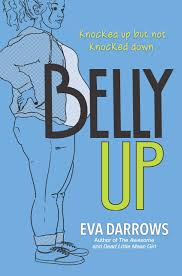
Title: Belly Up
Author: Eva Darrows
ISBN: 978-1335012357
Publisher: Inkyard Press
Copyright Date: 2019
Genre: Contemporary Fiction
Plot Summary: Serendipity, who goes by Sara, has a lot going for her. She gets good grades, has a great best friend, and seems to have a bright future ahead. She is busy planning which Ivy schools to apply to. But during one drunken party she makes a decision that alters her course. She ends up pregnant and at the same time learns she will be going to a new school. She also is not sure of the father’s last name, much less what his thoughts are on a baby. But rather than be defeated, she fights on. With a new group of friends and a supportive mother and Grandmother, Sara continues to go to school despite some gossipy and mean school mates. She even meets a cute, nice new boy. But, will her being pregnant prevent that romance from blooming? Will she be able to go to college?
Critical Analysis: This critical evaluation will be looking at the tone used by Eva Darrows in Belly Up. Surprisingly, this book is very optimistic even with an unplanned pregnancy. This book deal with a lot of complicated issues but it remains full or humor and lighthearted. The first issue is an unplanned pregnancy. But rather than Sara having no support, like many other titles on the subject, she has a super supportive mother and even Grandmother. She also has a best friend who is with her no matter what. She also meets a new boy and tells him her situations. Rather than Leaf just abandoning her or thinking she is easy, he wants to help her and be there for her. Eva also introduces Morgan, who is trans-queer, and Erin, who is bisexual, and they openly announce who they are. But they are just a regular, happy couple without a lot of extra drama. Eva does a great job of addressing all these aspects in a positive way. Sara’s friends don’t run away from her or make her feel bad about her choices. One way she does this is in the relationship between Sara and her mom. They have a joking and sarcastic relationship and Sara’s mom supports her in all her decisions. Such as when Sara tells her mom she does not know who the father is. “Mom finally brushed the hair out of her face and came to stand by my side. Her arm slid over my shoulders. “I could kill you, you know.” But her words were softened by the soft kiss she pressed to my temple. She loved my, even if I was a colossal screwup” (p. 57).
Reader’s Annotation: Serendipity Ramos has just gotten knocked up. Now she’ll find out who she really is.
Reading Level/Interest Age: Grades 9+

Author Biography:
Hillary Monahan’s YA debut MARY: The Summoning, a YA Horror retelling of the Bloody Mary myth, sold at auction to Hyperion and hit number two on the New York Times e-book bestseller list. MARY: Unleashed is out as of fall 2015. She’s also published THE AWESOME with Ravenstone under the name Eva Darrows, which received starred reviews in both Kirkus and PW. Her next three publications are an adult horror novel in the GODS & MONSTERS series for Solaris, due out in December of 2016. Spring of 2017 will see the YA contemporary DEAD LITTLE MEAN GIRL under the name Eva Darrows published through Harlequin Teen. Fall of 2017 sees the YA horror THE WAGON WITCH’S APPRENTICE under Hillary Monahan through Delacorte/Random House.
https://www.goodreads.com/author/show/7009629.Hillary_Monahan
Book Talking Ideas: Teenage Pregnancy, Gender Identity, Sexual Identity
Curriculum Ties: N/A
Challenge Issues: Sex, Language, Homosexuality
Reason for Inclusion into Mini-Collection: The reason I included this title in my collection was there are a lot of different characters that identify with different sexual identities. I also chose it because I have not read a book about teenage pregnancy that isn’t all fire and brimstone. As stated in Kirkus Review ” While their identities are never made a plot point, queer characters are refreshingly abundant: Devi is gray ace, Leaf is demisexual, his friend Morgan is a trans girl dating another girl, and Sara herself is questioning and most likely bisexual. Racial and ethnic identities are approached with care, with Leaf’s nuanced explanations of Romani cultural practices and Sara’s thoughtful approach to her identity as a half-Spanish/half-Swedish girl” ( https://www.kirkusreviews.com/book-reviews/eva-darrows/belly-up-darrows/ ).
Defense File:
Responsibility for Selection
Under the general supervision of the Library Director, the Supervising Librarians are responsible for the collection development process. Centralized Collection Development staff is responsible for identifying titles for acquisition. All library staff and members of the public are encouraged to recommend titles for purchase. Those recommendations will be evaluated by Supervising Librarians using the same selection criteria as general purchases. An electronic resources committee recommends resources for purchase. Selection Criteria
All materials, whether purchased or donated, are considered in terms of the criteria listed below. An item need not meet all of these standards in order to be added to the collection: Popular interest, Contemporary significance or permanent value, Currency of information or format, Representation of diverse points of view, Relationship to existing materials in collection, Readability or ability to sustain interest, Appropriateness of subject to the age and/or level of the intended audience, Reputation of the author, publisher, producer, illustrator, or artist, Creative, literary, or technical quality, Physical condition, Accuracy and authentication, Critical assessments in a variety of professional journals and attention in media, Circulation as monitored through the Library’s ILS, Cost and availability, Relationship to materials in other area libraries, Local emphasis, Multiple copies of materials are purchased in response to user demand as evidenced by the number of holds, anticipated popularity, and monitoring of the collection. Philosophy of Selection
In support of its mission, the Library fully endorses the principles documented in the Library Bill of Rights, Freedom to Read and Freedom to View statements of the American Library Association. These three documents can be accessed online through the following links:
http://www.ala.org/advocacy/intfreedom/librarybill
http://www.ala.org/advocacy/intfreedom/statementspols/freedomreadstatement
http://www.ala.org/advocacy/intfreedom/statementspols/freedomviewstatement Retrieved from: https://library.escondido.org/collection-development-policy.aspx Rationale – The rationale to how the materials were selected for this mini-collection is through reviews from School Library Journal as well as goodreads.com. Active Listening Skills – To avoid escalation, staff has been trained in active listening skills including; Neutral and nonjudgmental, Patient (periods of silence are not “filled”), Verbal and nonverbal feedback to show signs of listening (e.g., smiling, eye contact, leaning in, mirroring), Asking questions, Reflecting back what is said, Asking for clarification, and Summarizing. Retrieved from https://www.verywellmind.com/what-is-active-listening-3024343 Reconsideration Request – Library patrons who recommend the review of appropriateness or removal of a particular item in the Library collection may request and submit a Statement of Concern about Library Resources form available from Information Desk staff. The form will be reviewed by the Library Director or designee and staff in relation to the Library’s mission statement and the selection criteria in this Collection Development Policy. An evaluation of review materials submitted by the patron and staff will be made in accordance with the Reconsideration of Library Materials Policy which is listed below and can be viewed on the Library’s website. A response will be made by the Library Director or designee within 21 days of receiving the formal objection. Reconsideration of Library Materials Policy
Recognizing the importance of intellectual freedom, the Escondido Public Library Board of Trustees fully supports the American Library Association’s Library Bill of Rights and the Association’s Freedom to Read and Freedom to View Statements and has adopted them as official library policy. Reading is a private activity, and individuals must examine materials as to suitability for their own purposes and make their own decisions to read or not to read particular items. As part of its mission to provide ready access to the wide diversity of ideas and information, the library strives to collect materials that provide a variety of viewpoints on issues and subjects. It recognizes that some of these may be controversial and that any given item may offend some members of the community. Selection of materials is not made on the basis of anticipated approval or disapproval, but on the basis of the principles and guidelines stated in the Collection Development Policy. Likewise, the library will not eliminate items purchased under due consideration solely because they displease a particular individual or group. Library materials will not be marked or identified to show approval or disapproval of their contents, and no library materials will be sequestered, except to protect it from physical damage or theft. Responsibility for the reading of children rests with their parents or legal guardians. Selection of library materials will not be inhibited by the possibility that books may come into the possession of children, and only parents may restrict access for their own children. Patrons may raise an objection to an item in the library’s collection. If a complaint cannot be resolved informally, after the complainant has talked with a librarian and has seen the Collection Development Policy, the following procedure will be used to consider the opinions of those persons in the community who are not directly involved in the selection process.
- The library’s department heads and administrators will keep on hand and make available the form, Statement of Concern about Library Materials, and will assist the complainant in completing it if requested. All formal objections to library materials must be made on this form.
- The form shall be signed by the complainant and filed with the Library Administration.
- Within two business days of receiving the form, the Library Director or designee shall file it with the Reconsideration Committee for reevaluation of the material in question. The Committee shall recommend disposition to the Library Director or designee within three weeks.
- The challenge material will not be restricted during the reconsideration process.
- The Reconsideration Committee shall be mad up of three of the Library’s department heads, a Library administrator, and a Library trustee
- The Committee will have an initial meeting to:
- Distribute copies of the completed Statement of Concern About Library Materials form to committee members.
- Distribute copies of the challenged material, as available.
- Give the complainant an opportunity to talk about and expand on the form.
- Give the staff member who selected the item an opportunity to respond to the form.
- The Committee will make its recommendation and draft a response for the Library Director who will review it and send it to the complainant.
- If not satisfied with the decision, the complainant may appeal to the Public Library Board of Trustees, which has final authority for library policy and materials. Retrieved from https://library.escondido.org/collection-development-policy.aspx.

Title: The Chocolate War
Author: Robert Cormier
ISBN: 978-0394828053
Publisher: Knopf Books for Young Readers
Copyright Date: 1974
Genre: Contemporary Fiction
Plot Summary: Jerry Renault’s mother has just passed away and his father just seems to be going through the motions. But he keeps on going and is trying to make a difference. Firstly, with making the football team. He gets beaten up repeatedly but keeps pushing on. Jerry sees a poster that says, “Do I dare disturb the universe?” When he is told that he must sell chocolates for the school fundraiser, he puts his foot down. When Jerry refuses to sell the chocolates, the school turns on him and we see how corrupt this school really is, all the way up to the headmaster. Jerry continues to hold his ground and eventually some brave students follow him. But, with continued pressure, will he give in? And how far will those in power go to make an example of him?
Critical Analysis: This critical evaluation will be looking at the tone used by Robert Cormier in The Chocolate War. The tone of this book was very tense. For example, in chapter eleven, when Robert is describing a prank one of the boys played, he uses very explosive words. “It was as if somebody had dropped The Bomb. Brian Kelly started it all when he touched his chair. It collapsed. Then, everything happened at once. Albert LeBlanc brushed against a desk as he made his way down the aisle and it fell apart after trembling crazily for a moment. The impact sent out vibrations which shot down two other chairs” (p. 68). This description goes on for another couple of paragraphs. Robert uses this type of description throughout the book to make Jerry’s situation more and more tense all the way to the traumatic ending. The reason is to show the toxic masculinity of this all boy school and to even show that the masculinity is not only applied to teenagers but the men in charge of these teenagers’ livelihood. There are bullies all around this school, the worst bullies being Brother Leon. One of the more tense situations was reoccurring. When Brother Leon would ask every student how many chocolates they had sold, you could feel the tension escalating the closer it got to Jerry’s name.
Reader’s Annotation: Jerry is just a kid who is trying to stand up or what he believes in. But how far will corruption go to make sure the universe is not disturbed?
Reading Level/Interest Age: Grades 9+

Author Biography:
Robert Edmund Cormier (January 17, 1925–November 2, 2000) was an American author, columnist and reporter, known for his deeply pessimistic, downbeat literature. His most popular works include I Am the Cheese, After the First Death, We All Fall Down and The Chocolate War, all of which have won awards. The Chocolate War was challenged in multiple libraries. His books often are concerned with themes such as abuse, mental illness, violence, revenge, betrayal and conspiracy. In most of his novels, the protagonists do not win.
https://www.goodreads.com/author/show/10442.Robert_Cormier
Image retrieved from: https://www.robertcormier.com/about/about.html
Book Talking Ideas: Moral Issues
Curriculum Ties: N/A
Challenge Issues: Violence, Language
Reason for Inclusion into Mini-Collection: I added this title to my collection because it is still relevant today even though it was written in the 70s. It is a book that teens relate to because it makes them question authority. The book was a New York Times Outstanding Book of the Year, an ALA Best Book for Young Adults, and a School Library Journal Best Book of the Year.
Defense File:
Responsibility for Selection
Under the general supervision of the Library Director, the Supervising Librarians are responsible for the collection development process. Centralized Collection Development staff is responsible for identifying titles for acquisition. All library staff and members of the public are encouraged to recommend titles for purchase. Those recommendations will be evaluated by Supervising Librarians using the same selection criteria as general purchases. An electronic resources committee recommends resources for purchase. Selection Criteria
All materials, whether purchased or donated, are considered in terms of the criteria listed below. An item need not meet all of these standards in order to be added to the collection: Popular interest, Contemporary significance or permanent value, Currency of information or format, Representation of diverse points of view, Relationship to existing materials in collection, Readability or ability to sustain interest, Appropriateness of subject to the age and/or level of the intended audience, Reputation of the author, publisher, producer, illustrator, or artist, Creative, literary, or technical quality, Physical condition, Accuracy and authentication, Critical assessments in a variety of professional journals and attention in media, Circulation as monitored through the Library’s ILS, Cost and availability, Relationship to materials in other area libraries, Local emphasis, Multiple copies of materials are purchased in response to user demand as evidenced by the number of holds, anticipated popularity, and monitoring of the collection. Philosophy of Selection
In support of its mission, the Library fully endorses the principles documented in the Library Bill of Rights, Freedom to Read and Freedom to View statements of the American Library Association. These three documents can be accessed online through the following links:
http://www.ala.org/advocacy/intfreedom/librarybill
http://www.ala.org/advocacy/intfreedom/statementspols/freedomreadstatement
http://www.ala.org/advocacy/intfreedom/statementspols/freedomviewstatement Retrieved from: https://library.escondido.org/collection-development-policy.aspx Rationale – The rationale to how the materials were selected for this mini-collection is through reviews from School Library Journal as well as goodreads.com. Active Listening Skills – To avoid escalation, staff has been trained in active listening skills including; Neutral and nonjudgmental, Patient (periods of silence are not “filled”), Verbal and nonverbal feedback to show signs of listening (e.g., smiling, eye contact, leaning in, mirroring), Asking questions, Reflecting back what is said, Asking for clarification, and Summarizing. Retrieved from https://www.verywellmind.com/what-is-active-listening-3024343 Reconsideration Request – Library patrons who recommend the review of appropriateness or removal of a particular item in the Library collection may request and submit a Statement of Concern about Library Resources form available from Information Desk staff. The form will be reviewed by the Library Director or designee and staff in relation to the Library’s mission statement and the selection criteria in this Collection Development Policy. An evaluation of review materials submitted by the patron and staff will be made in accordance with the Reconsideration of Library Materials Policy which is listed below and can be viewed on the Library’s website. A response will be made by the Library Director or designee within 21 days of receiving the formal objection. Reconsideration of Library Materials Policy
Recognizing the importance of intellectual freedom, the Escondido Public Library Board of Trustees fully supports the American Library Association’s Library Bill of Rights and the Association’s Freedom to Read and Freedom to View Statements and has adopted them as official library policy. Reading is a private activity, and individuals must examine materials as to suitability for their own purposes and make their own decisions to read or not to read particular items. As part of its mission to provide ready access to the wide diversity of ideas and information, the library strives to collect materials that provide a variety of viewpoints on issues and subjects. It recognizes that some of these may be controversial and that any given item may offend some members of the community. Selection of materials is not made on the basis of anticipated approval or disapproval, but on the basis of the principles and guidelines stated in the Collection Development Policy. Likewise, the library will not eliminate items purchased under due consideration solely because they displease a particular individual or group. Library materials will not be marked or identified to show approval or disapproval of their contents, and no library materials will be sequestered, except to protect it from physical damage or theft. Responsibility for the reading of children rests with their parents or legal guardians. Selection of library materials will not be inhibited by the possibility that books may come into the possession of children, and only parents may restrict access for their own children. Patrons may raise an objection to an item in the library’s collection. If a complaint cannot be resolved informally, after the complainant has talked with a librarian and has seen the Collection Development Policy, the following procedure will be used to consider the opinions of those persons in the community who are not directly involved in the selection process.
- The library’s department heads and administrators will keep on hand and make available the form, Statement of Concern about Library Materials, and will assist the complainant in completing it if requested. All formal objections to library materials must be made on this form.
- The form shall be signed by the complainant and filed with the Library Administration.
- Within two business days of receiving the form, the Library Director or designee shall file it with the Reconsideration Committee for reevaluation of the material in question. The Committee shall recommend disposition to the Library Director or designee within three weeks.
- The challenge material will not be restricted during the reconsideration process.
- The Reconsideration Committee shall be mad up of three of the Library’s department heads, a Library administrator, and a Library trustee
- The Committee will have an initial meeting to:
- Distribute copies of the completed Statement of Concern About Library Materials form to committee members.
- Distribute copies of the challenged material, as available.
- Give the complainant an opportunity to talk about and expand on the form.
- Give the staff member who selected the item an opportunity to respond to the form.
- The Committee will make its recommendation and draft a response for the Library Director who will review it and send it to the complainant.
- If not satisfied with the decision, the complainant may appeal to the Public Library Board of Trustees, which has final authority for library policy and materials. Retrieved from https://library.escondido.org/collection-development-policy.aspx.
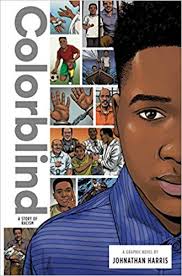
Title: Colorblind
Author: Jonathan Harris
ISBN: 978-1947378124
Publisher: Zuiker Press
Copyright Date: 2019
Genre: Non-fiction
Plot Summary: This is a graphic novel about Jonathan Harris’ life. Jonathan is 15 years old and lives in Long Beach, California. His dad is a probation officer, while his uncle is in prison. Jonathan Harris has experienced racism in his short life. When he was very little, his brothers and himself were roughed up by the police. Due to this treatment, Jonathan became angry that he and his family were treated differently due to the color of their skin. His family taught him about great men and women who were also persecuted. Some of those people were Nelson Mandela and Martin Luther King, Jr. They taught him about these men to show him how you can not be consumed by hate.
Critical Analysis: This critical evaluation will be looking at the characters used by Jonathan Harris in his book, Colorblind. Jonathan uses the character of his uncle to teach us that although some one has made big mistakes, they can still be good people. His uncle is one of those people. The art of this graphic novel also helped to highlight different characters in this book. The police officers who harassed Jonathan and his brothers were illustrated all in black and with mean faces. Versus his family, throughout the book, had kind faces and were illustrated with glowing sun behind them. Another way Jonathan and the illustrators of the book highlighted the negativity of the books was how they drew the kids that said racist comments to Jonathan. On page 45, they show Jonathan on the soccer field with a bunch of kids. Later, they yell racist slurs at him and then they are illustrated as giant trolls. This book is about the important people that raised Jonathan up and the important figures he learned about to overcome his anger.
Reader’s Annotation: Jonathan Harris has experienced racism in his short life. How can he overcome his anger to be a better man?
Reading Level/Interest Age: Grades 8+

Author Biography:
Johnathan Harris is a fifteen-year-old African American from Long Beach, California. He is the youngest of four brothers in a close-knit family. His father is a deputy probation officer, and his mother is a registered nurse. He loves to play competitive soccer, tackle football, and is an ardent fan of rap music, especially Snoop Dogg, Long Beach’s native son. Johnathan hopes that his story about overcoming racism will help others to see multi-culturalism, not color.
https://www.simonandschuster.com/books/Colorblind/Johnathan-Harris/Zuiker-Teen-Topics/9781947378124
Image retrieved from : https://zuikerpress.com/our-books/colorblind/
Book Talking Ideas: Racism
Curriculum Ties: Diversity of Cultures
Challenge Issues: Racism
Reason for Inclusion into Mini-Collection: I chose this title to add to my collection because it is written by a teenager. Zuiker Press is proud to publish stories about important current topics for kids and adolescents, written by their peers, that will help them cope with the challenges they face in today’s troubled world. https://www.simonandschuster.com/books/Colorblind/Johnathan-Harris/Zuiker-Teen-Topics/9781947378124
Defense File:
Responsibility for Selection
Under the general supervision of the Library Director, the Supervising Librarians are responsible for the collection development process. Centralized Collection Development staff is responsible for identifying titles for acquisition. All library staff and members of the public are encouraged to recommend titles for purchase. Those recommendations will be evaluated by Supervising Librarians using the same selection criteria as general purchases. An electronic resources committee recommends resources for purchase. Selection Criteria
All materials, whether purchased or donated, are considered in terms of the criteria listed below. An item need not meet all of these standards in order to be added to the collection: Popular interest, Contemporary significance or permanent value, Currency of information or format, Representation of diverse points of view, Relationship to existing materials in collection, Readability or ability to sustain interest, Appropriateness of subject to the age and/or level of the intended audience, Reputation of the author, publisher, producer, illustrator, or artist, Creative, literary, or technical quality, Physical condition, Accuracy and authentication, Critical assessments in a variety of professional journals and attention in media, Circulation as monitored through the Library’s ILS, Cost and availability, Relationship to materials in other area libraries, Local emphasis, Multiple copies of materials are purchased in response to user demand as evidenced by the number of holds, anticipated popularity, and monitoring of the collection. Philosophy of Selection
In support of its mission, the Library fully endorses the principles documented in the Library Bill of Rights, Freedom to Read and Freedom to View statements of the American Library Association. These three documents can be accessed online through the following links:
http://www.ala.org/advocacy/intfreedom/librarybill
http://www.ala.org/advocacy/intfreedom/statementspols/freedomreadstatement
http://www.ala.org/advocacy/intfreedom/statementspols/freedomviewstatement Retrieved from: https://library.escondido.org/collection-development-policy.aspx Rationale – The rationale to how the materials were selected for this mini-collection is through reviews from School Library Journal as well as goodreads.com. Active Listening Skills – To avoid escalation, staff has been trained in active listening skills including; Neutral and nonjudgmental, Patient (periods of silence are not “filled”), Verbal and nonverbal feedback to show signs of listening (e.g., smiling, eye contact, leaning in, mirroring), Asking questions, Reflecting back what is said, Asking for clarification, and Summarizing. Retrieved from https://www.verywellmind.com/what-is-active-listening-3024343 Reconsideration Request – Library patrons who recommend the review of appropriateness or removal of a particular item in the Library collection may request and submit a Statement of Concern about Library Resources form available from Information Desk staff. The form will be reviewed by the Library Director or designee and staff in relation to the Library’s mission statement and the selection criteria in this Collection Development Policy. An evaluation of review materials submitted by the patron and staff will be made in accordance with the Reconsideration of Library Materials Policy which is listed below and can be viewed on the Library’s website. A response will be made by the Library Director or designee within 21 days of receiving the formal objection. Reconsideration of Library Materials Policy
Recognizing the importance of intellectual freedom, the Escondido Public Library Board of Trustees fully supports the American Library Association’s Library Bill of Rights and the Association’s Freedom to Read and Freedom to View Statements and has adopted them as official library policy. Reading is a private activity, and individuals must examine materials as to suitability for their own purposes and make their own decisions to read or not to read particular items. As part of its mission to provide ready access to the wide diversity of ideas and information, the library strives to collect materials that provide a variety of viewpoints on issues and subjects. It recognizes that some of these may be controversial and that any given item may offend some members of the community. Selection of materials is not made on the basis of anticipated approval or disapproval, but on the basis of the principles and guidelines stated in the Collection Development Policy. Likewise, the library will not eliminate items purchased under due consideration solely because they displease a particular individual or group. Library materials will not be marked or identified to show approval or disapproval of their contents, and no library materials will be sequestered, except to protect it from physical damage or theft. Responsibility for the reading of children rests with their parents or legal guardians. Selection of library materials will not be inhibited by the possibility that books may come into the possession of children, and only parents may restrict access for their own children. Patrons may raise an objection to an item in the library’s collection. If a complaint cannot be resolved informally, after the complainant has talked with a librarian and has seen the Collection Development Policy, the following procedure will be used to consider the opinions of those persons in the community who are not directly involved in the selection process.
- The library’s department heads and administrators will keep on hand and make available the form, Statement of Concern about Library Materials, and will assist the complainant in completing it if requested. All formal objections to library materials must be made on this form.
- The form shall be signed by the complainant and filed with the Library Administration.
- Within two business days of receiving the form, the Library Director or designee shall file it with the Reconsideration Committee for reevaluation of the material in question. The Committee shall recommend disposition to the Library Director or designee within three weeks.
- The challenge material will not be restricted during the reconsideration process.
- The Reconsideration Committee shall be mad up of three of the Library’s department heads, a Library administrator, and a Library trustee
- The Committee will have an initial meeting to:
- Distribute copies of the completed Statement of Concern About Library Materials form to committee members.
- Distribute copies of the challenged material, as available.
- Give the complainant an opportunity to talk about and expand on the form.
- Give the staff member who selected the item an opportunity to respond to the form.
- The Committee will make its recommendation and draft a response for the Library Director who will review it and send it to the complainant.
- If not satisfied with the decision, the complainant may appeal to the Public Library Board of Trustees, which has final authority for library policy and materials. Retrieved from https://library.escondido.org/collection-development-policy.aspx.
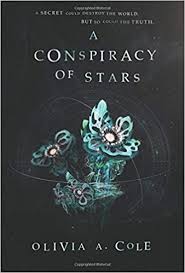
Title: A Conspiracy of Stars
Author: Olivia A. Cole
ISBN: 978-0062644213
Publisher: Katherine Tegen Books
Copyright Date: 2018
Genre: Science Fiction/ Fantasy
Other Books in Series: An Anatomy of Beasts
Plot Summary: A Conspiracy of Stars is a science fiction/ fantasy book that follows a teenager named Octavia. All her life, Octavia has wanted to be a whitecoat like her parents. Now, there has been a change that she can start interning for N’Terra immediately. While very exciting, Octavia notices that she seems to be affected by the animals differently than her fellow classmates. While trying to figure out why, her friends and her have unearthed secrets that the Council may not want them to know. With Rondo, a boy she may like more than a friend, and Alma, her best friend who happens to be a very smart student, Octavia investigates what is going on in both herself and N’Terra. As she investigates, she starts to discover the truth to some of these secrets may be closer to home than she’d like.
Critical Analysis: This critical evaluation will be looking at the characters used by Olivia A. Cole in A Conspiracy of Stars. Octavia is a very relatable character. She is questioning who she thought she was with who she really is. A lot of teenagers go through this in their life. They have believed or been told something their whole life and then get a shock of that not being one hundred percent the truth. She has had a one-track mind of what she wants her future to be, a scientist. Once she starts feeling the animals, she sees that profession is not what she thought it was. She also is a typical sixteen-year-old, in the sense that she experiences her first love and experiences changes in her friendships. The character of Octavia is strong, and she stuck to what she felt was the right thing to do even questioning authority figures. Another character that was strong and followed Octavia was Rondo. He is also smart and dedicated to Octavia to learn the truth no matter the cost. Many of Octavia’s class mates are trying to figure out who they are and have lived with the “truth” that their parents told them. Olivia created these characters to be relatable in that they seem like typical teenagers, although pretty smart teenagers.
Reader’s Annotation: Octavia is on the path to being a scientist, which has always been her dream. But what if that dream is actually a nightmare?
Reading Level/Interest Age: Grades 9+

Author Biography:
Olivia Cole is an author and blogger from Louisville, KY. She is the author of the New Adult series PANTHER IN THE HIVE and a Young Adult series, including books A CONSPIRACY OF STARS (2018) and AN ANATOMY OF BEASTS (2019). Her essays have been published at Bitch Media, Real Simple, the LA Times, HuffPost, Teen Vogue, Gay Mag, and others. Olivia is the creator and curator of the all-women science-fiction themed art show KINDRED. She teaches creative writing at the Kentucky Governor’s School for the Arts. Her book A CONSPIRACY OF STARS has been recognized as a choice for the 2019 LITA-Excellence in Young Adult Science Fiction Notable List and 2019 Bank Street College of Education Best Children’s Books of the Year.
http://www.oliviaacole.com/press-kit-1
Image retrieved from: https://www.goodreads.com/author/show/8119789.Olivia_A_Cole
Book Talking Ideas: Science
Curriculum Ties: N/A
Challenge Issues: Description of indigenous people
Reason for Inclusion into Mini-Collection: I included this title into my collection because it portrays a strong lead character and it is a great science fiction/ fantasy book. “In a time when books are so often drawn into series, this installment leaves you begging for more. A great science fiction/fantasy addition to any library collection.” (School Library Journal)
Defense File:
Responsibility for Selection
Under the general supervision of the Library Director, the Supervising Librarians are responsible for the collection development process. Centralized Collection Development staff is responsible for identifying titles for acquisition. All library staff and members of the public are encouraged to recommend titles for purchase. Those recommendations will be evaluated by Supervising Librarians using the same selection criteria as general purchases. An electronic resources committee recommends resources for purchase. Selection Criteria
All materials, whether purchased or donated, are considered in terms of the criteria listed below. An item need not meet all of these standards in order to be added to the collection: Popular interest, Contemporary significance or permanent value, Currency of information or format, Representation of diverse points of view, Relationship to existing materials in collection, Readability or ability to sustain interest, Appropriateness of subject to the age and/or level of the intended audience, Reputation of the author, publisher, producer, illustrator, or artist, Creative, literary, or technical quality, Physical condition, Accuracy and authentication, Critical assessments in a variety of professional journals and attention in media, Circulation as monitored through the Library’s ILS, Cost and availability, Relationship to materials in other area libraries, Local emphasis, Multiple copies of materials are purchased in response to user demand as evidenced by the number of holds, anticipated popularity, and monitoring of the collection. Philosophy of Selection
In support of its mission, the Library fully endorses the principles documented in the Library Bill of Rights, Freedom to Read and Freedom to View statements of the American Library Association. These three documents can be accessed online through the following links:
http://www.ala.org/advocacy/intfreedom/librarybill
http://www.ala.org/advocacy/intfreedom/statementspols/freedomreadstatement
http://www.ala.org/advocacy/intfreedom/statementspols/freedomviewstatement Retrieved from: https://library.escondido.org/collection-development-policy.aspx Rationale – The rationale to how the materials were selected for this mini-collection is through reviews from School Library Journal as well as goodreads.com. Active Listening Skills – To avoid escalation, staff has been trained in active listening skills including; Neutral and nonjudgmental, Patient (periods of silence are not “filled”), Verbal and nonverbal feedback to show signs of listening (e.g., smiling, eye contact, leaning in, mirroring), Asking questions, Reflecting back what is said, Asking for clarification, and Summarizing. Retrieved from https://www.verywellmind.com/what-is-active-listening-3024343 Reconsideration Request – Library patrons who recommend the review of appropriateness or removal of a particular item in the Library collection may request and submit a Statement of Concern about Library Resources form available from Information Desk staff. The form will be reviewed by the Library Director or designee and staff in relation to the Library’s mission statement and the selection criteria in this Collection Development Policy. An evaluation of review materials submitted by the patron and staff will be made in accordance with the Reconsideration of Library Materials Policy which is listed below and can be viewed on the Library’s website. A response will be made by the Library Director or designee within 21 days of receiving the formal objection. Reconsideration of Library Materials Policy
Recognizing the importance of intellectual freedom, the Escondido Public Library Board of Trustees fully supports the American Library Association’s Library Bill of Rights and the Association’s Freedom to Read and Freedom to View Statements and has adopted them as official library policy. Reading is a private activity, and individuals must examine materials as to suitability for their own purposes and make their own decisions to read or not to read particular items. As part of its mission to provide ready access to the wide diversity of ideas and information, the library strives to collect materials that provide a variety of viewpoints on issues and subjects. It recognizes that some of these may be controversial and that any given item may offend some members of the community. Selection of materials is not made on the basis of anticipated approval or disapproval, but on the basis of the principles and guidelines stated in the Collection Development Policy. Likewise, the library will not eliminate items purchased under due consideration solely because they displease a particular individual or group. Library materials will not be marked or identified to show approval or disapproval of their contents, and no library materials will be sequestered, except to protect it from physical damage or theft. Responsibility for the reading of children rests with their parents or legal guardians. Selection of library materials will not be inhibited by the possibility that books may come into the possession of children, and only parents may restrict access for their own children. Patrons may raise an objection to an item in the library’s collection. If a complaint cannot be resolved informally, after the complainant has talked with a librarian and has seen the Collection Development Policy, the following procedure will be used to consider the opinions of those persons in the community who are not directly involved in the selection process.
- The library’s department heads and administrators will keep on hand and make available the form, Statement of Concern about Library Materials, and will assist the complainant in completing it if requested. All formal objections to library materials must be made on this form.
- The form shall be signed by the complainant and filed with the Library Administration.
- Within two business days of receiving the form, the Library Director or designee shall file it with the Reconsideration Committee for reevaluation of the material in question. The Committee shall recommend disposition to the Library Director or designee within three weeks.
- The challenge material will not be restricted during the reconsideration process.
- The Reconsideration Committee shall be mad up of three of the Library’s department heads, a Library administrator, and a Library trustee
- The Committee will have an initial meeting to:
- Distribute copies of the completed Statement of Concern About Library Materials form to committee members.
- Distribute copies of the challenged material, as available.
- Give the complainant an opportunity to talk about and expand on the form.
- Give the staff member who selected the item an opportunity to respond to the form.
- The Committee will make its recommendation and draft a response for the Library Director who will review it and send it to the complainant.
- If not satisfied with the decision, the complainant may appeal to the Public Library Board of Trustees, which has final authority for library policy and materials. Retrieved from https://library.escondido.org/collection-development-policy.aspx.
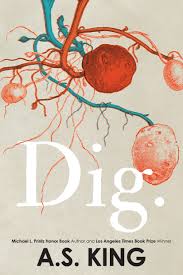
Title: Dig
Author: A. S. King
ISBN: 978-1101994917
Publisher: Dutton Books for Young Readers
Copyright Date: 2019
Genre: Contemporary Fiction
Plot Summary: Dig is about the racism and prejudice of a family and how the next generation has to deal with those consequences. Dig is presented in five different point of views and story lines. All these storylines end up intersecting. Gottfried and Marla Hemmings originally grew up on a potato farm. They had tricked their family into selling the farm and through some manipulation they are now rich. But they have hurt their family time and time again so they basically only have each other. They are greedy and do not share their wealth with their children and their grandchildren. Due to this, their children and grandchildren have all grown up differently and have their own struggles. But in some interesting twists and turns, their grandchildren come back to each other and uncover some shocking truths.
Critical Analysis: This critical evaluation will be looking at the characters used by A.S King in Dig. The entire book is developing these characters and eventually seeing how these characters link up. The Shoveler is a boy who walks around with a shovel talking to someone no else sees. Loretta is the Ring Mistress of a Flea Circus. Malcolm is traveling first class around the world with his dying father. The Freak is abused and neglected by her parents and can’t seem to catch a break. CanIHelpYou? is a fast food worker and a part-time drug dealer. A.S. King has developed these characters into people you sympathize with and want to know how their story works out. She writes in first person for each chapter they are narrating which sounds confusing. But she does it in such a great way, it’s easy to follow. This may be one of the best writers I have ever experienced, in that she can have multiple story lines at the same time, and you can still follow. She can get you to empathize with characters who are majorly flawed. You end up rooting for the part-time drug dealer to get her life together. The characters make this story what it is and that is a testament to A.S. King.
Reader’s Annotation: Estranged cousins must come together to learn the shocking truth of their family name.
Reading Level/Interest Age: Grades 9+

Author Biography:
A.S. King has been called “One of the best Y.A. writers working today” by the New York Times Book Review. King is the author of highly-acclaimed novels including her 2019 release DIG, 2016’s Still Life with Tornado, 2015’s surrealist I Crawl Through It, Glory O’Brien’s History of the Future, Reality Boy, the 2012 Los Angeles Times Book Prize winner Ask the Passengers, Everybody Sees the Ants, 2011 Michael L. Printz Honor Book Please Ignore Vera Dietz among others. She also writes Middle Grade fiction as Amy Sarig King. She is a faculty member of the Writing for Children and Young Adults MFA program at Vermont College of Fine Arts and spends many months of the year traveling the country speaking to high school and university students, educators, and humans who care about the mental health of young people. After more than a decade living self-sufficiently and teaching literacy to adults in Ireland, she now lives in Pennsylvania.
Book Talking Ideas: Racism and Prejudice
Curriculum Ties: N/A
Challenge Issues: Racism, Abuse, Sex, Language
Reason for Inclusion into Mini-Collection: I included this title to my collection because it addressed racism and prejudice but also gave some optimism in how our future generations will handle this issue.
Defense File:
Responsibility for Selection
Under the general supervision of the Library Director, the Supervising Librarians are responsible for the collection development process. Centralized Collection Development staff is responsible for identifying titles for acquisition. All library staff and members of the public are encouraged to recommend titles for purchase. Those recommendations will be evaluated by Supervising Librarians using the same selection criteria as general purchases. An electronic resources committee recommends resources for purchase. Selection Criteria
All materials, whether purchased or donated, are considered in terms of the criteria listed below. An item need not meet all of these standards in order to be added to the collection: Popular interest, Contemporary significance or permanent value, Currency of information or format, Representation of diverse points of view, Relationship to existing materials in collection, Readability or ability to sustain interest, Appropriateness of subject to the age and/or level of the intended audience, Reputation of the author, publisher, producer, illustrator, or artist, Creative, literary, or technical quality, Physical condition, Accuracy and authentication, Critical assessments in a variety of professional journals and attention in media, Circulation as monitored through the Library’s ILS, Cost and availability, Relationship to materials in other area libraries, Local emphasis, Multiple copies of materials are purchased in response to user demand as evidenced by the number of holds, anticipated popularity, and monitoring of the collection. Philosophy of Selection
In support of its mission, the Library fully endorses the principles documented in the Library Bill of Rights, Freedom to Read and Freedom to View statements of the American Library Association. These three documents can be accessed online through the following links:
http://www.ala.org/advocacy/intfreedom/librarybill
http://www.ala.org/advocacy/intfreedom/statementspols/freedomreadstatement
http://www.ala.org/advocacy/intfreedom/statementspols/freedomviewstatement Retrieved from: https://library.escondido.org/collection-development-policy.aspx Rationale – The rationale to how the materials were selected for this mini-collection is through reviews from School Library Journal as well as goodreads.com. Active Listening Skills – To avoid escalation, staff has been trained in active listening skills including; Neutral and nonjudgmental, Patient (periods of silence are not “filled”), Verbal and nonverbal feedback to show signs of listening (e.g., smiling, eye contact, leaning in, mirroring), Asking questions, Reflecting back what is said, Asking for clarification, and Summarizing. Retrieved from https://www.verywellmind.com/what-is-active-listening-3024343 Reconsideration Request – Library patrons who recommend the review of appropriateness or removal of a particular item in the Library collection may request and submit a Statement of Concern about Library Resources form available from Information Desk staff. The form will be reviewed by the Library Director or designee and staff in relation to the Library’s mission statement and the selection criteria in this Collection Development Policy. An evaluation of review materials submitted by the patron and staff will be made in accordance with the Reconsideration of Library Materials Policy which is listed below and can be viewed on the Library’s website. A response will be made by the Library Director or designee within 21 days of receiving the formal objection. Reconsideration of Library Materials Policy
Recognizing the importance of intellectual freedom, the Escondido Public Library Board of Trustees fully supports the American Library Association’s Library Bill of Rights and the Association’s Freedom to Read and Freedom to View Statements and has adopted them as official library policy. Reading is a private activity, and individuals must examine materials as to suitability for their own purposes and make their own decisions to read or not to read particular items. As part of its mission to provide ready access to the wide diversity of ideas and information, the library strives to collect materials that provide a variety of viewpoints on issues and subjects. It recognizes that some of these may be controversial and that any given item may offend some members of the community. Selection of materials is not made on the basis of anticipated approval or disapproval, but on the basis of the principles and guidelines stated in the Collection Development Policy. Likewise, the library will not eliminate items purchased under due consideration solely because they displease a particular individual or group. Library materials will not be marked or identified to show approval or disapproval of their contents, and no library materials will be sequestered, except to protect it from physical damage or theft. Responsibility for the reading of children rests with their parents or legal guardians. Selection of library materials will not be inhibited by the possibility that books may come into the possession of children, and only parents may restrict access for their own children. Patrons may raise an objection to an item in the library’s collection. If a complaint cannot be resolved informally, after the complainant has talked with a librarian and has seen the Collection Development Policy, the following procedure will be used to consider the opinions of those persons in the community who are not directly involved in the selection process.
- The library’s department heads and administrators will keep on hand and make available the form, Statement of Concern about Library Materials, and will assist the complainant in completing it if requested. All formal objections to library materials must be made on this form.
- The form shall be signed by the complainant and filed with the Library Administration.
- Within two business days of receiving the form, the Library Director or designee shall file it with the Reconsideration Committee for reevaluation of the material in question. The Committee shall recommend disposition to the Library Director or designee within three weeks.
- The challenge material will not be restricted during the reconsideration process.
- The Reconsideration Committee shall be mad up of three of the Library’s department heads, a Library administrator, and a Library trustee
- The Committee will have an initial meeting to:
- Distribute copies of the completed Statement of Concern About Library Materials form to committee members.
- Distribute copies of the challenged material, as available.
- Give the complainant an opportunity to talk about and expand on the form.
- Give the staff member who selected the item an opportunity to respond to the form.
- The Committee will make its recommendation and draft a response for the Library Director who will review it and send it to the complainant.
- If not satisfied with the decision, the complainant may appeal to the Public Library Board of Trustees, which has final authority for library policy and materials. Retrieved from https://library.escondido.org/collection-development-policy.aspx.

Title: Divergent
Author: Veronica Roth
ISBN: 978-0062024022
Publisher: Katherine Tegen Books
Copyright Date: 2011
Genre: Science Fiction
Other Books in Series: Insurgent, Allegiant
Plot Summary: In a dystopian world, everyone is segmented into five different areas. When you are sixteen years old, you are placed into one of those areas. There is the Candor, which are the honest, the Abnegation, which are the selfless, the Dauntless, which are the brave, the Amity, which are the peaceful, and the Erudite, which are the intelligent. When it is Beatrice’s time to see which area she falls into, her results show she fits in multiple areas. She decides to join the Dauntless. The training to become a Dauntless is very violent and tough. But she is surprisingly up for the challenge. One of the instructors named Four challenges her and helps her during her journey. As she learns more about being a Dauntless, Four and her become closer.
Critical Analysis: This critical evaluation will be looking at the characters used by Veronica Roth in Divergent. Beatrice (Tris) Prior is the main character. She at first seems timid but as she learns more about being a Dauntless, she becomes tougher and learns she can trust herself. Veronica writes Beatrice’s character to be extremely brave. As Beatrice says, “I am proud. It will get me into trouble someday, but today it makes me brave. I walk toward the ledge and hear snickers behind me” (p. 66). One of her defining moments is being the first jumper. This shows how brave Beatrice is. We don’t see that too much in the beginning of the book because she doesn’t need to be brave. But once she enters the world of the Dauntless, she has to push herself to be unafraid. The other characters that are Dauntless don’t seem to struggle like Beatrice does. But that is explained by that Beatrice is more than just Dauntless. It reflects who she is when compared to the other members of her group.
Reader’s Annotation: Beatrice must find out where she belongs but once she has chosen a side, will it be the right one?
Reading Level/Interest Age: Grades 9+

Author Biography:
Veronica Roth is the #1 New York Times bestselling author of the Divergent Series (Divergent, Insurgent, Allegiant, and Four: A Divergent Collection) and the Carve the Mark series (Carve the Mark, The Fates Divide). Her short stories and essays have appeared in the anthologies Summer Days and Summer Nights, Shards and Ashes, and Three Sides of a Heart. The Divergent Series was developed into three major motion pictures. Veronica grew up outside of Chicago and graduated from Northwestern University. She now lives in Chicago proper with her husband and dog and writes full-time.
Book Talking Ideas: Belonging
Curriculum Ties: N/A
Challenge Issues: Violence
Reason for Inclusion into Mini-Collection: I added Divergent to my collection because a main component to the book is figuring out where you belong. It won the senior category of the 2014 Young Reader’s Choice Award and was number one in YALSA’s Teen’s Top Ten Vote.
Defense File:
Responsibility for Selection
Under the general supervision of the Library Director, the Supervising Librarians are responsible for the collection development process. Centralized Collection Development staff is responsible for identifying titles for acquisition. All library staff and members of the public are encouraged to recommend titles for purchase. Those recommendations will be evaluated by Supervising Librarians using the same selection criteria as general purchases. An electronic resources committee recommends resources for purchase. Selection Criteria
All materials, whether purchased or donated, are considered in terms of the criteria listed below. An item need not meet all of these standards in order to be added to the collection: Popular interest, Contemporary significance or permanent value, Currency of information or format, Representation of diverse points of view, Relationship to existing materials in collection, Readability or ability to sustain interest, Appropriateness of subject to the age and/or level of the intended audience, Reputation of the author, publisher, producer, illustrator, or artist, Creative, literary, or technical quality, Physical condition, Accuracy and authentication, Critical assessments in a variety of professional journals and attention in media, Circulation as monitored through the Library’s ILS, Cost and availability, Relationship to materials in other area libraries, Local emphasis, Multiple copies of materials are purchased in response to user demand as evidenced by the number of holds, anticipated popularity, and monitoring of the collection. Philosophy of Selection
In support of its mission, the Library fully endorses the principles documented in the Library Bill of Rights, Freedom to Read and Freedom to View statements of the American Library Association. These three documents can be accessed online through the following links:
http://www.ala.org/advocacy/intfreedom/librarybill
http://www.ala.org/advocacy/intfreedom/statementspols/freedomreadstatement
http://www.ala.org/advocacy/intfreedom/statementspols/freedomviewstatement Retrieved from: https://library.escondido.org/collection-development-policy.aspx Rationale – The rationale to how the materials were selected for this mini-collection is through reviews from School Library Journal as well as goodreads.com. Active Listening Skills – To avoid escalation, staff has been trained in active listening skills including; Neutral and nonjudgmental, Patient (periods of silence are not “filled”), Verbal and nonverbal feedback to show signs of listening (e.g., smiling, eye contact, leaning in, mirroring), Asking questions, Reflecting back what is said, Asking for clarification, and Summarizing. Retrieved from https://www.verywellmind.com/what-is-active-listening-3024343 Reconsideration Request – Library patrons who recommend the review of appropriateness or removal of a particular item in the Library collection may request and submit a Statement of Concern about Library Resources form available from Information Desk staff. The form will be reviewed by the Library Director or designee and staff in relation to the Library’s mission statement and the selection criteria in this Collection Development Policy. An evaluation of review materials submitted by the patron and staff will be made in accordance with the Reconsideration of Library Materials Policy which is listed below and can be viewed on the Library’s website. A response will be made by the Library Director or designee within 21 days of receiving the formal objection. Reconsideration of Library Materials Policy
Recognizing the importance of intellectual freedom, the Escondido Public Library Board of Trustees fully supports the American Library Association’s Library Bill of Rights and the Association’s Freedom to Read and Freedom to View Statements and has adopted them as official library policy. Reading is a private activity, and individuals must examine materials as to suitability for their own purposes and make their own decisions to read or not to read particular items. As part of its mission to provide ready access to the wide diversity of ideas and information, the library strives to collect materials that provide a variety of viewpoints on issues and subjects. It recognizes that some of these may be controversial and that any given item may offend some members of the community. Selection of materials is not made on the basis of anticipated approval or disapproval, but on the basis of the principles and guidelines stated in the Collection Development Policy. Likewise, the library will not eliminate items purchased under due consideration solely because they displease a particular individual or group. Library materials will not be marked or identified to show approval or disapproval of their contents, and no library materials will be sequestered, except to protect it from physical damage or theft. Responsibility for the reading of children rests with their parents or legal guardians. Selection of library materials will not be inhibited by the possibility that books may come into the possession of children, and only parents may restrict access for their own children. Patrons may raise an objection to an item in the library’s collection. If a complaint cannot be resolved informally, after the complainant has talked with a librarian and has seen the Collection Development Policy, the following procedure will be used to consider the opinions of those persons in the community who are not directly involved in the selection process.
- The library’s department heads and administrators will keep on hand and make available the form, Statement of Concern about Library Materials, and will assist the complainant in completing it if requested. All formal objections to library materials must be made on this form.
- The form shall be signed by the complainant and filed with the Library Administration.
- Within two business days of receiving the form, the Library Director or designee shall file it with the Reconsideration Committee for reevaluation of the material in question. The Committee shall recommend disposition to the Library Director or designee within three weeks.
- The challenge material will not be restricted during the reconsideration process.
- The Reconsideration Committee shall be mad up of three of the Library’s department heads, a Library administrator, and a Library trustee
- The Committee will have an initial meeting to:
- Distribute copies of the completed Statement of Concern About Library Materials form to committee members.
- Distribute copies of the challenged material, as available.
- Give the complainant an opportunity to talk about and expand on the form.
- Give the staff member who selected the item an opportunity to respond to the form.
- The Committee will make its recommendation and draft a response for the Library Director who will review it and send it to the complainant.
- If not satisfied with the decision, the complainant may appeal to the Public Library Board of Trustees, which has final authority for library policy and materials. Retrieved from https://library.escondido.org/collection-development-policy.aspx.
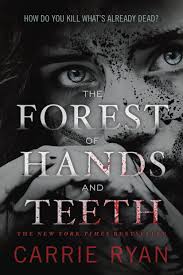
Title: The Forest of Hands and Teeth
Author: Carrie Ryan
ISBN: 978-0385736824
Publisher: Ember
Copyright Date: 2010
Genre: Horror
Plot Summary: The Forest of Hands and Teeth is about a teenager named Mary. She lives in a post-apocalyptic world where she and her village live within a fence. The fence is to keep the Unconsecrated, or undead zombies, away from the living. While, Mary is at the river with a friend, Harry, her mother has been bitten by one of the Unconsecrated. Her mother decides to join her husband, one of the Unconsecrated, leaving Mary on her own. Mary’s world is ruled by tradition and unless she marries Harry, she will be sent to the Sisterhood, somewhat of a nunnery. When their village is overrun by the Unconsecrated, Mary, her brother, and their friends must leave the village. Once they have left the village, they must figure out where to go and how to avoid the Unconsecrated.
Critical Analysis: This critical evaluation will be looking at the themes used by Carrie Ryan in The Forest of Hands and Teeth. Carrie Ryan’s The Forest of Hands and Teeth contains many themes. The theme I will be discussing is hope. Many of the characters displayed hope even in the face of despair and loss. That is why I enjoyed the book the most, it gives hope when there seems to be none. The first one to provide hope in the complex life they were living in is Mary’s mother. She gives Mary hope by telling her stories about the ocean. These stories give Mary an image of “A world without the Unconsecrated, a world without the Forest of Hands and Teeth” (p. 2). A different world where she could live in peace. Mary is another character with hope and a character that shares that hope with her friends. She shares the stories of her mother to inspire the group to travel with her and see if the ocean is real. When Mary discovers the outsider, Gabrielle, that renews Mary’s hope and drive to leave the village. All the characters have different view of what they want their lives to be and hope that there is a way to get there. It was interesting to read about different characters who are in the same position but their ideas of hope and what they hoped for were very different.
Reader’s Annotation: When Mary and her friends leave the village they grew up in, they must do what they can to avoid the Unconsecrated and figure out how to stay alive.
Reading Level/Interest Age: Grades 9+

Author Biography:
Carrie Ryan is the New York Times bestselling author of the Forest of Hands and Teeth series, the Map to Everywhere series (written with her husband, John Parke Davis), Daughter of Deep Silence, Infinity Ring: Divide and Conquer, and Dead Air (written with Gwenda Bond and Rachel Caine), as well as the editor of Foretold: 14 Tales of Prophecy and Prediction. Her books have sold in over 22 territories, and her first book is in development as a major motion picture. A former litigator, Carrie now lives in Charlotte, NC with her husband and various pets.
Book Talking Ideas: Zombie Survival Skills
Curriculum Ties: N/A
Challenge Issues: Violence
Reason for Inclusion into Mini-Collection: I included The Forest of Hands and Teeth in my collection because it is a well-written zombie book. It was a New York Times Best Seller, ALA Best Books For Young Adults, and a YALSA Popular Paperbacks for Young Adults.
Defense File:
Responsibility for Selection
Under the general supervision of the Library Director, the Supervising Librarians are responsible for the collection development process. Centralized Collection Development staff is responsible for identifying titles for acquisition. All library staff and members of the public are encouraged to recommend titles for purchase. Those recommendations will be evaluated by Supervising Librarians using the same selection criteria as general purchases. An electronic resources committee recommends resources for purchase. Selection Criteria
All materials, whether purchased or donated, are considered in terms of the criteria listed below. An item need not meet all of these standards in order to be added to the collection: Popular interest, Contemporary significance or permanent value, Currency of information or format, Representation of diverse points of view, Relationship to existing materials in collection, Readability or ability to sustain interest, Appropriateness of subject to the age and/or level of the intended audience, Reputation of the author, publisher, producer, illustrator, or artist, Creative, literary, or technical quality, Physical condition, Accuracy and authentication, Critical assessments in a variety of professional journals and attention in media, Circulation as monitored through the Library’s ILS, Cost and availability, Relationship to materials in other area libraries, Local emphasis, Multiple copies of materials are purchased in response to user demand as evidenced by the number of holds, anticipated popularity, and monitoring of the collection. Philosophy of Selection
In support of its mission, the Library fully endorses the principles documented in the Library Bill of Rights, Freedom to Read and Freedom to View statements of the American Library Association. These three documents can be accessed online through the following links:
http://www.ala.org/advocacy/intfreedom/librarybill
http://www.ala.org/advocacy/intfreedom/statementspols/freedomreadstatement
http://www.ala.org/advocacy/intfreedom/statementspols/freedomviewstatement Retrieved from: https://library.escondido.org/collection-development-policy.aspx Rationale – The rationale to how the materials were selected for this mini-collection is through reviews from School Library Journal as well as goodreads.com. Active Listening Skills – To avoid escalation, staff has been trained in active listening skills including; Neutral and nonjudgmental, Patient (periods of silence are not “filled”), Verbal and nonverbal feedback to show signs of listening (e.g., smiling, eye contact, leaning in, mirroring), Asking questions, Reflecting back what is said, Asking for clarification, and Summarizing. Retrieved from https://www.verywellmind.com/what-is-active-listening-3024343 Reconsideration Request – Library patrons who recommend the review of appropriateness or removal of a particular item in the Library collection may request and submit a Statement of Concern about Library Resources form available from Information Desk staff. The form will be reviewed by the Library Director or designee and staff in relation to the Library’s mission statement and the selection criteria in this Collection Development Policy. An evaluation of review materials submitted by the patron and staff will be made in accordance with the Reconsideration of Library Materials Policy which is listed below and can be viewed on the Library’s website. A response will be made by the Library Director or designee within 21 days of receiving the formal objection. Reconsideration of Library Materials Policy
Recognizing the importance of intellectual freedom, the Escondido Public Library Board of Trustees fully supports the American Library Association’s Library Bill of Rights and the Association’s Freedom to Read and Freedom to View Statements and has adopted them as official library policy. Reading is a private activity, and individuals must examine materials as to suitability for their own purposes and make their own decisions to read or not to read particular items. As part of its mission to provide ready access to the wide diversity of ideas and information, the library strives to collect materials that provide a variety of viewpoints on issues and subjects. It recognizes that some of these may be controversial and that any given item may offend some members of the community. Selection of materials is not made on the basis of anticipated approval or disapproval, but on the basis of the principles and guidelines stated in the Collection Development Policy. Likewise, the library will not eliminate items purchased under due consideration solely because they displease a particular individual or group. Library materials will not be marked or identified to show approval or disapproval of their contents, and no library materials will be sequestered, except to protect it from physical damage or theft. Responsibility for the reading of children rests with their parents or legal guardians. Selection of library materials will not be inhibited by the possibility that books may come into the possession of children, and only parents may restrict access for their own children. Patrons may raise an objection to an item in the library’s collection. If a complaint cannot be resolved informally, after the complainant has talked with a librarian and has seen the Collection Development Policy, the following procedure will be used to consider the opinions of those persons in the community who are not directly involved in the selection process.
- The library’s department heads and administrators will keep on hand and make available the form, Statement of Concern about Library Materials, and will assist the complainant in completing it if requested. All formal objections to library materials must be made on this form.
- The form shall be signed by the complainant and filed with the Library Administration.
- Within two business days of receiving the form, the Library Director or designee shall file it with the Reconsideration Committee for reevaluation of the material in question. The Committee shall recommend disposition to the Library Director or designee within three weeks.
- The challenge material will not be restricted during the reconsideration process.
- The Reconsideration Committee shall be mad up of three of the Library’s department heads, a Library administrator, and a Library trustee
- The Committee will have an initial meeting to:
- Distribute copies of the completed Statement of Concern About Library Materials form to committee members.
- Distribute copies of the challenged material, as available.
- Give the complainant an opportunity to talk about and expand on the form.
- Give the staff member who selected the item an opportunity to respond to the form.
- The Committee will make its recommendation and draft a response for the Library Director who will review it and send it to the complainant.
- If not satisfied with the decision, the complainant may appeal to the Public Library Board of Trustees, which has final authority for library policy and materials. Retrieved from https://library.escondido.org/collection-development-policy.aspx.
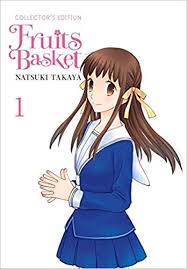
Title: Fruits Basket
Author: Natsuki Takaya
ISBN: 978-0316360166
Publisher: Yen Press
Copyright Date: 2016
Genre: Fantasy Manga
Plot Summary:
Tohru Honda lives in a tent in the forest. She is an orphan that had been living with her grandfather but due to a house remodel, she could not stay with him for a while. Two cousins, Yuki Soma and Shigure, find out she is living in the woods and offer for her to stay with them while the house is being repaired. Shortly, Tohru meets another cousin of the boys, Kyo, who has a quick temper. While Tohru is living with them, she finds out a big secret. The cousins all suffer from an ancient curse that turns them into different animals of the Chinese zodiac. They turn into these animals when they are either hurt or touched my someone from the opposite sex. Tohru promises to keep their secret and also attempts to figure out how to break this curse.
Critical Analysis: This critical evaluation will be looking at the themes used by Natsuki Takaya in her book, Fruits Basket. Natsuki has a few different themes through her manga. One theme is friendship. The Fruits Basket series is known to be very light-hearted series. Friendship is displayed in the series through Tohru’s character. She is very open and friendly to everyone, even Kyo, who comes off hostile and aggressive. Even after she finds out the cousins’ secret, she is nonjudgmental. She accidentally tripped and fell into Kyo, who turned into a cat. Instead of being frightened, she says “I hit him so hard, he became a cat? Is it my fault, because I bumped into him?” (p. 56). Tohru assumes it was her fault when something happened, not wanting to blame someone else. Even though the cousins don’t treat her kindly, at all times, she is more than happy to help them and wants to be their friend.
Reader’s Annotation: An orphan girl learns her new friends have a family curse and wants to help them in anyway she can.
Reading Level/Interest Age: Grades 8+

Author Biography:
Natsuki Takaya (高屋 奈月 Takaya Natsuki, real name Naka Hatake) is the penname of a Japanese manga artist best-known for creating the series Fruits Basket. She was born on July 7, 1973; (Tanabata). Takaya is left-handed and once revealed that she wanted to be a mangaka since first grade, when her sister started drawing. She was born in Shizuoka, Japan, but was raised in Tokyo, where she made her debut in 1992. She enjoys video games such as the Final Fantasy series or Sakura Wars, or working on her different manga series, such as Fruits Basket, which is the second best-selling shōjo manga ever in Japan, and the top selling shōjo manga in North America. Fruits Basket has also been adapted into a twenty-six-episode anime series. In 2001, Takaya received a Kodansha Manga Award for shōjo manga for Fruits Basket. According to Takaya (in a sidebar of a Fruits Basket manga volume), she enjoys drawing girls (girly ones) more than she does boys. Takaya also enjoys electronics and music, but dislikes talking about herself. Also revealed in a sidebar of Fruits Basket, Takaya broke her drawing arm (left) after Fruits Basket volume six was published. She had to go into surgery, and as a result, had put Fruits Basket on a brief hiatus. Takaya made a full recovery, but complains that her handwriting had gotten uglier, due to the surgery. During her hospital stay, she gained an interest in baseball.
https://www.goodreads.com/author/show/26306.Natsuki_Takaya
Image retrieved from: https://www.imdb.com/name/nm1229042/
Book Talking Ideas: Folklore
Curriculum Ties: Diversity of Cultures
Challenge Issues: Language, Violence
Reason for Inclusion into Mini-Collection: I included Fruits Basket in my collection because it is an extremely popular manga series. It won the 2001 Kodansha Manga Award in the shojo manga category and it also won the Best Manga award at the 2007 American Anime Awards.
Defense File:
Responsibility for Selection
Under the general supervision of the Library Director, the Supervising Librarians are responsible for the collection development process. Centralized Collection Development staff is responsible for identifying titles for acquisition. All library staff and members of the public are encouraged to recommend titles for purchase. Those recommendations will be evaluated by Supervising Librarians using the same selection criteria as general purchases. An electronic resources committee recommends resources for purchase. Selection Criteria
All materials, whether purchased or donated, are considered in terms of the criteria listed below. An item need not meet all of these standards in order to be added to the collection: Popular interest, Contemporary significance or permanent value, Currency of information or format, Representation of diverse points of view, Relationship to existing materials in collection, Readability or ability to sustain interest, Appropriateness of subject to the age and/or level of the intended audience, Reputation of the author, publisher, producer, illustrator, or artist, Creative, literary, or technical quality, Physical condition, Accuracy and authentication, Critical assessments in a variety of professional journals and attention in media, Circulation as monitored through the Library’s ILS, Cost and availability, Relationship to materials in other area libraries, Local emphasis, Multiple copies of materials are purchased in response to user demand as evidenced by the number of holds, anticipated popularity, and monitoring of the collection. Philosophy of Selection
In support of its mission, the Library fully endorses the principles documented in the Library Bill of Rights, Freedom to Read and Freedom to View statements of the American Library Association. These three documents can be accessed online through the following links:
http://www.ala.org/advocacy/intfreedom/librarybill
http://www.ala.org/advocacy/intfreedom/statementspols/freedomreadstatement
http://www.ala.org/advocacy/intfreedom/statementspols/freedomviewstatement Retrieved from: https://library.escondido.org/collection-development-policy.aspx Rationale – The rationale to how the materials were selected for this mini-collection is through reviews from School Library Journal as well as goodreads.com. Active Listening Skills – To avoid escalation, staff has been trained in active listening skills including; Neutral and nonjudgmental, Patient (periods of silence are not “filled”), Verbal and nonverbal feedback to show signs of listening (e.g., smiling, eye contact, leaning in, mirroring), Asking questions, Reflecting back what is said, Asking for clarification, and Summarizing. Retrieved from https://www.verywellmind.com/what-is-active-listening-3024343 Reconsideration Request – Library patrons who recommend the review of appropriateness or removal of a particular item in the Library collection may request and submit a Statement of Concern about Library Resources form available from Information Desk staff. The form will be reviewed by the Library Director or designee and staff in relation to the Library’s mission statement and the selection criteria in this Collection Development Policy. An evaluation of review materials submitted by the patron and staff will be made in accordance with the Reconsideration of Library Materials Policy which is listed below and can be viewed on the Library’s website. A response will be made by the Library Director or designee within 21 days of receiving the formal objection. Reconsideration of Library Materials Policy
Recognizing the importance of intellectual freedom, the Escondido Public Library Board of Trustees fully supports the American Library Association’s Library Bill of Rights and the Association’s Freedom to Read and Freedom to View Statements and has adopted them as official library policy. Reading is a private activity, and individuals must examine materials as to suitability for their own purposes and make their own decisions to read or not to read particular items. As part of its mission to provide ready access to the wide diversity of ideas and information, the library strives to collect materials that provide a variety of viewpoints on issues and subjects. It recognizes that some of these may be controversial and that any given item may offend some members of the community. Selection of materials is not made on the basis of anticipated approval or disapproval, but on the basis of the principles and guidelines stated in the Collection Development Policy. Likewise, the library will not eliminate items purchased under due consideration solely because they displease a particular individual or group. Library materials will not be marked or identified to show approval or disapproval of their contents, and no library materials will be sequestered, except to protect it from physical damage or theft. Responsibility for the reading of children rests with their parents or legal guardians. Selection of library materials will not be inhibited by the possibility that books may come into the possession of children, and only parents may restrict access for their own children. Patrons may raise an objection to an item in the library’s collection. If a complaint cannot be resolved informally, after the complainant has talked with a librarian and has seen the Collection Development Policy, the following procedure will be used to consider the opinions of those persons in the community who are not directly involved in the selection process.
- The library’s department heads and administrators will keep on hand and make available the form, Statement of Concern about Library Materials, and will assist the complainant in completing it if requested. All formal objections to library materials must be made on this form.
- The form shall be signed by the complainant and filed with the Library Administration.
- Within two business days of receiving the form, the Library Director or designee shall file it with the Reconsideration Committee for reevaluation of the material in question. The Committee shall recommend disposition to the Library Director or designee within three weeks.
- The challenge material will not be restricted during the reconsideration process.
- The Reconsideration Committee shall be mad up of three of the Library’s department heads, a Library administrator, and a Library trustee
- The Committee will have an initial meeting to:
- Distribute copies of the completed Statement of Concern About Library Materials form to committee members.
- Distribute copies of the challenged material, as available.
- Give the complainant an opportunity to talk about and expand on the form.
- Give the staff member who selected the item an opportunity to respond to the form.
- The Committee will make its recommendation and draft a response for the Library Director who will review it and send it to the complainant.
- If not satisfied with the decision, the complainant may appeal to the Public Library Board of Trustees, which has final authority for library policy and materials. Retrieved from https://library.escondido.org/collection-development-policy.aspx.
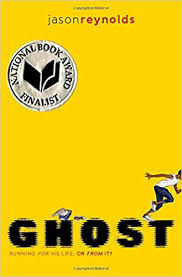
Title: Ghost
Author: Jason Reynolds
ISBN:
Publisher:
Copyright Date:
Genre:
Other Books in Series: Patina, Sunny, Lu
Plot Summary: Ghost, or Castle Cranshaw) is a teenage boy who has lived in some tough times. All he cares about is playing basketball. In a drunken episode his father tried to kill both him and his mother, so they had to take off. They have been living at Mr. Charles’ shop since. One day he sees the track team practicing and he thinks he is as fast as them. So, he asks the track coach for a shot. Turns out, Ghost is really fast. He is able to beat one of the fastest runners on the team. So, the coach gives him a shot to join the team since he sees how much talent Ghost has. But Ghost has to deal with a lot of things in order to be successful. Mostly, he needs to figure out why he is so angry all the time and learn how to process that anger.
Critical Analysis: This critical evaluation will be looking at the themes used by Jason Reynolds in his book, Ghost. The themes Jason focuses on in this book are fear and overcoming fear. Jason writes in a relatable way for young adults. One way is by making you relate to Ghost. After he has an altercation with Brandon, the bully, Jason explains what is going on in Ghost’s head. “The third, fourth, and fifth minute of the seventeenth hour were the altercation minutes. But the sixth was the longest minute of them all-the embarrassing walk to the principal’s office” (p. 37). Ghost is angry, but that anger is really fear. He is afraid of what the team will think about him if he tells them the truth about his father and that his own father almost killed him. Ghost overcomes this fear by finally telling his team about his background. When they don’t shun him away, he realizes he can count on his team.
Reader’s Annotation: Ghost is a naturally gifted runner but can he reign in his anger to be part of a team?
Reading Level/Interest Age: Grades 8+

Author Biography:
Jason Reynolds is a New York Times bestselling author, a Newbery Award Honoree, a Printz Award Honoree, National Book Award Honoree, a Kirkus Award winner, a two-time Walter Dean Myers Award winner, an NAACP Image Award Winner, and the recipient of multiple Coretta Scott King honors. The American Booksellers Association’s 2017 and 2018 spokesperson for Indies First, his many books include When I Was the Greatest, Boy in the Black Suit, All American Boys (cowritten with Brendan Kiely), As Brave as You, For Every One, the Track series (Ghost, Patina, Sunny, and Lu), and Long Way Down, which received both a Newbery Honor and a Printz Honor. He lives in Washington, DC. You can find his ramblings at JasonWritesBooks.com.
https://www.simonandschuster.com/authors/Jason-Reynolds/403685768
Book Talking Ideas: How to overcome your fear
Curriculum Ties: Diversity of Cultures
Challenge Issues: Language
Reason for Inclusion into Mini-Collection: I really enjoyed the first book to Jason Reynolds’ Track series, Ghost. He has been nominated for quite a few awards for this book including; the Odyssey Award in 2017, the Dorothy Canfield Fisher Children’s Book Award in 2018 and was a National Book Award finalist for Young People’s Literature.
Defense File:
Responsibility for Selection
Under the general supervision of the Library Director, the Supervising Librarians are responsible for the collection development process. Centralized Collection Development staff is responsible for identifying titles for acquisition. All library staff and members of the public are encouraged to recommend titles for purchase. Those recommendations will be evaluated by Supervising Librarians using the same selection criteria as general purchases. An electronic resources committee recommends resources for purchase. Selection Criteria
All materials, whether purchased or donated, are considered in terms of the criteria listed below. An item need not meet all of these standards in order to be added to the collection: Popular interest, Contemporary significance or permanent value, Currency of information or format, Representation of diverse points of view, Relationship to existing materials in collection, Readability or ability to sustain interest, Appropriateness of subject to the age and/or level of the intended audience, Reputation of the author, publisher, producer, illustrator, or artist, Creative, literary, or technical quality, Physical condition, Accuracy and authentication, Critical assessments in a variety of professional journals and attention in media, Circulation as monitored through the Library’s ILS, Cost and availability, Relationship to materials in other area libraries, Local emphasis, Multiple copies of materials are purchased in response to user demand as evidenced by the number of holds, anticipated popularity, and monitoring of the collection. Philosophy of Selection
In support of its mission, the Library fully endorses the principles documented in the Library Bill of Rights, Freedom to Read and Freedom to View statements of the American Library Association. These three documents can be accessed online through the following links:
http://www.ala.org/advocacy/intfreedom/librarybill
http://www.ala.org/advocacy/intfreedom/statementspols/freedomreadstatement
http://www.ala.org/advocacy/intfreedom/statementspols/freedomviewstatement Retrieved from: https://library.escondido.org/collection-development-policy.aspx Rationale – The rationale to how the materials were selected for this mini-collection is through reviews from School Library Journal as well as goodreads.com. Active Listening Skills – To avoid escalation, staff has been trained in active listening skills including; Neutral and nonjudgmental, Patient (periods of silence are not “filled”), Verbal and nonverbal feedback to show signs of listening (e.g., smiling, eye contact, leaning in, mirroring), Asking questions, Reflecting back what is said, Asking for clarification, and Summarizing. Retrieved from https://www.verywellmind.com/what-is-active-listening-3024343 Reconsideration Request – Library patrons who recommend the review of appropriateness or removal of a particular item in the Library collection may request and submit a Statement of Concern about Library Resources form available from Information Desk staff. The form will be reviewed by the Library Director or designee and staff in relation to the Library’s mission statement and the selection criteria in this Collection Development Policy. An evaluation of review materials submitted by the patron and staff will be made in accordance with the Reconsideration of Library Materials Policy which is listed below and can be viewed on the Library’s website. A response will be made by the Library Director or designee within 21 days of receiving the formal objection. Reconsideration of Library Materials Policy
Recognizing the importance of intellectual freedom, the Escondido Public Library Board of Trustees fully supports the American Library Association’s Library Bill of Rights and the Association’s Freedom to Read and Freedom to View Statements and has adopted them as official library policy. Reading is a private activity, and individuals must examine materials as to suitability for their own purposes and make their own decisions to read or not to read particular items. As part of its mission to provide ready access to the wide diversity of ideas and information, the library strives to collect materials that provide a variety of viewpoints on issues and subjects. It recognizes that some of these may be controversial and that any given item may offend some members of the community. Selection of materials is not made on the basis of anticipated approval or disapproval, but on the basis of the principles and guidelines stated in the Collection Development Policy. Likewise, the library will not eliminate items purchased under due consideration solely because they displease a particular individual or group. Library materials will not be marked or identified to show approval or disapproval of their contents, and no library materials will be sequestered, except to protect it from physical damage or theft. Responsibility for the reading of children rests with their parents or legal guardians. Selection of library materials will not be inhibited by the possibility that books may come into the possession of children, and only parents may restrict access for their own children. Patrons may raise an objection to an item in the library’s collection. If a complaint cannot be resolved informally, after the complainant has talked with a librarian and has seen the Collection Development Policy, the following procedure will be used to consider the opinions of those persons in the community who are not directly involved in the selection process.
- The library’s department heads and administrators will keep on hand and make available the form, Statement of Concern about Library Materials, and will assist the complainant in completing it if requested. All formal objections to library materials must be made on this form.
- The form shall be signed by the complainant and filed with the Library Administration.
- Within two business days of receiving the form, the Library Director or designee shall file it with the Reconsideration Committee for reevaluation of the material in question. The Committee shall recommend disposition to the Library Director or designee within three weeks.
- The challenge material will not be restricted during the reconsideration process.
- The Reconsideration Committee shall be mad up of three of the Library’s department heads, a Library administrator, and a Library trustee
- The Committee will have an initial meeting to:
- Distribute copies of the completed Statement of Concern About Library Materials form to committee members.
- Distribute copies of the challenged material, as available.
- Give the complainant an opportunity to talk about and expand on the form.
- Give the staff member who selected the item an opportunity to respond to the form.
- The Committee will make its recommendation and draft a response for the Library Director who will review it and send it to the complainant.
- If not satisfied with the decision, the complainant may appeal to the Public Library Board of Trustees, which has final authority for library policy and materials. Retrieved from https://library.escondido.org/collection-development-policy.aspx.
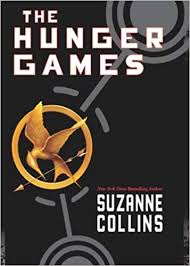
Title: The Hunger Games
Author: Suzanne Collins
ISBN: 978-0439023481
Publisher: Scholastic Press
Copyright Date: 2008
Genre: Science Fiction/ Fantasy
Books in Series: Catching Fire, Mockingjay, The Ballad of Songbirds and Snakes
Plot Summary: The Capital of Panem is control of the nation. The nation is made of 12 districts who are responsible for certain resources and services for the entire nation. Each year, there is a Reaping in which each district offers up a male and female tribute to fight to the death during a televised event. This year, Katniss Everdeen’s younger sister was selected. Katniss volunteers to go in place of her sister. The male who was selected was a boy around Katniss’ age, Peeta. The two of them are taken to the capital to prepare for the Hunger Games. Katniss prepares for the Hunger Games, including getting sponsors and training. Katniss must decide what she is willing to do to survive the Hunger Games.
Critical Analysis: This critical evaluation will be looking at the themes used by Suzanne Collins in her book, The Hunger Games. Two main themes from The Hunger Games are inequality and survival. Inequality is displayed in this book in many areas. Katniss comes from district 12, which is one of the poorest communities where people struggle to have enough to eat. When she gets to the Capital, you see that they are so much richer than the districts. Everything is in excess. Even as Katniss is being paraded around the Capital, she understands that her community is poor so that the Capital can have everything they want. The other theme is survival. Katniss might not like having to perform for the Capital but she quickly realizes she needs a sponsor to survive. She needs a sponsor in order to have the best weapons and items to succeed in the Huger Games. She also realizes as much as she hates per situation, she does want to survive and get back to her family.
Reader’s Annotation: Katniss Everdeen is selected as tribute to fight to the death. Can she learn the Hunger Games and survive?
Reading Level/Interest Age: Grades 9+

Author Biography:
Since 1991, Suzanne Collins has been busy writing for children’s television. She has worked on the staffs of several Nickelodeon shows, including the Emmy-nominated hit Clarissa Explains it All and The Mystery Files of Shelby Woo. For preschool viewers, she penned multiple stories for the Emmy-nominated Little Bear and Oswald. She also co-wrote the critically acclaimed Rankin/Bass Christmas special, Santa, Baby! Most recently she was the Head Writer for Scholastic Entertainment’s Clifford’s Puppy Days. While working on a Kids WB show called Generation O! she met children’s author James Proimos, who talked her into giving children’s books a try. Thinking one day about Alice in Wonderland, she was struck by how pastoral the setting must seem to kids who, like her own, lived in urban surroundings. In New York City, you’re much more likely to fall down a manhole than a rabbit hole and, if you do, you’re not going to find a tea party. What you might find…? Well, that’s the story of Gregor the Overlander, the first book in her five-part series, The Underland Chronicles. Suzanne also has a rhyming picture book illustrated by Mike Lester entitled When Charlie McButton Lost Power. She currently lives in Connecticut with her family and a pair of feral kittens they adopted from their backyard. The books she is most successful for in teenage eyes are The Hunger Games, Catching Fire and Mockingjay. These books have won several awards, including the GA Peach Award.
https://www.goodreads.com/author/show/153394.Suzanne_Collins
Book Talking Ideas: Survival
Curriculum Ties: N/A
Challenge Issues: Violence
Reason for Inclusion into Mini-Collection: I included The Hunger Games to my collection because it is a very popular title for young adults. It has won a lot of awards and here is a list of a few of them:
the Locus Award Nominee for Best Young Adult Book in 2009, the Georgia Peach Book Award in 2009 and the California Young Readers Medal for Young Adult in 2011.
Defense File:
Responsibility for Selection
Under the general supervision of the Library Director, the Supervising Librarians are responsible for the collection development process. Centralized Collection Development staff is responsible for identifying titles for acquisition. All library staff and members of the public are encouraged to recommend titles for purchase. Those recommendations will be evaluated by Supervising Librarians using the same selection criteria as general purchases. An electronic resources committee recommends resources for purchase. Selection Criteria
All materials, whether purchased or donated, are considered in terms of the criteria listed below. An item need not meet all of these standards in order to be added to the collection: Popular interest, Contemporary significance or permanent value, Currency of information or format, Representation of diverse points of view, Relationship to existing materials in collection, Readability or ability to sustain interest, Appropriateness of subject to the age and/or level of the intended audience, Reputation of the author, publisher, producer, illustrator, or artist, Creative, literary, or technical quality, Physical condition, Accuracy and authentication, Critical assessments in a variety of professional journals and attention in media, Circulation as monitored through the Library’s ILS, Cost and availability, Relationship to materials in other area libraries, Local emphasis, Multiple copies of materials are purchased in response to user demand as evidenced by the number of holds, anticipated popularity, and monitoring of the collection. Philosophy of Selection
In support of its mission, the Library fully endorses the principles documented in the Library Bill of Rights, Freedom to Read and Freedom to View statements of the American Library Association. These three documents can be accessed online through the following links:
http://www.ala.org/advocacy/intfreedom/librarybill
http://www.ala.org/advocacy/intfreedom/statementspols/freedomreadstatement
http://www.ala.org/advocacy/intfreedom/statementspols/freedomviewstatement Retrieved from: https://library.escondido.org/collection-development-policy.aspx Rationale – The rationale to how the materials were selected for this mini-collection is through reviews from School Library Journal as well as goodreads.com. Active Listening Skills – To avoid escalation, staff has been trained in active listening skills including; Neutral and nonjudgmental, Patient (periods of silence are not “filled”), Verbal and nonverbal feedback to show signs of listening (e.g., smiling, eye contact, leaning in, mirroring), Asking questions, Reflecting back what is said, Asking for clarification, and Summarizing. Retrieved from https://www.verywellmind.com/what-is-active-listening-3024343 Reconsideration Request – Library patrons who recommend the review of appropriateness or removal of a particular item in the Library collection may request and submit a Statement of Concern about Library Resources form available from Information Desk staff. The form will be reviewed by the Library Director or designee and staff in relation to the Library’s mission statement and the selection criteria in this Collection Development Policy. An evaluation of review materials submitted by the patron and staff will be made in accordance with the Reconsideration of Library Materials Policy which is listed below and can be viewed on the Library’s website. A response will be made by the Library Director or designee within 21 days of receiving the formal objection. Reconsideration of Library Materials Policy
Recognizing the importance of intellectual freedom, the Escondido Public Library Board of Trustees fully supports the American Library Association’s Library Bill of Rights and the Association’s Freedom to Read and Freedom to View Statements and has adopted them as official library policy. Reading is a private activity, and individuals must examine materials as to suitability for their own purposes and make their own decisions to read or not to read particular items. As part of its mission to provide ready access to the wide diversity of ideas and information, the library strives to collect materials that provide a variety of viewpoints on issues and subjects. It recognizes that some of these may be controversial and that any given item may offend some members of the community. Selection of materials is not made on the basis of anticipated approval or disapproval, but on the basis of the principles and guidelines stated in the Collection Development Policy. Likewise, the library will not eliminate items purchased under due consideration solely because they displease a particular individual or group. Library materials will not be marked or identified to show approval or disapproval of their contents, and no library materials will be sequestered, except to protect it from physical damage or theft. Responsibility for the reading of children rests with their parents or legal guardians. Selection of library materials will not be inhibited by the possibility that books may come into the possession of children, and only parents may restrict access for their own children. Patrons may raise an objection to an item in the library’s collection. If a complaint cannot be resolved informally, after the complainant has talked with a librarian and has seen the Collection Development Policy, the following procedure will be used to consider the opinions of those persons in the community who are not directly involved in the selection process.
- The library’s department heads and administrators will keep on hand and make available the form, Statement of Concern about Library Materials, and will assist the complainant in completing it if requested. All formal objections to library materials must be made on this form.
- The form shall be signed by the complainant and filed with the Library Administration.
- Within two business days of receiving the form, the Library Director or designee shall file it with the Reconsideration Committee for reevaluation of the material in question. The Committee shall recommend disposition to the Library Director or designee within three weeks.
- The challenge material will not be restricted during the reconsideration process.
- The Reconsideration Committee shall be mad up of three of the Library’s department heads, a Library administrator, and a Library trustee
- The Committee will have an initial meeting to:
- Distribute copies of the completed Statement of Concern About Library Materials form to committee members.
- Distribute copies of the challenged material, as available.
- Give the complainant an opportunity to talk about and expand on the form.
- Give the staff member who selected the item an opportunity to respond to the form.
- The Committee will make its recommendation and draft a response for the Library Director who will review it and send it to the complainant.
- If not satisfied with the decision, the complainant may appeal to the Public Library Board of Trustees, which has final authority for library policy and materials. Retrieved from https://library.escondido.org/collection-development-policy.aspx.
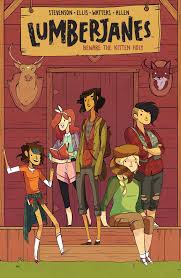
Title: Lumberjanes: Beware the Kitten Holy
Author: Shannon Watters, Grace Ellis, Brooklyn A. Allen and Noelle Stevenson
ISBN: 978-1608866878
Publisher: BOOM!
Copyright Date: 2015
Genre: Fantasy
Books in Series: Friendship To The Max, A Terrible Plan, Out Of Time
Plot Summary: Five best friends are camping at Miss Qiunzilla Thiskwin Penniquiqul Thistle Crumpet’s camp for hard-core lady-types. Things are not quite what it seems. Jo, April, Mal, Molly, and Ripley go on adventure after adventure, never leaving each other behind. They are surrounded by mysteries and supernatural occurrences. During the day, they are earning their badges for different wilderness survival skills, such as naval gauging and archery. But during the night, they are discovering this camp is not what it seems. As they investigate caves and forests, they have to use their brains and brawns to save each other for something dark and mysterious.
Critical Analysis: This critical evaluation will be looking at the themes used by Noelle Stevenson in her book, Lumberjanes: Beware the Kitten Holy. The major theme throughout Lumberjanes is friendship. Jo, April, Mal, Molly, and Ripley are super close friends that would do anything for each other. An example would be when April jumps down a hole without knowing where that hole will go. The group hesitates just briefly and then they all follow her. Each character also has their own strengths and so when they all work together, they seem to figure out most situations. Another theme is survival. No matter what supernatural beast the friends encounter, they seem to be able to survive due to their strengths. Some of the characters are strong, some are brave, and some are smart. But when they work together, they are so much better. That is another theme to the book, teamwork.
Reader’s Annotation: Five best friends must battle supernatural critters and solve puzzles to ensure they have the best summer ever.
Reading Level/Interest Age: Grades 7+
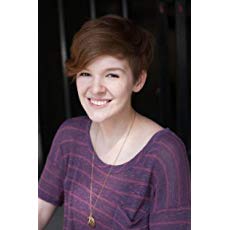
Author Biography:
Noelle Stevenson is the New York Times bestselling author of NIMONA, has been nominated for Harvey and Eisner Awards, and was awarded the Slate Cartoonist Studio Prize for Best Web Comic in 2012 for NIMONA. A graduate of the Maryland Institute College of Art, Noelle is a writer on Disney’s WANDER OVER YONDER, the cowriter of Boom! Studios’ LUMBERJANES, and has written for Marvel and DC Comics. She lives in Los Angeles. In her spare time she can be found drawing superheroes and talking about bad TV on her Tumblr or on Twitter.
Book Talking Ideas: Friendship
Curriculum Ties: N/A
Challenge Issues: Sexual Identity
Reason for Inclusion into Mini-Collection: I included Lumberjanes: Beware the Kitten Holy in my collection because it has diverse characters. It is a New York Times bestseller and has won the 2015 Eisner Awards for Best Series and Best Publication for Teens.
Defense File:
Responsibility for Selection
Under the general supervision of the Library Director, the Supervising Librarians are responsible for the collection development process. Centralized Collection Development staff is responsible for identifying titles for acquisition. All library staff and members of the public are encouraged to recommend titles for purchase. Those recommendations will be evaluated by Supervising Librarians using the same selection criteria as general purchases. An electronic resources committee recommends resources for purchase. Selection Criteria
All materials, whether purchased or donated, are considered in terms of the criteria listed below. An item need not meet all of these standards in order to be added to the collection: Popular interest, Contemporary significance or permanent value, Currency of information or format, Representation of diverse points of view, Relationship to existing materials in collection, Readability or ability to sustain interest, Appropriateness of subject to the age and/or level of the intended audience, Reputation of the author, publisher, producer, illustrator, or artist, Creative, literary, or technical quality, Physical condition, Accuracy and authentication, Critical assessments in a variety of professional journals and attention in media, Circulation as monitored through the Library’s ILS, Cost and availability, Relationship to materials in other area libraries, Local emphasis, Multiple copies of materials are purchased in response to user demand as evidenced by the number of holds, anticipated popularity, and monitoring of the collection. Philosophy of Selection
In support of its mission, the Library fully endorses the principles documented in the Library Bill of Rights, Freedom to Read and Freedom to View statements of the American Library Association. These three documents can be accessed online through the following links:
http://www.ala.org/advocacy/intfreedom/librarybill
http://www.ala.org/advocacy/intfreedom/statementspols/freedomreadstatement
http://www.ala.org/advocacy/intfreedom/statementspols/freedomviewstatement Retrieved from: https://library.escondido.org/collection-development-policy.aspx Rationale – The rationale to how the materials were selected for this mini-collection is through reviews from School Library Journal as well as goodreads.com. Active Listening Skills – To avoid escalation, staff has been trained in active listening skills including; Neutral and nonjudgmental, Patient (periods of silence are not “filled”), Verbal and nonverbal feedback to show signs of listening (e.g., smiling, eye contact, leaning in, mirroring), Asking questions, Reflecting back what is said, Asking for clarification, and Summarizing. Retrieved from https://www.verywellmind.com/what-is-active-listening-3024343 Reconsideration Request – Library patrons who recommend the review of appropriateness or removal of a particular item in the Library collection may request and submit a Statement of Concern about Library Resources form available from Information Desk staff. The form will be reviewed by the Library Director or designee and staff in relation to the Library’s mission statement and the selection criteria in this Collection Development Policy. An evaluation of review materials submitted by the patron and staff will be made in accordance with the Reconsideration of Library Materials Policy which is listed below and can be viewed on the Library’s website. A response will be made by the Library Director or designee within 21 days of receiving the formal objection. Reconsideration of Library Materials Policy
Recognizing the importance of intellectual freedom, the Escondido Public Library Board of Trustees fully supports the American Library Association’s Library Bill of Rights and the Association’s Freedom to Read and Freedom to View Statements and has adopted them as official library policy. Reading is a private activity, and individuals must examine materials as to suitability for their own purposes and make their own decisions to read or not to read particular items. As part of its mission to provide ready access to the wide diversity of ideas and information, the library strives to collect materials that provide a variety of viewpoints on issues and subjects. It recognizes that some of these may be controversial and that any given item may offend some members of the community. Selection of materials is not made on the basis of anticipated approval or disapproval, but on the basis of the principles and guidelines stated in the Collection Development Policy. Likewise, the library will not eliminate items purchased under due consideration solely because they displease a particular individual or group. Library materials will not be marked or identified to show approval or disapproval of their contents, and no library materials will be sequestered, except to protect it from physical damage or theft. Responsibility for the reading of children rests with their parents or legal guardians. Selection of library materials will not be inhibited by the possibility that books may come into the possession of children, and only parents may restrict access for their own children. Patrons may raise an objection to an item in the library’s collection. If a complaint cannot be resolved informally, after the complainant has talked with a librarian and has seen the Collection Development Policy, the following procedure will be used to consider the opinions of those persons in the community who are not directly involved in the selection process.
- The library’s department heads and administrators will keep on hand and make available the form, Statement of Concern about Library Materials, and will assist the complainant in completing it if requested. All formal objections to library materials must be made on this form.
- The form shall be signed by the complainant and filed with the Library Administration.
- Within two business days of receiving the form, the Library Director or designee shall file it with the Reconsideration Committee for reevaluation of the material in question. The Committee shall recommend disposition to the Library Director or designee within three weeks.
- The challenge material will not be restricted during the reconsideration process.
- The Reconsideration Committee shall be mad up of three of the Library’s department heads, a Library administrator, and a Library trustee
- The Committee will have an initial meeting to:
- Distribute copies of the completed Statement of Concern About Library Materials form to committee members.
- Distribute copies of the challenged material, as available.
- Give the complainant an opportunity to talk about and expand on the form.
- Give the staff member who selected the item an opportunity to respond to the form.
- The Committee will make its recommendation and draft a response for the Library Director who will review it and send it to the complainant.
- If not satisfied with the decision, the complainant may appeal to the Public Library Board of Trustees, which has final authority for library policy and materials. Retrieved from https://library.escondido.org/collection-development-policy.aspx.
Title: A Midsummer Night’s Scream
Author: R. L. Stine
ISBN: 978-1250024343
Publisher: Feiwel & Friends
Copyright Date: 2013
Genre: Horror
Plot Summary: Sixty years ago, there was a horrible accident on the film set for Mayhem Manor that resulted in three actors’ death. Now Claire’s father is producing a remake of the Mayhem Manor and Claire and her friends are trying to get parts. As Claire is trying to get Jake, her crush, to notice her. Weird things are starting to happen on the set. Claire notices that Jake is into her best friend, Delia, and she’ll do anything to get him to notice her. Even talk to the creepy man named Puck who may have a love potion she can use. Should Claire use the love potion? And what is going on with all these creepy occurrences on the set? Are their really ghosts haunting the filming?
Critical Analysis: This critical evaluation will be looking at the tones used by R.L. Stine in his book, A Midsummer Night’s Scream. R.L. Stine uses a lot of humor in a very dark story. One example is when Claire sees Puck for the first time. “OMG. Anybody could have mistaken him for a bear or something. Trust me. He was a real hairy bowling ball” (p. 63). R.L. Stine writes in a way that even when people are dying, there is still a lot of humor or sarcasm. By using humor, R.L. Stine keeps the audience on their toes. Rather than keep everyone tense the entire time, the audience gets breaks of the fear, so they are not expecting the violence and horror that may happen in the next few pages. R.L. Stine does have tones of darkness and gore. He heightens the audiences fear through his description. Here is an example, “My heart started to beat faster, and I had a tingly feeling all over my body” (p. 222).
Reader’s Annotation: When a film production starts remaking a movie that was not completed due to a horrible tragedy, are ghosts haunting the new crew?
Reading Level/Interest Age: Grades 9+

Author Biography:
R.L. Stine, in full Robert Lawrence Stine, (born October 8, 1943, Columbus, Ohio, U.S.), American novelist who was best known for his horror books for children, including the Goosebumps and Fear Street series. Stine graduated from the Ohio State University in 1965, having served three years as editor of the campus humour magazine, the Sundial. After teaching junior high school for a year, he went to New York City, where he eventually landed an editorial job with Scholastic Books. He worked there for 16 years on various children’s magazines, notably Bananas, a humour magazine for older age groups. The first of Stine’s more than 40 humour books for children, The Absurdly Silly Encyclopedia & Fly Swatter (1978), was published under the pseudonym Jovial Bob Stine. His first scary novel, Blind Date, was released in 1986 and launched Stine’s career as a horror writer. His Fear Street series of stories for young teens began with The New Girl (1989), and the Goosebumps series for age 8 to 11 was launched with Welcome to Dead House (1992); the latter series inspired the television program Goosebumps (1995–98). The unpredictability, plot twists, and cliff-hanger endings of his horror writing relied on surprise, avoided the seriously threatening topics of modern urban life, and delivered to kids what Stine termed “a safe scare.” Both series were an immediate success. Stine launched various spin-off series, including Give Yourself Goosebumps (1995), a choose-your-own-scary-adventure line, and The Nightmare Room (2000), which was adapted for television and aired in 2001–02. He also penned a number of series related to Fear Street, including Fear Street Super Chillers (1991), Fear Street Seniors (1998), and Return to Fear Street (2018). In 2008 Stine revived the haunted dummy, a classic Goosebumps character, in the first book of the Goosebumps Horrorland series, titled Revenge of the Living Dummy. Four years later the Goosebumps Most Wanted series debuted. Stine’s other notable series included Point Horror (1986) and Rotten School (2005). He also wrote numerous short stories, some of which inspired the TV series The Haunting Hour (2010–14). Other works included When Good Ghouls Go Bad (2001; TV movie 2001) and Monsterville: Cabinet of Souls (2016; film 2015). By the second decade of the 21st century, Stine had sold more than 400 million copies of his children’s books. In addition, he penned several novels for adults, including Superstitious (1995), Eye Candy (2004; television series 2015), and Red Rain (2012).
Book Talking Ideas: Goosebumps versus Fear Street
Curriculum Ties: N/A
Challenge Issues: Violence
Reason for Inclusion into Mini-Collection: I included A Midsummer Night’s Scream to my collection because R.L. Stine is one of the masters of horror in young adult literature. “As usual, Stine delivers the hilarity and horror that readers love, and his mastery of sustaining mood will not disappoint. . . . Kids will love the twist at the end.” ―School Library Journal, starred review on It’s the First Day of School Forever ( https://www.amazon.com/Midsummer-Nights-Scream-R-Stine/dp/125002434X/ref=tmm_hrd_swatch_0?_encoding=UTF8&qid=1575321473&sr=8-2 ).
Defense File:
Responsibility for Selection
Under the general supervision of the Library Director, the Supervising Librarians are responsible for the collection development process. Centralized Collection Development staff is responsible for identifying titles for acquisition. All library staff and members of the public are encouraged to recommend titles for purchase. Those recommendations will be evaluated by Supervising Librarians using the same selection criteria as general purchases. An electronic resources committee recommends resources for purchase. Selection Criteria
All materials, whether purchased or donated, are considered in terms of the criteria listed below. An item need not meet all of these standards in order to be added to the collection: Popular interest, Contemporary significance or permanent value, Currency of information or format, Representation of diverse points of view, Relationship to existing materials in collection, Readability or ability to sustain interest, Appropriateness of subject to the age and/or level of the intended audience, Reputation of the author, publisher, producer, illustrator, or artist, Creative, literary, or technical quality, Physical condition, Accuracy and authentication, Critical assessments in a variety of professional journals and attention in media, Circulation as monitored through the Library’s ILS, Cost and availability, Relationship to materials in other area libraries, Local emphasis, Multiple copies of materials are purchased in response to user demand as evidenced by the number of holds, anticipated popularity, and monitoring of the collection. Philosophy of Selection
In support of its mission, the Library fully endorses the principles documented in the Library Bill of Rights, Freedom to Read and Freedom to View statements of the American Library Association. These three documents can be accessed online through the following links:
http://www.ala.org/advocacy/intfreedom/librarybill
http://www.ala.org/advocacy/intfreedom/statementspols/freedomreadstatement
http://www.ala.org/advocacy/intfreedom/statementspols/freedomviewstatement Retrieved from: https://library.escondido.org/collection-development-policy.aspx Rationale – The rationale to how the materials were selected for this mini-collection is through reviews from School Library Journal as well as goodreads.com. Active Listening Skills – To avoid escalation, staff has been trained in active listening skills including; Neutral and nonjudgmental, Patient (periods of silence are not “filled”), Verbal and nonverbal feedback to show signs of listening (e.g., smiling, eye contact, leaning in, mirroring), Asking questions, Reflecting back what is said, Asking for clarification, and Summarizing. Retrieved from https://www.verywellmind.com/what-is-active-listening-3024343 Reconsideration Request – Library patrons who recommend the review of appropriateness or removal of a particular item in the Library collection may request and submit a Statement of Concern about Library Resources form available from Information Desk staff. The form will be reviewed by the Library Director or designee and staff in relation to the Library’s mission statement and the selection criteria in this Collection Development Policy. An evaluation of review materials submitted by the patron and staff will be made in accordance with the Reconsideration of Library Materials Policy which is listed below and can be viewed on the Library’s website. A response will be made by the Library Director or designee within 21 days of receiving the formal objection. Reconsideration of Library Materials Policy
Recognizing the importance of intellectual freedom, the Escondido Public Library Board of Trustees fully supports the American Library Association’s Library Bill of Rights and the Association’s Freedom to Read and Freedom to View Statements and has adopted them as official library policy. Reading is a private activity, and individuals must examine materials as to suitability for their own purposes and make their own decisions to read or not to read particular items. As part of its mission to provide ready access to the wide diversity of ideas and information, the library strives to collect materials that provide a variety of viewpoints on issues and subjects. It recognizes that some of these may be controversial and that any given item may offend some members of the community. Selection of materials is not made on the basis of anticipated approval or disapproval, but on the basis of the principles and guidelines stated in the Collection Development Policy. Likewise, the library will not eliminate items purchased under due consideration solely because they displease a particular individual or group. Library materials will not be marked or identified to show approval or disapproval of their contents, and no library materials will be sequestered, except to protect it from physical damage or theft. Responsibility for the reading of children rests with their parents or legal guardians. Selection of library materials will not be inhibited by the possibility that books may come into the possession of children, and only parents may restrict access for their own children. Patrons may raise an objection to an item in the library’s collection. If a complaint cannot be resolved informally, after the complainant has talked with a librarian and has seen the Collection Development Policy, the following procedure will be used to consider the opinions of those persons in the community who are not directly involved in the selection process.
- The library’s department heads and administrators will keep on hand and make available the form, Statement of Concern about Library Materials, and will assist the complainant in completing it if requested. All formal objections to library materials must be made on this form.
- The form shall be signed by the complainant and filed with the Library Administration.
- Within two business days of receiving the form, the Library Director or designee shall file it with the Reconsideration Committee for reevaluation of the material in question. The Committee shall recommend disposition to the Library Director or designee within three weeks.
- The challenge material will not be restricted during the reconsideration process.
- The Reconsideration Committee shall be mad up of three of the Library’s department heads, a Library administrator, and a Library trustee
- The Committee will have an initial meeting to:
- Distribute copies of the completed Statement of Concern About Library Materials form to committee members.
- Distribute copies of the challenged material, as available.
- Give the complainant an opportunity to talk about and expand on the form.
- Give the staff member who selected the item an opportunity to respond to the form.
- The Committee will make its recommendation and draft a response for the Library Director who will review it and send it to the complainant.
- If not satisfied with the decision, the complainant may appeal to the Public Library Board of Trustees, which has final authority for library policy and materials. Retrieved from https://library.escondido.org/collection-development-policy.aspx.
Title: Not Even Bones
Author: Rebecca Schaeffer
ISBN: 978-1328863546
Publisher: HMH Books for Young Readers
Copyright Date: 2018
Genre: Horror
Books in Series: Only Ashes Remain
Plot Summary: Nita spends her time dissecting bodies of supernatural beings. She is forced to by her mother, who hunts these beings, and then her mother sells these parts on the black market. Nita is forced to dissect these beings but she also really enjoys doing it. One day, her mother brings a boy to Nita to dissect. But the problem is this boy is still alive and Nita can not dissect something that is still alive. So, she helps this boy escape. But by helping the boy escape, Nita has put herself in jeopardy. Because the thing is, Nita is supernatural as well. Nita has the power to heal herself and that power is quite popular on the black market. So, now Nita, and her body parts, are the ones being sold. Nita must find a way to escape her prison and figure out how she will survive.
Critical Analysis: This critical evaluation will be looking at the themes used by Rebecca Schaeffer in her book, Not Even Bones. One of the major themes of the book is what is the difference between good and evil. Nita does not feel bad for dissecting dead beings but she could not handle hurting someone that was alive. One example on how Nita is constantly battling with being good or bad is when she burns the black market. “She took a lighter out of the box, where it was wedged between the two flashlights. She flicked it on, and finally, there, she scorched the last of her morals from her soul” (p. 307). Each action Nita takes through out the book, brings her closer to good or bad. She helped free Fabricio, which brought her towards the good side. But she has been battling the fact that she likes cutting up bodies. Another character that is determining what type of a person they are is Kovit. His nature is to be bad since he is a zannie and feeds on others’ pain. But he tries to help Nita and puts his own life in jeopardy to do that. Both f these characters were born into bad roles but try to fight their nature to be better.
Reader’s Annotation: Nita’s job is to dissect supernatural beings. But what happens if she is the supernatural being and now she is being dissected.
Reading Level/Interest Age: Grades 9+

Author Biography:
Rebecca Schaeffer was born and raised in the Canadian prairies. Her itchy feet took her far from home when she turned eighteen, and she hasn’t returned for more than a few months here or there since. You can find her sitting in a cafe on the other side of the world, writing about villains, antiheroes and morally ambiguous characters. Her debut, Not Even Bones, is about a girl who dissects and sells monsters on the internet. Not Even Bones received a starred review from Booklist, was shortlisted for Cybilis awards and Sunburst Awards.
Book Talking Ideas: Good versus evil
Curriculum Ties: N/A
Challenge Issues: Violence
Reason for Inclusion into Mini-Collection: I included Not Even Bones because it was an interesting horror book with a flawed protagonist. It was a Sunburst Award Nominee for Young Adult (2019) .
Defense File:
Responsibility for Selection
Under the general supervision of the Library Director, the Supervising Librarians are responsible for the collection development process. Centralized Collection Development staff is responsible for identifying titles for acquisition. All library staff and members of the public are encouraged to recommend titles for purchase. Those recommendations will be evaluated by Supervising Librarians using the same selection criteria as general purchases. An electronic resources committee recommends resources for purchase. Selection Criteria
All materials, whether purchased or donated, are considered in terms of the criteria listed below. An item need not meet all of these standards in order to be added to the collection: Popular interest, Contemporary significance or permanent value, Currency of information or format, Representation of diverse points of view, Relationship to existing materials in collection, Readability or ability to sustain interest, Appropriateness of subject to the age and/or level of the intended audience, Reputation of the author, publisher, producer, illustrator, or artist, Creative, literary, or technical quality, Physical condition, Accuracy and authentication, Critical assessments in a variety of professional journals and attention in media, Circulation as monitored through the Library’s ILS, Cost and availability, Relationship to materials in other area libraries, Local emphasis, Multiple copies of materials are purchased in response to user demand as evidenced by the number of holds, anticipated popularity, and monitoring of the collection. Philosophy of Selection
In support of its mission, the Library fully endorses the principles documented in the Library Bill of Rights, Freedom to Read and Freedom to View statements of the American Library Association. These three documents can be accessed online through the following links:
http://www.ala.org/advocacy/intfreedom/librarybill
http://www.ala.org/advocacy/intfreedom/statementspols/freedomreadstatement
http://www.ala.org/advocacy/intfreedom/statementspols/freedomviewstatement Retrieved from: https://library.escondido.org/collection-development-policy.aspx Rationale – The rationale to how the materials were selected for this mini-collection is through reviews from School Library Journal as well as goodreads.com. Active Listening Skills – To avoid escalation, staff has been trained in active listening skills including; Neutral and nonjudgmental, Patient (periods of silence are not “filled”), Verbal and nonverbal feedback to show signs of listening (e.g., smiling, eye contact, leaning in, mirroring), Asking questions, Reflecting back what is said, Asking for clarification, and Summarizing. Retrieved from https://www.verywellmind.com/what-is-active-listening-3024343 Reconsideration Request – Library patrons who recommend the review of appropriateness or removal of a particular item in the Library collection may request and submit a Statement of Concern about Library Resources form available from Information Desk staff. The form will be reviewed by the Library Director or designee and staff in relation to the Library’s mission statement and the selection criteria in this Collection Development Policy. An evaluation of review materials submitted by the patron and staff will be made in accordance with the Reconsideration of Library Materials Policy which is listed below and can be viewed on the Library’s website. A response will be made by the Library Director or designee within 21 days of receiving the formal objection. Reconsideration of Library Materials Policy
Recognizing the importance of intellectual freedom, the Escondido Public Library Board of Trustees fully supports the American Library Association’s Library Bill of Rights and the Association’s Freedom to Read and Freedom to View Statements and has adopted them as official library policy. Reading is a private activity, and individuals must examine materials as to suitability for their own purposes and make their own decisions to read or not to read particular items. As part of its mission to provide ready access to the wide diversity of ideas and information, the library strives to collect materials that provide a variety of viewpoints on issues and subjects. It recognizes that some of these may be controversial and that any given item may offend some members of the community. Selection of materials is not made on the basis of anticipated approval or disapproval, but on the basis of the principles and guidelines stated in the Collection Development Policy. Likewise, the library will not eliminate items purchased under due consideration solely because they displease a particular individual or group. Library materials will not be marked or identified to show approval or disapproval of their contents, and no library materials will be sequestered, except to protect it from physical damage or theft. Responsibility for the reading of children rests with their parents or legal guardians. Selection of library materials will not be inhibited by the possibility that books may come into the possession of children, and only parents may restrict access for their own children. Patrons may raise an objection to an item in the library’s collection. If a complaint cannot be resolved informally, after the complainant has talked with a librarian and has seen the Collection Development Policy, the following procedure will be used to consider the opinions of those persons in the community who are not directly involved in the selection process.
- The library’s department heads and administrators will keep on hand and make available the form, Statement of Concern about Library Materials, and will assist the complainant in completing it if requested. All formal objections to library materials must be made on this form.
- The form shall be signed by the complainant and filed with the Library Administration.
- Within two business days of receiving the form, the Library Director or designee shall file it with the Reconsideration Committee for reevaluation of the material in question. The Committee shall recommend disposition to the Library Director or designee within three weeks.
- The challenge material will not be restricted during the reconsideration process.
- The Reconsideration Committee shall be mad up of three of the Library’s department heads, a Library administrator, and a Library trustee
- The Committee will have an initial meeting to:
- Distribute copies of the completed Statement of Concern About Library Materials form to committee members.
- Distribute copies of the challenged material, as available.
- Give the complainant an opportunity to talk about and expand on the form.
- Give the staff member who selected the item an opportunity to respond to the form.
- The Committee will make its recommendation and draft a response for the Library Director who will review it and send it to the complainant.
- If not satisfied with the decision, the complainant may appeal to the Public Library Board of Trustees, which has final authority for library policy and materials. Retrieved from https://library.escondido.org/collection-development-policy.aspx.
Title: Rot & Ruin
Author: Jonathan Maberry
ISBN: 978-1442402324
Publisher: Simon & Schuster
Copyright Date: 2010
Genre: Horror
Other Books in Series: Dust & Decay, Flesh & Bone, Fire & Ash, Bits & Pieces
Plot Summary: Benny Imura lives in a post-apocalyptic zombie-infested world, where once you turn fifteen, you are expected to get a job to contribute to the village you live in or you will lose a portion of your food rations. After attempting to take on multiple different jobs, Benny eventually agrees to be an apprentice to his brother Tom. Tom is a zombie hunter. His job is to go find family members of his clients who have turned and kill them for the family to have some closure. In order to complete their job, they must venture outside of their village and into the Rot and Ruin. As Benny learns more about his brother and the job he will be doing, he learns the dark truth about some of the other zombie hunters. Although their society has made them fear the zombies, as Benny learns more with his brother and friends, they may need to fear their fellow humans more.
Critical Analysis: This critical evaluation will be looking at the tones that Jonathan Maberry uses in the book, Rot & Ruin. The tone of this book was dark and suspenseful with elements of humor as well. I think the humor was added because this is a young adult book, so the audience would appreciate breaks in the suspense. Also, since Benny is a fifteen-year old boy, some of the humor was added so the character was believable. Some examples of the tone being suspenseful include the scene where the village is overrun by zombies and Tom leaves Benny alone in their house. From Benny’s perspective, he can hear screaming and attacking outside the house, but he cannot see what is happening. You can feel the tension he is experiencing through the author’s word choices and the way he leaves each chapter with a cliff hanger. One example would be at the end of chapter 9 on page 78, “And that’s when they heard the gunshots.” There are parts n the story where you see the humor that Benny experiences even though his world is dark and scary. Most of those parts include him hanging out with his friends, Morgie and Chong. When Chong and Benny are trying to find jobs, they poke a lot of fun at each other, which seems like standard fifteen-year old humor. One scene, where they are interviewing for the pit thrower job, Chong fake vomits to show his disgust to Benny. The humor also makes it easier to handle the darkness of this story.
Reader’s Annotation: In a zombie-infested world, Benny must learn who he can trust and maybe zombies aren’t the worst nightmare he has to worry about.
Reading Level/Interest Age: Grades 9-12

Author Biography:
Jonathan Maberry is a New York Times best-selling and five-time Bram Stoker Award-winning author, anthology editor, comic book writer, magazine feature writer, playwright, content creator, and writing teacher/lecturer. He was named one of the Today’s Top Ten Horror Writers. His books have been sold to more than two-dozen countries. He writes in several genres. His young adult fiction includes Rot & Ruin (2011; was named in Booklist’s Ten Best Horror Novels for Young Adults, an American Library Association Top Pick, a Bram Stoker and Pennsylvania Keystone to Reading winner; winner of several state Teen Book Awards including the Cricket, Nutmeg and MASL; winner of the Cybils Award, the Eva Perry Mock Printz medal, Dead Letter Best Novel Award, and four Melinda Awards); Dust & Decay (winner of the 2011 Bram Stoker Award; Flesh & Bone (winner of the Bram Stoker Award; 2012; and Fire & Ash (August 2013). Broken Lands, the first of a new spin-off series, debuted in 2018.
Book Talking Ideas: Zombie survival skill
Curriculum Ties: N/A
Challenge Issues: Violence Reason for Inclusion into Mini-Collection: I included Rot & Ruin because it is an entertaining book that has relatable characters. The main character is dealing with growing up and deciding what he wants to do with his life. He also must work through the idea that the people he thought he knew may not be good people and how to trust those close to him. The book puts you in a spot where you might think about what you would do if you were in the same situation.
Defense File:
Responsibility for Selection
Under the general supervision of the Library Director, the Supervising Librarians are responsible for the collection development process. Centralized Collection Development staff is responsible for identifying titles for acquisition. All library staff and members of the public are encouraged to recommend titles for purchase. Those recommendations will be evaluated by Supervising Librarians using the same selection criteria as general purchases. An electronic resources committee recommends resources for purchase. Selection Criteria All materials, whether purchased or donated, are considered in terms of the criteria listed below. An item need not meet all of these standards in order to be added to the collection: Popular interest, Contemporary significance or permanent value, Currency of information or format, Representation of diverse points of view, Relationship to existing materials in collection, Readability or ability to sustain interest, Appropriateness of subject to the age and/or level of the intended audience, Reputation of the author, publisher, producer, illustrator, or artist, Creative, literary, or technical quality, Physical condition, Accuracy and authentication, Critical assessments in a variety of professional journals and attention in media, Circulation as monitored through the Library’s ILS, Cost and availability, Relationship to materials in other area libraries, Local emphasis, Multiple copies of materials are purchased in response to user demand as evidenced by the number of holds, anticipated popularity, and monitoring of the collection. Philosophy of Selection
In support of its mission, the Library fully endorses the principles documented in the Library Bill of Rights, Freedom to Read and Freedom to View statements of the American Library Association. These three documents can be accessed online through the following links:
http://www.ala.org/advocacy/intfreedom/librarybill
http://www.ala.org/advocacy/intfreedom/statementspols/freedomreadstatement
http://www.ala.org/advocacy/intfreedom/statementspols/freedomviewstatement Retrieved from: https://library.escondido.org/collection-development-policy.aspx Rationale – The rationale to how the materials were selected for this mini-collection is through reviews from School Library Journal as well as goodreads.com. Active Listening Skills – To avoid escalation, staff has been trained in active listening skills including; Neutral and nonjudgmental, Patient (periods of silence are not “filled”), Verbal and nonverbal feedback to show signs of listening (e.g., smiling, eye contact, leaning in, mirroring), Asking questions, Reflecting back what is said, Asking for clarification, and Summarizing. Retrieved from https://www.verywellmind.com/what-is-active-listening-3024343 Reconsideration Request – Library patrons who recommend the review of appropriateness or removal of a particular item in the Library collection may request and submit a Statement of Concern about Library Resources form available from Information Desk staff. The form will be reviewed by the Library Director or designee and staff in relation to the Library’s mission statement and the selection criteria in this Collection Development Policy. An evaluation of review materials submitted by the patron and staff will be made in accordance with the Reconsideration of Library Materials Policy which is listed below and can be viewed on the Library’s website. A response will be made by the Library Director or designee within 21 days of receiving the formal objection. Reconsideration of Library Materials Policy
Recognizing the importance of intellectual freedom, the Escondido Public Library Board of Trustees fully supports the American Library Association’s Library Bill of Rights and the Association’s Freedom to Read and Freedom to View Statements and has adopted them as official library policy. Reading is a private activity, and individuals must examine materials as to suitability for their own purposes and make their own decisions to read or not to read particular items. As part of its mission to provide ready access to the wide diversity of ideas and information, the library strives to collect materials that provide a variety of viewpoints on issues and subjects. It recognizes that some of these may be controversial and that any given item may offend some members of the community. Selection of materials is not made on the basis of anticipated approval or disapproval, but on the basis of the principles and guidelines stated in the Collection Development Policy. Likewise, the library will not eliminate items purchased under due consideration solely because they displease a particular individual or group. Library materials will not be marked or identified to show approval or disapproval of their contents, and no library materials will be sequestered, except to protect it from physical damage or theft. Responsibility for the reading of children rests with their parents or legal guardians. Selection of library materials will not be inhibited by the possibility that books may come into the possession of children, and only parents may restrict access for their own children. Patrons may raise an objection to an item in the library’s collection. If a complaint cannot be resolved informally, after the complainant has talked with a librarian and has seen the Collection Development Policy, the following procedure will be used to consider the opinions of those persons in the community who are not directly involved in the selection process.
- The library’s department heads and administrators will keep on hand and make available the form, Statement of Concern about Library Materials, and will assist the complainant in completing it if requested. All formal objections to library materials must be made on this form.
- The form shall be signed by the complainant and filed with the Library Administration.
- Within two business days of receiving the form, the Library Director or designee shall file it with the Reconsideration Committee for reevaluation of the material in question. The Committee shall recommend disposition to the Library Director or designee within three weeks.
- The challenge material will not be restricted during the reconsideration process.
- The Reconsideration Committee shall be mad up of three of the Library’s department heads, a Library administrator, and a Library trustee
- The Committee will have an initial meeting to:
- Distribute copies of the completed Statement of Concern About Library Materials form to committee members.
- Distribute copies of the challenged material, as available.
- Give the complainant an opportunity to talk about and expand on the form.
- Give the staff member who selected the item an opportunity to respond to the form.
- The Committee will make its recommendation and draft a response for the Library Director who will review it and send it to the complainant.
- If not satisfied with the decision, the complainant may appeal to the Public Library Board of Trustees, which has final authority for library policy and materials. Retrieved from https://library.escondido.org/collection-development-policy.aspx.
Title: Smile
Author: Raina Telgemeier
ISBN: 978-0545132060
Publisher: Graphix
Copyright Date: 2010
Genre: Semi-Autobiographical Graphic Novel
Plot Summary: Raina is just trying to make it to middle school. She has a group of friends and feels like she knows where she belongs. Then she has an accident that requires major dental work for years to come. As she realizes her injury to her two front teeth are more severe than she first thought, she must learn how to cope with braces, retainers with fake teeth and headgear. Although this is very trying for her, she also has many other situations to navigate, such as first crushes and finding out that the friends she thought were close, are not so true. Throughout all this, Raina must find out who she is and where she fits in. When Raina is ready to enter high school, she thinks the worst is behind her, which may not be true. Can Raina find out who her real friends are and where she fits in high school?
Critical Analysis: This critical evaluation will be looking at the themes used by Raina Telgemeier in her book, Smile. One of the major themes for Smile are beauty is more than skin deep. Raina is so focused on how embarrassing it is to smile after she had her accident. But we find that some of her friends and schoolmates, although may have nice smiles, are not pretty on the inside. Although, Raina may have been awkward with her braces and retainers, she was a kind person which made her beautiful on the inside. Another theme is friendship. Although most of the book focuses on how Raina’s accident affected her, the book is truly about growing up. In the process of growing up, some of the close friends Raina had went on different course than she did. But other friends came into her life as well. The book shows that your friendships may change as you grow up and figure out where you belong.
Reader’s Annotation: Raina just wants to be a typical kid but when an accident happens that severely damages her teeth, can she still figure out how to fit in?
Reading Level/Interest Age: Grades 7+

Author Biography:
Raina Telgemeier is the author and illustrator of the graphic novels Smile, Drama, Sisters, and Ghosts, all #1 New York Times bestsellers. She also adapted and illustrated four graphic novel versions of Ann M. Martin’s Baby-sitters Club series, and has contributed short stories to many anthologies. Raina’s accolades include three Eisner Awards, a Boston Globe-Horn Book Honor, a Stonewall Honor, and many Best-of and Notables lists. Raina lives and works in San Francisco, CA.
Book Talking Ideas: Growing Up
Curriculum Ties: N/A
Challenge Issues: Sexual Innuendo
Reason for Inclusion into Mini-Collection: I included Smile in my collection because it is a light-hearted book about the awkwardness of growing up. Smile has won the
Dorothy Canfield Fisher Children’s Book Award in 2012, the Iowa Children’s Choice Award in 2012 and the Will Eisner Comic Industry Awards for Best Publication for Teens in 2011. It also was a Boston Globe-Horn Book Award Nominee for Nonfiction in 2010.
Defense File:
Responsibility for Selection
Under the general supervision of the Library Director, the Supervising Librarians are responsible for the collection development process. Centralized Collection Development staff is responsible for identifying titles for acquisition. All library staff and members of the public are encouraged to recommend titles for purchase. Those recommendations will be evaluated by Supervising Librarians using the same selection criteria as general purchases. An electronic resources committee recommends resources for purchase. Selection Criteria All materials, whether purchased or donated, are considered in terms of the criteria listed below. An item need not meet all of these standards in order to be added to the collection: Popular interest, Contemporary significance or permanent value, Currency of information or format, Representation of diverse points of view, Relationship to existing materials in collection, Readability or ability to sustain interest, Appropriateness of subject to the age and/or level of the intended audience, Reputation of the author, publisher, producer, illustrator, or artist, Creative, literary, or technical quality, Physical condition, Accuracy and authentication, Critical assessments in a variety of professional journals and attention in media, Circulation as monitored through the Library’s ILS, Cost and availability, Relationship to materials in other area libraries, Local emphasis, Multiple copies of materials are purchased in response to user demand as evidenced by the number of holds, anticipated popularity, and monitoring of the collection. Philosophy of Selection
In support of its mission, the Library fully endorses the principles documented in the Library Bill of Rights, Freedom to Read and Freedom to View statements of the American Library Association. These three documents can be accessed online through the following links:
http://www.ala.org/advocacy/intfreedom/librarybill
http://www.ala.org/advocacy/intfreedom/statementspols/freedomreadstatement
http://www.ala.org/advocacy/intfreedom/statementspols/freedomviewstatement Retrieved from: https://library.escondido.org/collection-development-policy.aspx Rationale – The rationale to how the materials were selected for this mini-collection is through reviews from School Library Journal as well as goodreads.com. Active Listening Skills – To avoid escalation, staff has been trained in active listening skills including; Neutral and nonjudgmental, Patient (periods of silence are not “filled”), Verbal and nonverbal feedback to show signs of listening (e.g., smiling, eye contact, leaning in, mirroring), Asking questions, Reflecting back what is said, Asking for clarification, and Summarizing. Retrieved from https://www.verywellmind.com/what-is-active-listening-3024343 Reconsideration Request – Library patrons who recommend the review of appropriateness or removal of a particular item in the Library collection may request and submit a Statement of Concern about Library Resources form available from Information Desk staff. The form will be reviewed by the Library Director or designee and staff in relation to the Library’s mission statement and the selection criteria in this Collection Development Policy. An evaluation of review materials submitted by the patron and staff will be made in accordance with the Reconsideration of Library Materials Policy which is listed below and can be viewed on the Library’s website. A response will be made by the Library Director or designee within 21 days of receiving the formal objection. Reconsideration of Library Materials Policy
Recognizing the importance of intellectual freedom, the Escondido Public Library Board of Trustees fully supports the American Library Association’s Library Bill of Rights and the Association’s Freedom to Read and Freedom to View Statements and has adopted them as official library policy. Reading is a private activity, and individuals must examine materials as to suitability for their own purposes and make their own decisions to read or not to read particular items. As part of its mission to provide ready access to the wide diversity of ideas and information, the library strives to collect materials that provide a variety of viewpoints on issues and subjects. It recognizes that some of these may be controversial and that any given item may offend some members of the community. Selection of materials is not made on the basis of anticipated approval or disapproval, but on the basis of the principles and guidelines stated in the Collection Development Policy. Likewise, the library will not eliminate items purchased under due consideration solely because they displease a particular individual or group. Library materials will not be marked or identified to show approval or disapproval of their contents, and no library materials will be sequestered, except to protect it from physical damage or theft. Responsibility for the reading of children rests with their parents or legal guardians. Selection of library materials will not be inhibited by the possibility that books may come into the possession of children, and only parents may restrict access for their own children. Patrons may raise an objection to an item in the library’s collection. If a complaint cannot be resolved informally, after the complainant has talked with a librarian and has seen the Collection Development Policy, the following procedure will be used to consider the opinions of those persons in the community who are not directly involved in the selection process.
- The library’s department heads and administrators will keep on hand and make available the form, Statement of Concern about Library Materials, and will assist the complainant in completing it if requested. All formal objections to library materials must be made on this form.
- The form shall be signed by the complainant and filed with the Library Administration.
- Within two business days of receiving the form, the Library Director or designee shall file it with the Reconsideration Committee for reevaluation of the material in question. The Committee shall recommend disposition to the Library Director or designee within three weeks.
- The challenge material will not be restricted during the reconsideration process.
- The Reconsideration Committee shall be mad up of three of the Library’s department heads, a Library administrator, and a Library trustee
- The Committee will have an initial meeting to:
- Distribute copies of the completed Statement of Concern About Library Materials form to committee members.
- Distribute copies of the challenged material, as available.
- Give the complainant an opportunity to talk about and expand on the form.
- Give the staff member who selected the item an opportunity to respond to the form.
- The Committee will make its recommendation and draft a response for the Library Director who will review it and send it to the complainant.
- If not satisfied with the decision, the complainant may appeal to the Public Library Board of Trustees, which has final authority for library policy and materials. Retrieved from https://library.escondido.org/collection-development-policy.aspx.
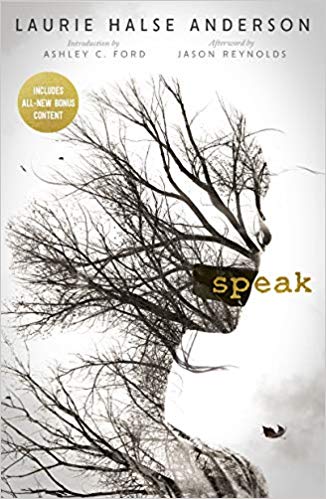
Title: Speak
Author: Laurie Halse Anderson
ISBN: 978-0374311254
Publisher: Farrar, Straus and Giroux
Copyright Date: 1999
Genre: Realistic Contemporary Fiction
Plot Summary: Melinda has just started ninth grade. She is a bit of an outcast and doesn’t feel like there is anyone there for her. Her old friends have abandoned her due to the fact, that she called the cops to a party. They don’t know why she actually called the cops, so they assume she was just trying to break up the party. As she feels more and more alone, she withdraws from everyone. Eventually she is not even speaking anymore. She is afraid to talk about what actually happened at the party. But she does have relief in her art class and slowly starts to open up there. Will she eventually tell someone what happened or is destiny bound to repeat itself?
Critical Analysis: This critical evaluation will be looking at the tones used by Laurie Halse Anderson in her book, Speak. Some of the tones in the book are tension and fear. Through Laurie’s writing we identify with what Melinda is going through especially since the book is written in a first-person perspective. One example is when she sees Andy Evans for first time at school. “I see IT in the hallway. IT goes to Merryweather. IT is walking with Aubrey Cheerleader. IT is my nightmare and I can’t wake up. IT sees me. IT smiles and winks. Good thing my lips are stitched together or I’d throw up.” (p. 45). This causes the audience to know something serious has happened and Melinda is having a physical reaction of fear by whoever IT is. We also, as the audience, have the ability to know what Melinda is thinking. So, even though she is not speaking, and the other characters don’t know how she feels, we do. When, we finally are told what exactly happened, we understand why Melinda has stopped talking and why she has isolated herself.
Reader’s Annotation: Melinda has stopped talking due to a traumatic event. Can she be brave enough to tell someone her secret?
Reading Level/Interest Age: Grades 9+

Author Biography:
Laurie Halse Anderson is a New York Times bestselling author whose writing spans young readers, teens, and adults. Combined, her books have sold more than 8 million copies. Her new book, SHOUT, a memoir-in-verse about surviving sexual assault at the age of thirteen and a manifesta for the #MeToo era, has received widespread critical acclaim and was Laurie’s eighth New York Times bestselling book. Two of her novels, Speak and Chains, were National Book Award finalists, and Chains was short-listed for the prestigious Carnegie medal in the United Kingdom. Laurie has been nominated for Sweden’s Astrid Lindgren Memorial Award three times. Laurie was selected by the American Library Association for the Margaret A. Edwards Award and has been honored for her battles for intellectual freedom by the National Coalition Against Censorship and the National Council of Teachers of English. In addition to combating censorship, Laurie regularly speaks about the need for diversity in publishing and is a member of RAINN’s National Leadership Council. She lives in Philadelphia, where she enjoys cheesesteaks while she writes.
madwomanintheforest.com/about-the-author/
Image Retrieved from: https://www.simonandschuster.com/authors/Laurie-Halse-Anderson/1791921
Book Talking Ideas: Rape & Sexual Abuse
Curriculum Ties: N/A
Challenge Issues: Rape, Sex, Abuse, Language, Drinking
Reason for Inclusion into Mini-Collection: I included Speak in my collection because it addresses sexual abuse and may help a teenager who is in a similar situation. Speak was a Dorothy Canfield Fisher Children’s Book Award Nominee in 2001, a California Young Readers Medal Nominee for Young Adult in 2003, a Lincoln Award Nominee in 2005, and a National Book Award Finalist for Young People’s Literature in 1999. It also won an Evergreen Teen Book Award in 2002 and a Boston Globe-Horn Book Award in 2000.
Defense File:
Responsibility for Selection
Under the general supervision of the Library Director, the Supervising Librarians are responsible for the collection development process. Centralized Collection Development staff is responsible for identifying titles for acquisition. All library staff and members of the public are encouraged to recommend titles for purchase. Those recommendations will be evaluated by Supervising Librarians using the same selection criteria as general purchases. An electronic resources committee recommends resources for purchase. Selection Criteria All materials, whether purchased or donated, are considered in terms of the criteria listed below. An item need not meet all of these standards in order to be added to the collection: Popular interest, Contemporary significance or permanent value, Currency of information or format, Representation of diverse points of view, Relationship to existing materials in collection, Readability or ability to sustain interest, Appropriateness of subject to the age and/or level of the intended audience, Reputation of the author, publisher, producer, illustrator, or artist, Creative, literary, or technical quality, Physical condition, Accuracy and authentication, Critical assessments in a variety of professional journals and attention in media, Circulation as monitored through the Library’s ILS, Cost and availability, Relationship to materials in other area libraries, Local emphasis, Multiple copies of materials are purchased in response to user demand as evidenced by the number of holds, anticipated popularity, and monitoring of the collection. Philosophy of Selection
In support of its mission, the Library fully endorses the principles documented in the Library Bill of Rights, Freedom to Read and Freedom to View statements of the American Library Association. These three documents can be accessed online through the following links:
http://www.ala.org/advocacy/intfreedom/librarybill
http://www.ala.org/advocacy/intfreedom/statementspols/freedomreadstatement
http://www.ala.org/advocacy/intfreedom/statementspols/freedomviewstatement Retrieved from: https://library.escondido.org/collection-development-policy.aspx Rationale – The rationale to how the materials were selected for this mini-collection is through reviews from School Library Journal as well as goodreads.com. Active Listening Skills – To avoid escalation, staff has been trained in active listening skills including; Neutral and nonjudgmental, Patient (periods of silence are not “filled”), Verbal and nonverbal feedback to show signs of listening (e.g., smiling, eye contact, leaning in, mirroring), Asking questions, Reflecting back what is said, Asking for clarification, and Summarizing. Retrieved from https://www.verywellmind.com/what-is-active-listening-3024343 Reconsideration Request – Library patrons who recommend the review of appropriateness or removal of a particular item in the Library collection may request and submit a Statement of Concern about Library Resources form available from Information Desk staff. The form will be reviewed by the Library Director or designee and staff in relation to the Library’s mission statement and the selection criteria in this Collection Development Policy. An evaluation of review materials submitted by the patron and staff will be made in accordance with the Reconsideration of Library Materials Policy which is listed below and can be viewed on the Library’s website. A response will be made by the Library Director or designee within 21 days of receiving the formal objection. Reconsideration of Library Materials Policy
Recognizing the importance of intellectual freedom, the Escondido Public Library Board of Trustees fully supports the American Library Association’s Library Bill of Rights and the Association’s Freedom to Read and Freedom to View Statements and has adopted them as official library policy. Reading is a private activity, and individuals must examine materials as to suitability for their own purposes and make their own decisions to read or not to read particular items. As part of its mission to provide ready access to the wide diversity of ideas and information, the library strives to collect materials that provide a variety of viewpoints on issues and subjects. It recognizes that some of these may be controversial and that any given item may offend some members of the community. Selection of materials is not made on the basis of anticipated approval or disapproval, but on the basis of the principles and guidelines stated in the Collection Development Policy. Likewise, the library will not eliminate items purchased under due consideration solely because they displease a particular individual or group. Library materials will not be marked or identified to show approval or disapproval of their contents, and no library materials will be sequestered, except to protect it from physical damage or theft. Responsibility for the reading of children rests with their parents or legal guardians. Selection of library materials will not be inhibited by the possibility that books may come into the possession of children, and only parents may restrict access for their own children. Patrons may raise an objection to an item in the library’s collection. If a complaint cannot be resolved informally, after the complainant has talked with a librarian and has seen the Collection Development Policy, the following procedure will be used to consider the opinions of those persons in the community who are not directly involved in the selection process.
- The library’s department heads and administrators will keep on hand and make available the form, Statement of Concern about Library Materials, and will assist the complainant in completing it if requested. All formal objections to library materials must be made on this form.
- The form shall be signed by the complainant and filed with the Library Administration.
- Within two business days of receiving the form, the Library Director or designee shall file it with the Reconsideration Committee for reevaluation of the material in question. The Committee shall recommend disposition to the Library Director or designee within three weeks.
- The challenge material will not be restricted during the reconsideration process.
- The Reconsideration Committee shall be mad up of three of the Library’s department heads, a Library administrator, and a Library trustee
- The Committee will have an initial meeting to:
- Distribute copies of the completed Statement of Concern About Library Materials form to committee members.
- Distribute copies of the challenged material, as available.
- Give the complainant an opportunity to talk about and expand on the form.
- Give the staff member who selected the item an opportunity to respond to the form.
- The Committee will make its recommendation and draft a response for the Library Director who will review it and send it to the complainant.
- If not satisfied with the decision, the complainant may appeal to the Public Library Board of Trustees, which has final authority for library policy and materials. Retrieved from https://library.escondido.org/collection-development-policy.aspx.
Title: Staying Fat for Sarah Byrnes
Author: Chris Crutcher
ISBN: 978-0060094898
Publisher: Greenwillow Books
Copyright Date: 1993
Genre: Realistic Contemporary Fiction
Plot Summary: Sarah Byrnes and Eric have been friends for quite some time. They bounded over being outcasts in their own rights. Sarah was an outcast because her face was covered in burns. Eric was an outcast because he was fat. Eventually, Eric fell in love with swimming which caused him to lose weight and this caused a small strain on their friendship although they still stated close. Eric continued to try to eat a lot to stay fat because he was afraid he might lose Sarah. Now, Sarah is in a hospital and not talking to anyone. Eric investigates and tries to get to the bottom of why Sarah is not talking. As he is investigating, he finds out the story behind Sarah’s burns may not be true and that that story could be a part of why she is not talking now. With the help of another friend and Eric’s swim coach, Eric uncovers the truth about Sarah Byrnes.
Critical Analysis: This critical evaluation will be looking at the themes Chris Crutcher uses in Stayin Fat for Sarah Byrnes. One of the main themes is about religion and spirituality. The author reviews this theme by having different characters that represent different aspects of religion and spirituality. You have Mark, who embodies the negative of religion, which is judgmental and never bending. He thinks if you do not agree with him, you are against him. But you also have Ellerby, who is the son of a preacher, who is nonjudgmental and questions his own beliefs. So, essentially you have two religious characters, who are nothing alike. Another theme, the author explores is friendship. Eric has some strong friendships and this book makes you question what it means to be a true friend. The first display of friendship is when Eric starts losing weight. Eric is so concerned about his friendship changing with Sarah that he overeats when he starts swimming so that he remains fat. In his eyes, being outcasts was the thing that brought Sarah and him together, so he did not want that to change. Throughout the story we see the themes of friendship in what each character will do and say to protect their friends . Another example is what the coach is willing to do for Eric and Sarah by assisting with their plan to keep Sarah’s father away from her. Chris Crutcher uses violence and suspense in his writing to convey his themes.
Reader’s Annotation: Eric must explore the secrets his friend has been hiding to help save her and save their friendship.
Reading Level/Interest Age: Grades 7-12

Author Biography:
Chris Crutcher was raised in Cascade, Idaho, a lumber and cattle ranch town located in the central Idaho Rockies, a two hour drive over treacherous two-lane from the nearest movie theater and a good forty minutes from the nearest bowling alley. In high school he played football, basketball and ran track, not because he was a stellar athlete, but because in a place so isolated, every able bodied male was heavily recruited. Crutcher’s years as teacher, then director, of a K-12 alternative school in Oakland, California through the nineteen-seventies, and his subsequent twenty-odd years as a therapist specializing in child abuse and neglect, inform his thirteen novels and two collections of short stories. “I have forever been intrigued by the extremes of the human condition,” he says, “the remarkable juxtaposition of the ghastly and the glorious. As Eric ‘Moby’ Calhoun tells us at the conclusion of Staying Fat for Sarah Byrnes, ‘Ain’t it a trip where heroes come from’.” Chris has received a number of coveted awards, from his high school designation as “Most Likely to Plagiarize” to the American Library Association’s Margaret A. Edwards Lifetime Achievement Award. His favorites are his two Intellectual Freedom awards, one from the National Council for Teachers of English and the other from the National Coalition Against Censorship. Five of Crutcher’s books appeared on an American Library Association list of the 100 Best Books for Teens of the Twentieth Century (1999 to 2000).
Book Talking Ideas: Friendship, Compassion, Body Image
Curriculum Ties: Health Education – Abuse
Challenge Issues: Abortion, Abuse, Language, Portrayal of religious character
Reason for Inclusion into Mini-Collection: I included Staying Fat for Sarah Byrnes because it is one of my favorite books . It deals with a lot of complex issues that young adults are experiencing. Mostly it delves into being a teenager and deciding what type of person you are going to be. It also deals with friendship and trust and what it truly means to be a good person. It was awarded the California Young Readers Medal for Young Adult (1997).
Defense File:
Responsibility for Selection
Under the general supervision of the Library Director, the Supervising Librarians are responsible for the collection development process. Centralized Collection Development staff is responsible for identifying titles for acquisition. All library staff and members of the public are encouraged to recommend titles for purchase. Those recommendations will be evaluated by Supervising Librarians using the same selection criteria as general purchases. An electronic resources committee recommends resources for purchase. Selection Criteria
All materials, whether purchased or donated, are considered in terms of the criteria listed below. An item need not meet all of these standards in order to be added to the collection: Popular interest, Contemporary significance or permanent value, Currency of information or format, Representation of diverse points of view, Relationship to existing materials in collection, Readability or ability to sustain interest, Appropriateness of subject to the age and/or level of the intended audience, Reputation of the author, publisher, producer, illustrator, or artist, Creative, literary, or technical quality, Physical condition, Accuracy and authentication, Critical assessments in a variety of professional journals and attention in media, Circulation as monitored through the Library’s ILS, Cost and availability, Relationship to materials in other area libraries, Local emphasis, Multiple copies of materials are purchased in response to user demand as evidenced by the number of holds, anticipated popularity, and monitoring of the collection. Philosophy of Selection
In support of its mission, the Library fully endorses the principles documented in the Library Bill of Rights, Freedom to Read and Freedom to View statements of the American Library Association. These three documents can be accessed online through the following links:
http://www.ala.org/advocacy/intfreedom/librarybill
http://www.ala.org/advocacy/intfreedom/statementspols/freedomreadstatement
http://www.ala.org/advocacy/intfreedom/statementspols/freedomviewstatement Retrieved from: https://library.escondido.org/collection-development-policy.aspx Rationale – The rationale to how the materials were selected for this mini-collection is through reviews from School Library Journal as well as goodreads.com. Active Listening Skills – To avoid escalation, staff has been trained in active listening skills including; Neutral and nonjudgmental, Patient (periods of silence are not “filled”), Verbal and nonverbal feedback to show signs of listening (e.g., smiling, eye contact, leaning in, mirroring), Asking questions, Reflecting back what is said, Asking for clarification, and Summarizing. Retrieved from https://www.verywellmind.com/what-is-active-listening-3024343 Reconsideration Request – Library patrons who recommend the review of appropriateness or removal of a particular item in the Library collection may request and submit a Statement of Concern about Library Resources form available from Information Desk staff. The form will be reviewed by the Library Director or designee and staff in relation to the Library’s mission statement and the selection criteria in this Collection Development Policy. An evaluation of review materials submitted by the patron and staff will be made in accordance with the Reconsideration of Library Materials Policy which is listed below and can be viewed on the Library’s website. A response will be made by the Library Director or designee within 21 days of receiving the formal objection. Reconsideration of Library Materials Policy
Recognizing the importance of intellectual freedom, the Escondido Public Library Board of Trustees fully supports the American Library Association’s Library Bill of Rights and the Association’s Freedom to Read and Freedom to View Statements and has adopted them as official library policy. Reading is a private activity, and individuals must examine materials as to suitability for their own purposes and make their own decisions to read or not to read particular items. As part of its mission to provide ready access to the wide diversity of ideas and information, the library strives to collect materials that provide a variety of viewpoints on issues and subjects. It recognizes that some of these may be controversial and that any given item may offend some members of the community. Selection of materials is not made on the basis of anticipated approval or disapproval, but on the basis of the principles and guidelines stated in the Collection Development Policy. Likewise, the library will not eliminate items purchased under due consideration solely because they displease a particular individual or group. Library materials will not be marked or identified to show approval or disapproval of their contents, and no library materials will be sequestered, except to protect it from physical damage or theft. Responsibility for the reading of children rests with their parents or legal guardians. Selection of library materials will not be inhibited by the possibility that books may come into the possession of children, and only parents may restrict access for their own children. Patrons may raise an objection to an item in the library’s collection. If a complaint cannot be resolved informally, after the complainant has talked with a librarian and has seen the Collection Development Policy, the following procedure will be used to consider the opinions of those persons in the community who are not directly involved in the selection process.
- The library’s department heads and administrators will keep on hand and make available the form, Statement of Concern about Library Materials, and will assist the complainant in completing it if requested. All formal objections to library materials must be made on this form.
- The form shall be signed by the complainant and filed with the Library Administration.
- Within two business days of receiving the form, the Library Director or designee shall file it with the Reconsideration Committee for reevaluation of the material in question. The Committee shall recommend disposition to the Library Director or designee within three weeks.
- The challenge material will not be restricted during the reconsideration process.
- The Reconsideration Committee shall be mad up of three of the Library’s department heads, a Library administrator, and a Library trustee
- The Committee will have an initial meeting to:
- Distribute copies of the completed Statement of Concern About Library Materials form to committee members.
- Distribute copies of the challenged material, as available.
- Give the complainant an opportunity to talk about and expand on the form.
- Give the staff member who selected the item an opportunity to respond to the form.
- The Committee will make its recommendation and draft a response for the Library Director who will review it and send it to the complainant.
- If not satisfied with the decision, the complainant may appeal to the Public Library Board of Trustees, which has final authority for library policy and materials. Retrieved from https://library.escondido.org/collection-development-policy.aspx.
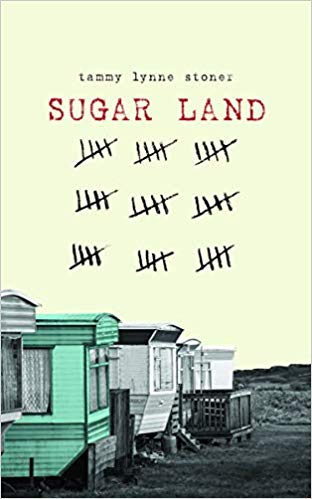
Title: Sugar Land
Author: Tammy Lynne Stoner
ISBN: 978-1597096270
Publisher: Red Hen Press
Copyright Date: 2018
Genre: Historical Fiction
Plot Summary: This story is set in the 1920’s and follows Dara, a young woman from Texas. Dara works at the Imperial State Prison Farm, which is a men’s prison. She works in the kitchen. She has come to work here to run away from her past. She had fallen in love with her best friend, Rhodie, who is a girl. When their relationship was discovered, Dara ran away to work at the prison, where she keeps her identity a secret. While at the prison, she meets a few characters. One man is Huddie, a man with a beautiful voice but can’t seem to keep himself out of trouble and out of prison. Another man is the horrible head cook who terrorizes Dara. And he man who helps her leave the prison, the Warden, who offers her hand in marriage. As we follow Dara from her teenage years and her marriage to the Warden, she continues to keep her secret. Will she ever be free to be who she truly is?
Critical Analysis: This critical evaluation will be looking at the characters used by Tammy Lynne Stoner in her book, Sugar Land. Throughout Sugar Land, Tammy uses a variety of characters to help or hurt Dara on her journey. Firstly, we meet Dara, who is a sweet girl but has a quiet strength that allows her to survive many awful situations. For example, when the head cook tries to force himself on her, she defends herself with no concern for what the future will hold. “I held back the urge to knee him in the privates, since I knew that wouldn’t stop him from getting to me before I could run off. I paced myself, waiting until I could cut that bastard wide open” (p. 95). Dara is always conscious of what she has to stay alive in this world. But she is brave enough to try to be happy. Rhodie, the girl she is in love with, is like Dara except she doesn’t care being shunned away to be with Dara. She is always optimistic. Huddie has a good heart and is optimistic like Rhodie but he can’t seem to stay out of trouble. The Warden was a good man, although he does not like to make too many waves. He loved Dara even though he knew that she may not feel exactly the same for him as he did for her. The characters all were a part of Dara’s life and eventually how she found out to be truly happy.
Reader’s Annotation: Dara is a young woman growing up in an unforgiving time with a tremendous secret.
Reading Level/Interest Age: Grades 9+

Author Biography:
Award winning author and VCCA Fellow, tammy was born in Midland, Texas. SUGAR LAND is her debut novel. She’s been published two dozen times in journals and anthologies and is also the publisher of Gertrude and wrangler of GERTIE queer book club. tammy attended the Tin House Workshop twice, earned her MFA from Antioch University, won a fellowship to the 2012 SLS Summer Seminar in Kenya and a 2017 Sou-Wester Artist-in-Residence Fellowship, and was nominated for a Million Writers Awardand a Pushcart. SUGAR LAND won an IPPY, was a finalist for a Forewords Indie Award, made the Advocate’s Best of 2018, was a Top Five for 2018 by Powell’s booksellers, was starred by Kirkus Reviews, and called “writing at its finest” by the New York Journal of Books. Stemming from what her grandmother calls her “gypsy blood,” she has lived in 16 cities in 3 countries, working as a gas station attendant, biscuit maker, medical experimentee, waitress in a Greek diner, house cleaner, and a college instructor – among other odd jobs. She also created “Dottie’s Magic Pockets” – the first show for kids in all kinds of families. She lives between Portland, OR and Basel, Switzerland with her lady-friend, Karena, and their three kids.
Book Talking Ideas: Identity and Self-Perseverance
Curriculum Ties: Diversity of Cultures
Challenge Issues: Homosexuality, Sexual Abuse, Language, Violence
Reason for Inclusion into Mini-Collection: I included Sugar Land in my collection because it is a very well-written story that teenagers, especially who belong to the LGBT community, may relate to. It received a starred review from Kirkus Review. ” The love child of Fannie Flagg and Rita Mae Brown, Stoner is sure to win her own devoted following with this ravishing debut. ” ( https://www.kirkusreviews.com/book-reviews/tammy-lynne-stoner/sugar-land/ ).
Defense File:
Responsibility for Selection
Under the general supervision of the Library Director, the Supervising Librarians are responsible for the collection development process. Centralized Collection Development staff is responsible for identifying titles for acquisition. All library staff and members of the public are encouraged to recommend titles for purchase. Those recommendations will be evaluated by Supervising Librarians using the same selection criteria as general purchases. An electronic resources committee recommends resources for purchase. Selection Criteria All materials, whether purchased or donated, are considered in terms of the criteria listed below. An item need not meet all of these standards in order to be added to the collection: Popular interest, Contemporary significance or permanent value, Currency of information or format, Representation of diverse points of view, Relationship to existing materials in collection, Readability or ability to sustain interest, Appropriateness of subject to the age and/or level of the intended audience, Reputation of the author, publisher, producer, illustrator, or artist, Creative, literary, or technical quality, Physical condition, Accuracy and authentication, Critical assessments in a variety of professional journals and attention in media, Circulation as monitored through the Library’s ILS, Cost and availability, Relationship to materials in other area libraries, Local emphasis, Multiple copies of materials are purchased in response to user demand as evidenced by the number of holds, anticipated popularity, and monitoring of the collection. Philosophy of Selection
In support of its mission, the Library fully endorses the principles documented in the Library Bill of Rights, Freedom to Read and Freedom to View statements of the American Library Association. These three documents can be accessed online through the following links:
http://www.ala.org/advocacy/intfreedom/librarybill
http://www.ala.org/advocacy/intfreedom/statementspols/freedomreadstatement
http://www.ala.org/advocacy/intfreedom/statementspols/freedomviewstatement Retrieved from: https://library.escondido.org/collection-development-policy.aspx Rationale – The rationale to how the materials were selected for this mini-collection is through reviews from School Library Journal as well as goodreads.com. Active Listening Skills – To avoid escalation, staff has been trained in active listening skills including; Neutral and nonjudgmental, Patient (periods of silence are not “filled”), Verbal and nonverbal feedback to show signs of listening (e.g., smiling, eye contact, leaning in, mirroring), Asking questions, Reflecting back what is said, Asking for clarification, and Summarizing. Retrieved from https://www.verywellmind.com/what-is-active-listening-3024343 Reconsideration Request – Library patrons who recommend the review of appropriateness or removal of a particular item in the Library collection may request and submit a Statement of Concern about Library Resources form available from Information Desk staff. The form will be reviewed by the Library Director or designee and staff in relation to the Library’s mission statement and the selection criteria in this Collection Development Policy. An evaluation of review materials submitted by the patron and staff will be made in accordance with the Reconsideration of Library Materials Policy which is listed below and can be viewed on the Library’s website. A response will be made by the Library Director or designee within 21 days of receiving the formal objection. Reconsideration of Library Materials Policy
Recognizing the importance of intellectual freedom, the Escondido Public Library Board of Trustees fully supports the American Library Association’s Library Bill of Rights and the Association’s Freedom to Read and Freedom to View Statements and has adopted them as official library policy. Reading is a private activity, and individuals must examine materials as to suitability for their own purposes and make their own decisions to read or not to read particular items. As part of its mission to provide ready access to the wide diversity of ideas and information, the library strives to collect materials that provide a variety of viewpoints on issues and subjects. It recognizes that some of these may be controversial and that any given item may offend some members of the community. Selection of materials is not made on the basis of anticipated approval or disapproval, but on the basis of the principles and guidelines stated in the Collection Development Policy. Likewise, the library will not eliminate items purchased under due consideration solely because they displease a particular individual or group. Library materials will not be marked or identified to show approval or disapproval of their contents, and no library materials will be sequestered, except to protect it from physical damage or theft. Responsibility for the reading of children rests with their parents or legal guardians. Selection of library materials will not be inhibited by the possibility that books may come into the possession of children, and only parents may restrict access for their own children. Patrons may raise an objection to an item in the library’s collection. If a complaint cannot be resolved informally, after the complainant has talked with a librarian and has seen the Collection Development Policy, the following procedure will be used to consider the opinions of those persons in the community who are not directly involved in the selection process.
- The library’s department heads and administrators will keep on hand and make available the form, Statement of Concern about Library Materials, and will assist the complainant in completing it if requested. All formal objections to library materials must be made on this form.
- The form shall be signed by the complainant and filed with the Library Administration.
- Within two business days of receiving the form, the Library Director or designee shall file it with the Reconsideration Committee for reevaluation of the material in question. The Committee shall recommend disposition to the Library Director or designee within three weeks.
- The challenge material will not be restricted during the reconsideration process.
- The Reconsideration Committee shall be mad up of three of the Library’s department heads, a Library administrator, and a Library trustee
- The Committee will have an initial meeting to:
- Distribute copies of the completed Statement of Concern About Library Materials form to committee members.
- Distribute copies of the challenged material, as available.
- Give the complainant an opportunity to talk about and expand on the form.
- Give the staff member who selected the item an opportunity to respond to the form.
- The Committee will make its recommendation and draft a response for the Library Director who will review it and send it to the complainant.
- If not satisfied with the decision, the complainant may appeal to the Public Library Board of Trustees, which has final authority for library policy and materials. Retrieved from https://library.escondido.org/collection-development-policy.aspx.

Title: This is Where it Ends
Author: Marieke Nikamp
ISBN: 978-1492622468
Publisher: Sourcebooks Fire
Copyright Date: 2016
Genre: Realistic Contemporary Fiction
Plot Summary: Claire, Autumn, Sylv, and Tomas are starting their first day back to school as any other day. Autumn and Sylv are listening to their principal’s back to school presentation while Claire is practicing for a track meet with her team and Tomas is breaking into the principal’s office. Shortly, as the presentation is ended, chaos starts to occur. The auditorium is locked, so no one can leave. And then, someone comes to the front of the auditorium and starts shooting. Why is this happening? Will Sylv and Autumn be all right? Can Tomas find a way to get to his sister and make sure she is okay? Who is the shooter and why are they doing this? Who will survive? As the minutes pass, more questions and answers come to the surface.
Critical Analysis: This critical evaluation will be looking at the tones used by Marieke Nijkamp in her book, This Is Where It Ends. Marieke’s tones are to cause tension and suspense. By only showing a few minutes at a time, we start to relate to the emotions the narrators are experiencing. She was able to keep the story flowing even though she used so many different narratives to discuss the same situation. Although the story only took place for an hour, she used tension and turned it into a 277-page book. Although the main story only lasted an hour, she was able to get a lot of back ground on the characters by using flashbacks and memories. Through tension and suspense, she was able to make the audience want to find out what happened next. One example was Sylv tries to approach Tyler. “There is nothing between her and Ty as he snaps a new cartridge in place. Still that doesn’t stop her. Please don’t. Matt squeezes my hand. And we brace for whatever comes next.” (p. 189). The memories and flashbacks helped to develop the characters and made you either root for characters to survive or to understand how each character got to this moment.
Reader’s Annotation: Four students perspectives of a school shooting as it is occurring, minute by minute.
Reading Level/Interest Age: Grades 9+

Author Biography:
Marieke Nijkamp was born and raised in the Netherlands. A lifelong student of stories, language, and ideas, she spends as much time in fictional worlds as she does the real world. She loves to travel, roll dice, and daydream. Marieke’s YA novels include: This Is Where It Ends, which follows four teens during the fifty-four minutes of a school shooting. And Before I Let Go, a haunting young adult murder mystery set during a cruel Alaskan winter. Additionally, Marieke is the editor of Unbroken, an anthology of 13 stories starring disabled teens, written by disabled authors.
Book Talking Ideas: School Shootings
Curriculum Ties: N/A
Challenge Issues: Violence, Sexual Abuse, Language
Reason for Inclusion into Mini-Collection: I included This Is Where It Ends in my collection because it deals with a very hard subject that teenagers have been exposed to. It also addresses bullying in the school setting. This Is Where It Ends was a Goodreads Choice Award Nominee for Young Adult Fiction in 2016.
Defense File:
Responsibility for Selection
Under the general supervision of the Library Director, the Supervising Librarians are responsible for the collection development process. Centralized Collection Development staff is responsible for identifying titles for acquisition. All library staff and members of the public are encouraged to recommend titles for purchase. Those recommendations will be evaluated by Supervising Librarians using the same selection criteria as general purchases. An electronic resources committee recommends resources for purchase. Selection Criteria
All materials, whether purchased or donated, are considered in terms of the criteria listed below. An item need not meet all of these standards in order to be added to the collection: Popular interest, Contemporary significance or permanent value, Currency of information or format, Representation of diverse points of view, Relationship to existing materials in collection, Readability or ability to sustain interest, Appropriateness of subject to the age and/or level of the intended audience, Reputation of the author, publisher, producer, illustrator, or artist, Creative, literary, or technical quality, Physical condition, Accuracy and authentication, Critical assessments in a variety of professional journals and attention in media, Circulation as monitored through the Library’s ILS, Cost and availability, Relationship to materials in other area libraries, Local emphasis, Multiple copies of materials are purchased in response to user demand as evidenced by the number of holds, anticipated popularity, and monitoring of the collection. Philosophy of Selection
In support of its mission, the Library fully endorses the principles documented in the Library Bill of Rights, Freedom to Read and Freedom to View statements of the American Library Association. These three documents can be accessed online through the following links:
http://www.ala.org/advocacy/intfreedom/librarybill
http://www.ala.org/advocacy/intfreedom/statementspols/freedomreadstatement
http://www.ala.org/advocacy/intfreedom/statementspols/freedomviewstatement Retrieved from: https://library.escondido.org/collection-development-policy.aspx Rationale – The rationale to how the materials were selected for this mini-collection is through reviews from School Library Journal as well as goodreads.com. Active Listening Skills – To avoid escalation, staff has been trained in active listening skills including; Neutral and nonjudgmental, Patient (periods of silence are not “filled”), Verbal and nonverbal feedback to show signs of listening (e.g., smiling, eye contact, leaning in, mirroring), Asking questions, Reflecting back what is said, Asking for clarification, and Summarizing. Retrieved from https://www.verywellmind.com/what-is-active-listening-3024343 Reconsideration Request – Library patrons who recommend the review of appropriateness or removal of a particular item in the Library collection may request and submit a Statement of Concern about Library Resources form available from Information Desk staff. The form will be reviewed by the Library Director or designee and staff in relation to the Library’s mission statement and the selection criteria in this Collection Development Policy. An evaluation of review materials submitted by the patron and staff will be made in accordance with the Reconsideration of Library Materials Policy which is listed below and can be viewed on the Library’s website. A response will be made by the Library Director or designee within 21 days of receiving the formal objection. Reconsideration of Library Materials Policy
Recognizing the importance of intellectual freedom, the Escondido Public Library Board of Trustees fully supports the American Library Association’s Library Bill of Rights and the Association’s Freedom to Read and Freedom to View Statements and has adopted them as official library policy. Reading is a private activity, and individuals must examine materials as to suitability for their own purposes and make their own decisions to read or not to read particular items. As part of its mission to provide ready access to the wide diversity of ideas and information, the library strives to collect materials that provide a variety of viewpoints on issues and subjects. It recognizes that some of these may be controversial and that any given item may offend some members of the community. Selection of materials is not made on the basis of anticipated approval or disapproval, but on the basis of the principles and guidelines stated in the Collection Development Policy. Likewise, the library will not eliminate items purchased under due consideration solely because they displease a particular individual or group. Library materials will not be marked or identified to show approval or disapproval of their contents, and no library materials will be sequestered, except to protect it from physical damage or theft. Responsibility for the reading of children rests with their parents or legal guardians. Selection of library materials will not be inhibited by the possibility that books may come into the possession of children, and only parents may restrict access for their own children. Patrons may raise an objection to an item in the library’s collection. If a complaint cannot be resolved informally, after the complainant has talked with a librarian and has seen the Collection Development Policy, the following procedure will be used to consider the opinions of those persons in the community who are not directly involved in the selection process.
- The library’s department heads and administrators will keep on hand and make available the form, Statement of Concern about Library Materials, and will assist the complainant in completing it if requested. All formal objections to library materials must be made on this form.
- The form shall be signed by the complainant and filed with the Library Administration.
- Within two business days of receiving the form, the Library Director or designee shall file it with the Reconsideration Committee for reevaluation of the material in question. The Committee shall recommend disposition to the Library Director or designee within three weeks.
- The challenge material will not be restricted during the reconsideration process.
- The Reconsideration Committee shall be mad up of three of the Library’s department heads, a Library administrator, and a Library trustee
- The Committee will have an initial meeting to:
- Distribute copies of the completed Statement of Concern About Library Materials form to committee members.
- Distribute copies of the challenged material, as available.
- Give the complainant an opportunity to talk about and expand on the form.
- Give the staff member who selected the item an opportunity to respond to the form.
- The Committee will make its recommendation and draft a response for the Library Director who will review it and send it to the complainant.
- If not satisfied with the decision, the complainant may appeal to the Public Library Board of Trustees, which has final authority for library policy and materials. Retrieved from https://library.escondido.org/collection-development-policy.aspx.
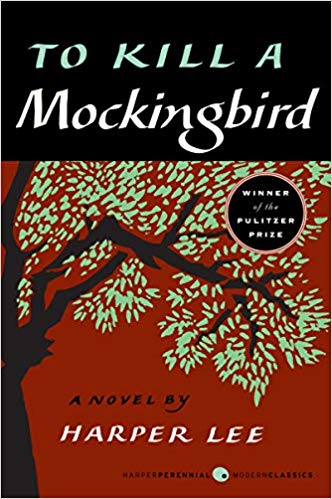
Title: To Kill A Mockingbird
Author: Harper Lee
ISBN: 978-0062420701
Publisher: Harper
Copyright Date: 1960
Genre: Classical Fiction
Other Books in Series: Go Set A Watchman
Plot Summary: To Kill A Mockingbird is a story written from the perspective of a girl living in Alabama during the Great Depression. The girl’s name is Scout and her father is a lawyer named Atticus. Atticus ends up defending a black man, Boo Radley, who is accused of raping a white woman. Through Scout’s eyes, we see the racism that envelops her community and how Boo is treated. The story also highlights how the justice system itself discriminates against Boo. Can Atticus get fair treatment for Boo so the right verdict is decided?
Critical Analysis: This critical evaluation will be looking at the themes used by Harper Lee in her book, To Kill A Mockingbird. Two main themes that occur during To Kill A Mockingbird are racism and social inequality. The way Boo Radley’s case proceeds is a clear example of racism. All the evidence is circumstantial and the there is no true evidence to show Boo Radley raped the lady. But, because he is black, the verdict goes against him. Even before the verdict is read, the towns folk came to the jail to try to have Boo lynched. Social inequality is shown through different examples. One interesting aspect is that Scout and Atticus are actually in a pretty financially secure place compared to a lot of the towns folk, yet they are trying to help Boo. Another aspect to that is Atticus was more educated than many of the towns folk, so it highlights that education can prevent ignorance.
Reader’s Annotation: A young girl witnesses racism and discrimination as her father defends a black man in Alabama.
Reading Level/Interest Age: Grades 8+

Author Biography:
Harper Lee was born April 28, 1926. She was the youngest of four children and grew up in Monroeville, Alabama. She was known to be a tomboy who loved the outdoors, much like her protagonist, Scout, in To Kill a Mockingbird. Her father was a lawyer and her mother was known to be mentally ill. She was childhood friends with Truman Capote who would later in life also become a writer. After graduation in 1949, Lee moved to New York City to pursue her writing career. She struggled for a long time and it wasn’t until she wrote the Pulitzer Prize winning novel in 1960, To Kill a Mockingbird, when she really got on her feet. The book later became a highly- acclaimed movie starring Gregory Peck. Go Set a Watchman, a sequel to To Kill a Mockingbird, was published in 2015. Lee originally wrote Go Set a Watchman first but her publisher told her to re-write it and make her main character, Scout, a child. She worked with her childhood friend Capote on an article for The New Yorker. They had a falling out because Capote did not give Lee credit in one of their collaborations. They made-up later on and continued to remain as friends for the rest of Lee’s life.
https://blog.connectionsacademy.com/harper-lee-short-biography/
Book Talking Ideas: Racism, Injustice
Curriculum Ties: Diversity of Cultures
Challenge Issues: Racism, Language, Violence
Reason for Inclusion into Mini-Collection: I included To Kill A Mockingbird to my collection because it is a classic that looks at racism and inequality. Some of the awards it has won are the Pulitzer Prize for Fiction in 1961 and the Audie Award for Classic in 2007, and it was a National Book Award Finalist for Fiction in 1961.
Defense File:
Responsibility for Selection
Under the general supervision of the Library Director, the Supervising Librarians are responsible for the collection development process. Centralized Collection Development staff is responsible for identifying titles for acquisition. All library staff and members of the public are encouraged to recommend titles for purchase. Those recommendations will be evaluated by Supervising Librarians using the same selection criteria as general purchases. An electronic resources committee recommends resources for purchase. Selection Criteria
All materials, whether purchased or donated, are considered in terms of the criteria listed below. An item need not meet all of these standards in order to be added to the collection: Popular interest, Contemporary significance or permanent value, Currency of information or format, Representation of diverse points of view, Relationship to existing materials in collection, Readability or ability to sustain interest, Appropriateness of subject to the age and/or level of the intended audience, Reputation of the author, publisher, producer, illustrator, or artist, Creative, literary, or technical quality, Physical condition, Accuracy and authentication, Critical assessments in a variety of professional journals and attention in media, Circulation as monitored through the Library’s ILS, Cost and availability, Relationship to materials in other area libraries, Local emphasis, Multiple copies of materials are purchased in response to user demand as evidenced by the number of holds, anticipated popularity, and monitoring of the collection. Philosophy of Selection
In support of its mission, the Library fully endorses the principles documented in the Library Bill of Rights, Freedom to Read and Freedom to View statements of the American Library Association. These three documents can be accessed online through the following links:
http://www.ala.org/advocacy/intfreedom/librarybill
http://www.ala.org/advocacy/intfreedom/statementspols/freedomreadstatement
http://www.ala.org/advocacy/intfreedom/statementspols/freedomviewstatement Retrieved from: https://library.escondido.org/collection-development-policy.aspx Rationale – The rationale to how the materials were selected for this mini-collection is through reviews from School Library Journal as well as goodreads.com. Active Listening Skills – To avoid escalation, staff has been trained in active listening skills including; Neutral and nonjudgmental, Patient (periods of silence are not “filled”), Verbal and nonverbal feedback to show signs of listening (e.g., smiling, eye contact, leaning in, mirroring), Asking questions, Reflecting back what is said, Asking for clarification, and Summarizing. Retrieved from https://www.verywellmind.com/what-is-active-listening-3024343 Reconsideration Request – Library patrons who recommend the review of appropriateness or removal of a particular item in the Library collection may request and submit a Statement of Concern about Library Resources form available from Information Desk staff. The form will be reviewed by the Library Director or designee and staff in relation to the Library’s mission statement and the selection criteria in this Collection Development Policy. An evaluation of review materials submitted by the patron and staff will be made in accordance with the Reconsideration of Library Materials Policy which is listed below and can be viewed on the Library’s website. A response will be made by the Library Director or designee within 21 days of receiving the formal objection. Reconsideration of Library Materials Policy
Recognizing the importance of intellectual freedom, the Escondido Public Library Board of Trustees fully supports the American Library Association’s Library Bill of Rights and the Association’s Freedom to Read and Freedom to View Statements and has adopted them as official library policy. Reading is a private activity, and individuals must examine materials as to suitability for their own purposes and make their own decisions to read or not to read particular items. As part of its mission to provide ready access to the wide diversity of ideas and information, the library strives to collect materials that provide a variety of viewpoints on issues and subjects. It recognizes that some of these may be controversial and that any given item may offend some members of the community. Selection of materials is not made on the basis of anticipated approval or disapproval, but on the basis of the principles and guidelines stated in the Collection Development Policy. Likewise, the library will not eliminate items purchased under due consideration solely because they displease a particular individual or group. Library materials will not be marked or identified to show approval or disapproval of their contents, and no library materials will be sequestered, except to protect it from physical damage or theft. Responsibility for the reading of children rests with their parents or legal guardians. Selection of library materials will not be inhibited by the possibility that books may come into the possession of children, and only parents may restrict access for their own children. Patrons may raise an objection to an item in the library’s collection. If a complaint cannot be resolved informally, after the complainant has talked with a librarian and has seen the Collection Development Policy, the following procedure will be used to consider the opinions of those persons in the community who are not directly involved in the selection process.
- The library’s department heads and administrators will keep on hand and make available the form, Statement of Concern about Library Materials, and will assist the complainant in completing it if requested. All formal objections to library materials must be made on this form.
- The form shall be signed by the complainant and filed with the Library Administration.
- Within two business days of receiving the form, the Library Director or designee shall file it with the Reconsideration Committee for reevaluation of the material in question. The Committee shall recommend disposition to the Library Director or designee within three weeks.
- The challenge material will not be restricted during the reconsideration process.
- The Reconsideration Committee shall be mad up of three of the Library’s department heads, a Library administrator, and a Library trustee
- The Committee will have an initial meeting to:
- Distribute copies of the completed Statement of Concern About Library Materials form to committee members.
- Distribute copies of the challenged material, as available.
- Give the complainant an opportunity to talk about and expand on the form.
- Give the staff member who selected the item an opportunity to respond to the form.
- The Committee will make its recommendation and draft a response for the Library Director who will review it and send it to the complainant.
- If not satisfied with the decision, the complainant may appeal to the Public Library Board of Trustees, which has final authority for library policy and materials. Retrieved from https://library.escondido.org/collection-development-policy.aspx.
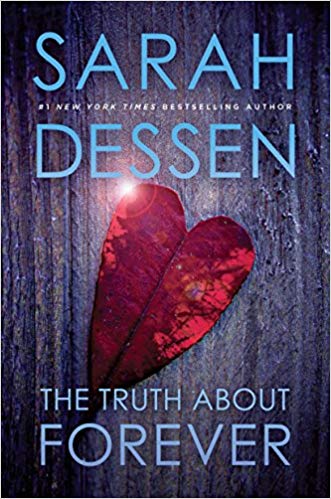
Title: The Truth About Forever
Author: The Truth About Forever
ISBN: 978-0142406250
Publisher: Penguin Group
Copyright Date: 2004
Genre: Contemporary Romance
Plot Summary: Macy is the girl who has it all figured out. She has the perfect boyfriend, the good job, and studies really hard to be the perfect student. She also is the perfect daughter. Macy tries to keep things in complete control, especially after her father passed away. But after she meets Wes and the people he works with, she decides to switch things up a bit. She starts working at a catering company called Wish, which is a chaotic but fun job. She breaks up with her boyfriend. Macy is starting to figure out who she is not who everyone wants her to be. While figuring out who she is, she starts to actually grieve her father. But is she brave enough to take a chance on what she really wants?
Critical Analysis: This critical evaluation will be looking at the themes used by Sarah Dressen in her book, The Truth About Forever. One theme that resonates throughput the book is self-identity. Throughout the book, Macy is trying to figure out who she is. There is the part of her from before her father passed away, who she is today, and then there is who she wants to be. Sarah shows these changes in Macy by eventually breaking up with her boyfriend. She was not happy living a completely controlled life and she sees that is what she would have to do if she stayed with Jason. We also see this when she stops doing exactly what her mom tells her to do. We also see this when she forces her mom to talk about her dad and then they can start the grieving process together. We see this transformation through the following quote from the book. “This life was fleeting, and I was still searching for the way I wanted to spend it that would make me happy, full, okay again.” (p. 122).
Reader’s Annotation: Macy has always been exactly what everyone wants her to be. What happens when she is actually herself?
Reading Level/Interest Age: Grades 8+

Author Biography:
Sarah Dessen is the #1 New York Times bestselling author of over a dozen novels for teens, which have received numerous awards and rave reviews. Her books have been published in over thirty countries and have sold millions of copies worldwide. She is the recipient of the 2017 Margaret A. Edwards Award from the American Library Association for outstanding contribution to young adult literature for her novels: Keeping the Moon, Dreamland, This Lullaby, The Truth about Forever, Just Listen, Along for the Ride, and What Happened to Goodbye. Her newest novel, Once and for All, will be released in June 2017. An NC native, she currently lives in Chapel Hill with her family.
Book Talking Ideas: Grieving
Curriculum Ties: N/A
Challenge Issues: Questioning authority figures
Reason for Inclusion into Mini-Collection: I included the Truth About Forever to my collection because it addresses major teenager issues such as grief and figuring out who you are. It also has won the following awards:
Romantic Times Reviewers’ Choice Award for Urban Fantasy in 2004 and the South Carolina Book Award for Young Adult Book Award in 2007.
Defense File:
Responsibility for Selection
Under the general supervision of the Library Director, the Supervising Librarians are responsible for the collection development process. Centralized Collection Development staff is responsible for identifying titles for acquisition. All library staff and members of the public are encouraged to recommend titles for purchase. Those recommendations will be evaluated by Supervising Librarians using the same selection criteria as general purchases. An electronic resources committee recommends resources for purchase. Selection Criteria
All materials, whether purchased or donated, are considered in terms of the criteria listed below. An item need not meet all of these standards in order to be added to the collection: Popular interest, Contemporary significance or permanent value, Currency of information or format, Representation of diverse points of view, Relationship to existing materials in collection, Readability or ability to sustain interest, Appropriateness of subject to the age and/or level of the intended audience, Reputation of the author, publisher, producer, illustrator, or artist, Creative, literary, or technical quality, Physical condition, Accuracy and authentication, Critical assessments in a variety of professional journals and attention in media, Circulation as monitored through the Library’s ILS, Cost and availability, Relationship to materials in other area libraries, Local emphasis, Multiple copies of materials are purchased in response to user demand as evidenced by the number of holds, anticipated popularity, and monitoring of the collection. Philosophy of Selection
In support of its mission, the Library fully endorses the principles documented in the Library Bill of Rights, Freedom to Read and Freedom to View statements of the American Library Association. These three documents can be accessed online through the following links:
http://www.ala.org/advocacy/intfreedom/librarybill
http://www.ala.org/advocacy/intfreedom/statementspols/freedomreadstatement
http://www.ala.org/advocacy/intfreedom/statementspols/freedomviewstatement Retrieved from: https://library.escondido.org/collection-development-policy.aspx Rationale – The rationale to how the materials were selected for this mini-collection is through reviews from School Library Journal as well as goodreads.com. Active Listening Skills – To avoid escalation, staff has been trained in active listening skills including; Neutral and nonjudgmental, Patient (periods of silence are not “filled”), Verbal and nonverbal feedback to show signs of listening (e.g., smiling, eye contact, leaning in, mirroring), Asking questions, Reflecting back what is said, Asking for clarification, and Summarizing. Retrieved from https://www.verywellmind.com/what-is-active-listening-3024343 Reconsideration Request – Library patrons who recommend the review of appropriateness or removal of a particular item in the Library collection may request and submit a Statement of Concern about Library Resources form available from Information Desk staff. The form will be reviewed by the Library Director or designee and staff in relation to the Library’s mission statement and the selection criteria in this Collection Development Policy. An evaluation of review materials submitted by the patron and staff will be made in accordance with the Reconsideration of Library Materials Policy which is listed below and can be viewed on the Library’s website. A response will be made by the Library Director or designee within 21 days of receiving the formal objection. Reconsideration of Library Materials Policy
Recognizing the importance of intellectual freedom, the Escondido Public Library Board of Trustees fully supports the American Library Association’s Library Bill of Rights and the Association’s Freedom to Read and Freedom to View Statements and has adopted them as official library policy. Reading is a private activity, and individuals must examine materials as to suitability for their own purposes and make their own decisions to read or not to read particular items. As part of its mission to provide ready access to the wide diversity of ideas and information, the library strives to collect materials that provide a variety of viewpoints on issues and subjects. It recognizes that some of these may be controversial and that any given item may offend some members of the community. Selection of materials is not made on the basis of anticipated approval or disapproval, but on the basis of the principles and guidelines stated in the Collection Development Policy. Likewise, the library will not eliminate items purchased under due consideration solely because they displease a particular individual or group. Library materials will not be marked or identified to show approval or disapproval of their contents, and no library materials will be sequestered, except to protect it from physical damage or theft. Responsibility for the reading of children rests with their parents or legal guardians. Selection of library materials will not be inhibited by the possibility that books may come into the possession of children, and only parents may restrict access for their own children. Patrons may raise an objection to an item in the library’s collection. If a complaint cannot be resolved informally, after the complainant has talked with a librarian and has seen the Collection Development Policy, the following procedure will be used to consider the opinions of those persons in the community who are not directly involved in the selection process.
- The library’s department heads and administrators will keep on hand and make available the form, Statement of Concern about Library Materials, and will assist the complainant in completing it if requested. All formal objections to library materials must be made on this form.
- The form shall be signed by the complainant and filed with the Library Administration.
- Within two business days of receiving the form, the Library Director or designee shall file it with the Reconsideration Committee for reevaluation of the material in question. The Committee shall recommend disposition to the Library Director or designee within three weeks.
- The challenge material will not be restricted during the reconsideration process.
- The Reconsideration Committee shall be mad up of three of the Library’s department heads, a Library administrator, and a Library trustee
- The Committee will have an initial meeting to:
- Distribute copies of the completed Statement of Concern About Library Materials form to committee members.
- Distribute copies of the challenged material, as available.
- Give the complainant an opportunity to talk about and expand on the form.
- Give the staff member who selected the item an opportunity to respond to the form.
- The Committee will make its recommendation and draft a response for the Library Director who will review it and send it to the complainant.
- If not satisfied with the decision, the complainant may appeal to the Public Library Board of Trustees, which has final authority for library policy and materials. Retrieved from https://library.escondido.org/collection-development-policy.aspx.

Title: Twilight
Author: Stephenie Meyer
ISBN: 978-0316015844
Publisher: Little, Brown Books for Young Readers
Copyright Date: 2005
Genre: Fantasy
Other Books in Series: New Moon, Eclipse, Breaking Dawn
Plot Summary: Bella Swan has just moved to Forks, Washington. She has always been a bit of an outsider and is just trying to find her place at her new school. Then, she meets a mysterious but cute boy named Edward. It doesn’t take long for Bella to find out Edward and his family are a different than everyone else. After a near accident, Bella gets closer to Edward and eventually learns his secret. He is a vampire and so is the rest of his family. Although they are vampires, they are different in that they don’t drink human blood. Edward and Bella become closer and realize they have feeling for each other. Bella also meets a family friend, Jacob, who also has feelings for her. As Edward and Bella become closer, Bella learns more about where he came from as well as his family. But, with the two becoming closer, they also realize Bella is in more danger from outside forces.
Critical Analysis: This critical evaluation will be looking at the themes used by Stephenie Meyer in her book, Twilight. Stephenie uses multiple themes throughout Twilight. One of the themes is morality. Edward is constantly struggling with what is right and wrong because of who he is. On one side he wants to be good because as a vampire, that is how he has been raised in the Cullen’s household. One way they try to be good is by not drinking human blood, even though they need blood to remain strong. Jasper shows this struggle more than Edward does in that he cannot resist himself when he sees human. Edward can, although it is painful. Bella also struggles with doing right versus wrong as well in that she is conflicted in how far she wants to go with Edward sexually. Edward helps her by resisting his desire. Another theme, Stephenie explores is choice. This goes along with the morality theme, in that, Bella and Edward must make difficult choices to stay together.
Reader’s Annotation: A teenage girl moves into a new town and falls in love with a vampire.
Reading Level/Interest Age: Grades 9+

Author Biography:
Best known for her Twilight series, Stephenie Meyer’s four-book collection has sold over 100 million copies globally in over 50 countries, with translations in 37 different languages. Meyer was the highest-selling author of 2008 and 2009 in the United States, having sold over 29 million books in 2008, and 26.5 million books in 2009. In 2008, Meyer also released The Host, which debuted at #1 on The New York Times and Wall Street Journal bestseller lists. Additionally, USA Today declared Meyer “Author of the Year,” citing that she had done something that no one else had in the 15 years of the USA Today bestselling book list– she swept the top four slots in 2008. Meyer also accomplished this feat in 2009, when The Twilight Saga once again dominated the top of the bestseller list. All together, her books have spent over 303 weeks on the New York Times Bestseller List. Stephenie Meyer graduated from Brigham Young University with a degree in English Literature. She lives in Arizona with her husband and sons.
stepheniemeyer.com/bio/
Book Talking Ideas: Personal Choices
Curriculum Ties: N/A
Challenge Issues: Violence
Reason for Inclusion into Mini-Collection: I included Twilight in my collection because it is one of the most popular series for young adults. It was among School Library Journal’s Best Books of 2005.
Defense File:
Responsibility for Selection
Under the general supervision of the Library Director, the Supervising Librarians are responsible for the collection development process. Centralized Collection Development staff is responsible for identifying titles for acquisition. All library staff and members of the public are encouraged to recommend titles for purchase. Those recommendations will be evaluated by Supervising Librarians using the same selection criteria as general purchases. An electronic resources committee recommends resources for purchase. Selection Criteria
All materials, whether purchased or donated, are considered in terms of the criteria listed below. An item need not meet all of these standards in order to be added to the collection: Popular interest, Contemporary significance or permanent value, Currency of information or format, Representation of diverse points of view, Relationship to existing materials in collection, Readability or ability to sustain interest, Appropriateness of subject to the age and/or level of the intended audience, Reputation of the author, publisher, producer, illustrator, or artist, Creative, literary, or technical quality, Physical condition, Accuracy and authentication, Critical assessments in a variety of professional journals and attention in media, Circulation as monitored through the Library’s ILS, Cost and availability, Relationship to materials in other area libraries, Local emphasis, Multiple copies of materials are purchased in response to user demand as evidenced by the number of holds, anticipated popularity, and monitoring of the collection. Philosophy of Selection
In support of its mission, the Library fully endorses the principles documented in the Library Bill of Rights, Freedom to Read and Freedom to View statements of the American Library Association. These three documents can be accessed online through the following links:
http://www.ala.org/advocacy/intfreedom/librarybill
http://www.ala.org/advocacy/intfreedom/statementspols/freedomreadstatement
http://www.ala.org/advocacy/intfreedom/statementspols/freedomviewstatement Retrieved from: https://library.escondido.org/collection-development-policy.aspx Rationale – The rationale to how the materials were selected for this mini-collection is through reviews from School Library Journal as well as goodreads.com. Active Listening Skills – To avoid escalation, staff has been trained in active listening skills including; Neutral and nonjudgmental, Patient (periods of silence are not “filled”), Verbal and nonverbal feedback to show signs of listening (e.g., smiling, eye contact, leaning in, mirroring), Asking questions, Reflecting back what is said, Asking for clarification, and Summarizing. Retrieved from https://www.verywellmind.com/what-is-active-listening-3024343 Reconsideration Request – Library patrons who recommend the review of appropriateness or removal of a particular item in the Library collection may request and submit a Statement of Concern about Library Resources form available from Information Desk staff. The form will be reviewed by the Library Director or designee and staff in relation to the Library’s mission statement and the selection criteria in this Collection Development Policy. An evaluation of review materials submitted by the patron and staff will be made in accordance with the Reconsideration of Library Materials Policy which is listed below and can be viewed on the Library’s website. A response will be made by the Library Director or designee within 21 days of receiving the formal objection. Reconsideration of Library Materials Policy
Recognizing the importance of intellectual freedom, the Escondido Public Library Board of Trustees fully supports the American Library Association’s Library Bill of Rights and the Association’s Freedom to Read and Freedom to View Statements and has adopted them as official library policy. Reading is a private activity, and individuals must examine materials as to suitability for their own purposes and make their own decisions to read or not to read particular items. As part of its mission to provide ready access to the wide diversity of ideas and information, the library strives to collect materials that provide a variety of viewpoints on issues and subjects. It recognizes that some of these may be controversial and that any given item may offend some members of the community. Selection of materials is not made on the basis of anticipated approval or disapproval, but on the basis of the principles and guidelines stated in the Collection Development Policy. Likewise, the library will not eliminate items purchased under due consideration solely because they displease a particular individual or group. Library materials will not be marked or identified to show approval or disapproval of their contents, and no library materials will be sequestered, except to protect it from physical damage or theft. Responsibility for the reading of children rests with their parents or legal guardians. Selection of library materials will not be inhibited by the possibility that books may come into the possession of children, and only parents may restrict access for their own children. Patrons may raise an objection to an item in the library’s collection. If a complaint cannot be resolved informally, after the complainant has talked with a librarian and has seen the Collection Development Policy, the following procedure will be used to consider the opinions of those persons in the community who are not directly involved in the selection process.
- The library’s department heads and administrators will keep on hand and make available the form, Statement of Concern about Library Materials, and will assist the complainant in completing it if requested. All formal objections to library materials must be made on this form.
- The form shall be signed by the complainant and filed with the Library Administration.
- Within two business days of receiving the form, the Library Director or designee shall file it with the Reconsideration Committee for reevaluation of the material in question. The Committee shall recommend disposition to the Library Director or designee within three weeks.
- The challenge material will not be restricted during the reconsideration process.
- The Reconsideration Committee shall be mad up of three of the Library’s department heads, a Library administrator, and a Library trustee
- The Committee will have an initial meeting to:
- Distribute copies of the completed Statement of Concern About Library Materials form to committee members.
- Distribute copies of the challenged material, as available.
- Give the complainant an opportunity to talk about and expand on the form.
- Give the staff member who selected the item an opportunity to respond to the form.
- The Committee will make its recommendation and draft a response for the Library Director who will review it and send it to the complainant.
- If not satisfied with the decision, the complainant may appeal to the Public Library Board of Trustees, which has final authority for library policy and materials. Retrieved from https://library.escondido.org/collection-development-policy.aspx.
- Cover images and author pictures obtained from amazon.com unless otherwise noted.
 Kelly's Mini-Collection Blog Assignment - Young Adult